
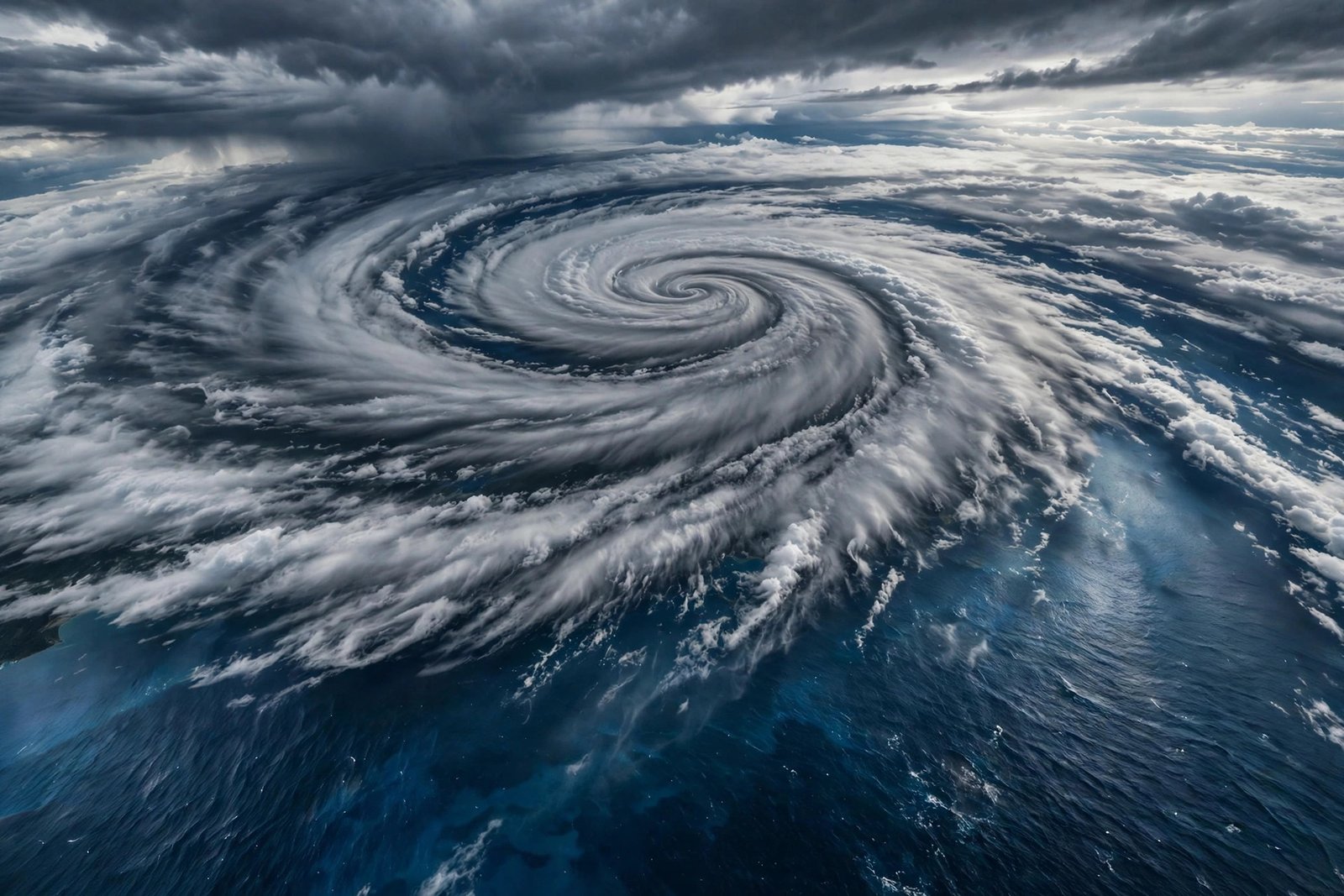
Have you ever wondered why a terrifying storm gets a gentle, almost musical name? That question is back in the headlines thanks to Cyclone Murasu, the storm churning across the Bay of Bengal in early November 2026. Learning how cyclone names are chosen turns a confusing weather bulletin into a story about thirteen countries, a shared list, and one very old Tamil word for a war drum.
On November 1, 2026, a deep depression over the Bay of Bengal strengthened into a cyclonic storm, and the India Meteorological Department (IMD) gave it the next name on the regional list: Murasu. The name was contributed by India, and it means war drum in Tamil. Forecasters said the storm was likely to cross the Andhra Pradesh coast between Nellore and Narsapur in the early hours of November 3, with sustained winds of 100 to 110 kilometres per hour, gusting to 120 kilometres per hour. Southern Odisha was also put on high alert, and officials stepped up preparedness as heavy rain spread toward the coast.
It is a dramatic name for a dramatic moment, and it arrived barely a week after Cyclone Arnab battered the same coastline. But Murasu was not picked because the storm looked fierce, or because forecasters wanted a scary label. The name was decided years in advance, sitting quietly on a list until its turn came. That is the part most people miss, and it is what makes the whole system so fascinating.
How Cyclone Names Are Chosen in the Bay of Bengal
The Bay of Bengal and the Arabian Sea share one naming system, overseen by the WMO/ESCAP Panel on Tropical Cyclones. Thirteen member countries contribute names to a common list: Bangladesh, India, Iran, the Maldives, Myanmar, Oman, Pakistan, Qatar, Saudi Arabia, Sri Lanka, Thailand, the United Arab Emirates and Yemen. Each country suggested thirteen names, producing a list of 169 names that the IMD published in April 2020.
India’s thirteen contributions to that list were Gati, Tej, Murasu, Aag, Vyom, Jhar, Probaho, Neer, Prabhanjan, Ghurni, Ambud, Jaladhi and Vega. When Murasu’s turn arrived, it did not matter where the storm formed or where it was heading. A name from India’s column of the list simply came up next in sequence, and the IMD, acting as the region’s specialised meteorological centre in New Delhi, assigned it once the system reached cyclonic strength.
That threshold matters. Not every swirl of cloud over warm water earns a name. A system must first intensify until its maximum sustained surface winds reach at least 34 knots, roughly 62 to 63 kilometres per hour. Until then it is a low-pressure area, a depression, or a deep depression. Only when it crosses that line does it graduate to a named cyclonic storm, which is why forecast bulletins can talk about a depression for days before a name suddenly appears.
The system behind cyclone names in this region began in 2000, when eight countries, Bangladesh, India, the Maldives, Myanmar, Oman, Pakistan, Sri Lanka and Thailand, agreed to start naming storms in the North Indian Ocean. Five more countries joined the panel in 2018, expanding the group to thirteen. Before that agreement, storms in the region were largely known by numbers and technical descriptions, which were hard for the public to follow during an emergency.
Murasu: A War Drum Rolling Toward Andhra Pradesh
So what does Murasu actually mean, and why does it fit this storm so well? In Tamil, a murasu is a war drum, an instrument historically beaten to announce important news, rally people, or warn of danger. It is a vivid image for a storm that is, in effect, beating its own warning across the coastline, and news reports quickly picked up on the poetry of it.
The IMD said on November 1 that Murasu was moving west-northwestwards over the southwest and west-central Bay of Bengal, and that it was likely to intensify into a severe cyclonic storm by the morning of November 2. Some bulletins described it as set to become a very severe cyclonic storm before landfall. Forecasts can shift as a storm evolves, so the exact intensity label matters less than the consistent core message: a powerful storm, heavy rain, strong winds, and a landfall window in the early hours of November 3 between Nellore and Narsapur, with some forecasts pointing to a crossing near Bapatla.
Authorities responded the way they do for any major landfall threat. The IMD advised the complete suspension of shipping and fishing operations off the Andhra Pradesh coast and over the southwest Bay of Bengal until the afternoon of November 3. In Odisha, the disaster management minister announced a high alert in the southern region, and the meteorological centre in Bhubaneswar said rainfall would begin on November 2 and grow heavier on November 3 and 4 under the storm’s influence. Red alerts were sounded in five districts of Andhra Pradesh, according to The Hindu, as the state braced for its second cyclone in less than a week.
That back-to-back timing is part of why Murasu drew so much attention. Cyclone Arnab, named by Bangladesh, had struck the east coast only days earlier, reportedly leaving at least seven people dead and causing widespread damage in Andhra Pradesh. Communities still clearing up from one storm suddenly had to prepare for another, which is exactly the kind of situation where a clear, memorable storm name helps warnings travel fast.
Why Cyclone Names Matter When a Storm Hits
There is a practical reason behind the poetry. A short, distinctive name is far easier to remember, repeat on television, share on social media, and shout across a village than a string of coordinates and wind speeds. When officials say “Murasu is coming,” everyone instantly knows which storm they mean, even if two weather systems are active at once. That clarity saves time, and in a cyclone, time saves lives.
Cyclone names also help the record books. Researchers, insurers, journalists and disaster agencies can track a single storm from its first bulletin to its final damage assessment under one label. Decades later, anyone can look up what happened during a particular storm without untangling a mess of dates and technical codes. In the Atlantic, famously destructive names such as Katrina are retired and never used again, so that a name is not reused for a storm associated with catastrophe. In the North Indian Ocean, the rule is simpler and stricter in its own way: names on the list are not repeated at all, so once Murasu has been used, it leaves the list for good.
The contrast with other parts of the world is worth knowing. In the Atlantic, the United States National Hurricane Center works through alphabetical lists that alternate between male and female names, and those lists rotate every six years unless a name is retired. In the western Pacific, typhoons draw on a large list maintained by fourteen countries and territories. Every ocean basin has its own committee and its own list, but the goal behind cyclone names is identical everywhere: one storm, one name, zero confusion.
The Rules Behind Every Name on the List
Countries cannot just submit any word they like. The panel’s guidelines require each proposed name to be neutral on politics, political figures, religion, culture and gender, and to avoid hurting the sentiments of any group. Names must be short, no more than eight letters, easy to pronounce, and not rude or cruel in nature. Each submission must come with its pronunciation, so that broadcasters around the region can say it correctly.
India’s own suggestions go through an IMD committee before they reach the panel, and some of them were suggested by members of the public. That public route is one reason the Indian list feels so varied: it moves from Gati, meaning motion, to Tej, meaning brilliance or speed, to Murasu, the war drum, and on to gentler words such as Neer, meaning water. The list is a small atlas of Indian languages and imagery, assembled long before any of these storms existed.
Another common misunderstanding is worth clearing up. The country that contributes a name is not predicting that it will be hit, and it is not claiming ownership of the storm. Arnab was Bangladesh’s suggestion, yet it struck India’s east coast. Murasu is India’s suggestion, yet it threatens Andhra Pradesh and worries Odisha, and its path is decided by winds and ocean temperatures, not by the flag attached to its name. The sequence is fixed, and the storm simply takes whatever name is next.
- Names are chosen years in advance by thirteen countries sharing one list.
- A storm earns its name only when sustained winds reach at least 34 knots.
- Names are used in sequence, never picked to match a storm’s strength or path.
- Once used in the North Indian Ocean, a name is never repeated.
- Short, neutral, easy-to-pronounce names help warnings spread faster.
What Happens After a Name Is Used?
When Murasu’s turn is over, the list simply moves on to the next name in sequence, and forecasters, journalists and emergency teams switch their attention to whatever system forms next. That steady rotation is the quiet genius of the system. It removes arguments about what to call a storm in the middle of a crisis, and it lets every warning, evacuation order and news report use the same word from the first bulletin to the last.
For people living along the Andhra Pradesh and Odisha coasts, though, the name will likely stick in memory for a different reason. Murasu arrived hard on the heels of Arnab, at the start of November, when the Bay of Bengal is historically at its most active for cyclones. November storms in this region have a long and sobering history, and coastal communities know that preparation, not panic, is the right response: secure loose items, stock essentials, follow official evacuation advice, and never venture into the sea during a cyclone warning.
If you are following the storm from elsewhere, the best habit is to check the IMD’s own bulletins rather than viral social media posts, which often recycle old footage or exaggerate wind speeds. Official updates give the storm’s position, its movement speed, and the expected landfall window, and they are revised every few hours as new satellite and radar data arrives. Murasu was moving at around 23 kilometres per hour in the hours before landfall, according to the Andhra Pradesh State Disaster Management Authority, a reminder that even a fast-moving storm gives coastal districts only a short window to act.
There is also a seasonal curiosity worth noting for readers who love weather trivia. Just as the calendar turns to November, nature puts on other spectacles too, from mass butterfly movements to charity campaigns that change faces across the country. If you enjoy this kind of seasonal story, our look at monarch butterflies and their November migration is a gentler November tale, while the story of Movember and the moustache charity month explains how a simple idea grew into a global movement.
Key Takeaways
The story of Murasu is really two stories in one. The first is a weather event: a deep depression that became a cyclonic storm on November 1, 2026, named by India, meaning war drum, and forecast to cross the Andhra Pradesh coast between Nellore and Narsapur in the early hours of November 3 with winds of 100 to 110 kilometres per hour, gusting to 120. The second is a system built by thirteen countries over more than two decades, designed so that nobody has to argue about a name while a storm is bearing down.
Next time a new storm name flashes across your screen, you will know what to look for: which country’s list it came from, what the word means, and why it was waiting patiently for its turn. A name like Murasu sounds dramatic, but its real power is practical. It is a war drum in the oldest sense, a signal meant to be heard, understood, and acted on before the storm arrives.
Frequently Asked Questions
What does Cyclone Murasu mean?
Murasu means war drum in Tamil. The name was contributed by India to the shared North Indian Ocean list, and it was assigned to the Bay of Bengal storm that formed on November 1, 2026.
When and where is Cyclone Murasu expected to make landfall?
The IMD forecast the storm to cross the Andhra Pradesh coast between Nellore and Narsapur in the early hours of November 3, 2026, with sustained winds of 100 to 110 kilometres per hour, gusting to 120 kilometres per hour. Some forecasts pointed to a crossing near Bapatla, and official bulletins should be checked for the latest track.
Who decides the name of a cyclone in the Bay of Bengal?
The WMO/ESCAP Panel on Tropical Cyclones maintains the shared list, and the IMD in New Delhi assigns the next name in sequence once a system reaches cyclonic strength. Thirteen member countries contribute thirteen names each to the list.
Why are cyclones given names at all?
Names make storms easier to remember, communicate and track, especially during emergencies when clear warnings matter most. A single short name avoids confusion when multiple weather systems are active and helps researchers keep clean historical records.
Will the name Murasu ever be used again?
No. In the North Indian Ocean, names are not repeated once they have been used, so Murasu will leave the list permanently after this storm, and the sequence will move on to the next name.