
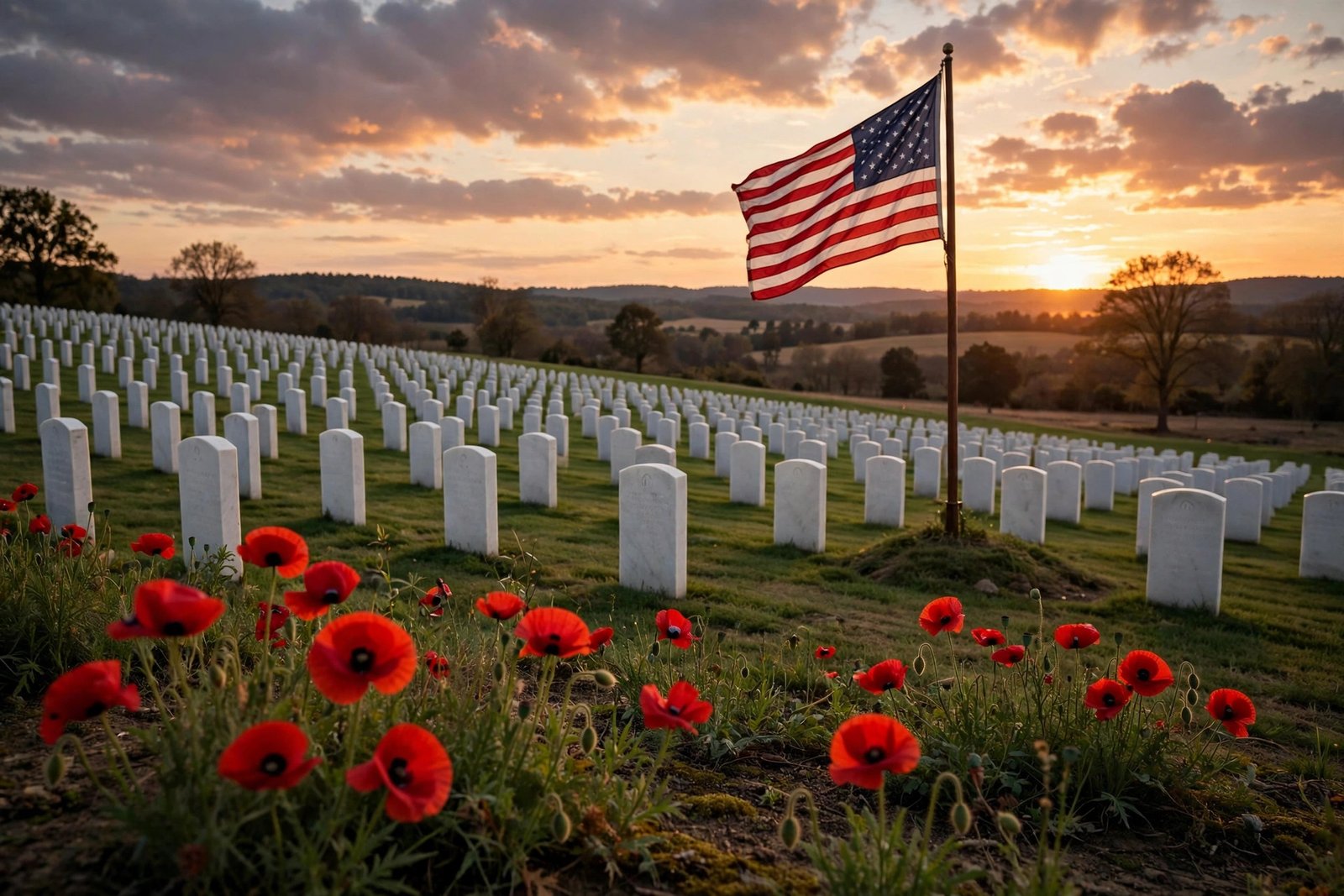
Every year on November 11, flags fly, parades march, and Americans pause to thank the men and women who served in the United States Armed Forces. But why this date, of all dates? The Veterans Day history begins not with a celebration, but with a silence. At the eleventh hour of the eleventh day of the eleventh month in 1918, the guns of World War I fell silent, and a world exhausted by four years of war finally stopped to breathe.
That moment was so powerful that it became a holiday. First it honoured only the veterans of World War I, under the name Armistice Day. Then, after two more great wars sent new generations into service, it grew into something bigger: a day for every American veteran, whatever war they served in, whatever branch they wore, and whether they served in combat or not. The Veterans Day history is the story of how one morning’s silence grew into a national thank-you.
In this article, we trace that journey from the battlefields of France to the parades of small-town America, from a 1919 proclamation to a 1954 renaming, and from a brief move to October and back again. Along the way, you will learn how Veterans Day differs from Memorial Day, how other countries mark the same date, and how you can honour veterans in a way that truly means something.
Veterans Day History: The Armistice That Ended World War I
The Veterans Day history starts on the Western Front in the autumn of 1918. World War I, known at the time as the Great War, had raged since 1914, killing millions and reshaping the map of Europe. By November 1918, Germany’s armies were in retreat, its allies had collapsed, and its government was suing for peace. The fighting could not go on, but a formal peace treaty would take months to negotiate. What the world needed first was a halt: an armistice, an agreement to stop fighting while peace was worked out.
That armistice was signed in a railway carriage in the Forest of Compiegne in France in the early hours of November 11, 1918, and it came into effect at 11 a.m. Paris time that same morning. The timing gave history one of its most memorable phrases: the eleventh hour of the eleventh day of the eleventh month. Soldiers on both sides, many of whom had spent years in trenches, heard the guns stop and struggled to believe it. Church bells rang, crowds gathered in streets from London to New York, and a war that had seemed endless was suddenly over, at least in its fighting.
The armistice did not formally end the war in law. That came later, with the Treaty of Versailles in 1919 and other peace settlements. But for ordinary people, November 11, 1918 was the day the killing stopped, and that is what made the date sacred. It was a moment of relief, grief, and hope all at once: relief that the fighting had ended, grief for the millions who would never come home, and hope that such a war would never happen again. People called it the war to end all wars, a phrase that later history would sadly prove too optimistic, but that captures how desperately the world wanted peace in that moment.
From Armistice Day to a National Holiday
Exactly one year later, on November 11, 1919, President Woodrow Wilson proclaimed the first Armistice Day. He called on Americans to mark the day with parades, public meetings, and a brief suspension of business at 11 a.m., so that the whole nation could pause together at the hour the armistice had taken effect. That first observance set the pattern that still shapes the holiday today: public ceremony, community gathering, and a shared moment of remembrance at eleven o’clock.
Congress followed with a resolution in 1926 urging annual observance of November 11, and in 1938 it went further, making Armistice Day a legal federal holiday. The 1938 act dedicated the day to the cause of world peace and to honouring the veterans of World War I. At that point, the holiday still belonged to one war and one generation. Nobody yet knew how much bigger its job would become.
Those early Armistice Day ceremonies often had a solemn, even mournful tone. Many communities held two minutes of silence at 11 a.m., a custom that began in Britain and spread widely. Veterans marched, wreaths were laid, and the names of local men who had died were read aloud. The day was about remembering sacrifice as much as celebrating survival, and that balance between gratitude and grief remains at the heart of the holiday today.
Veterans Day History: How Armistice Day Became Veterans Day
The Veterans Day history took its decisive turn after World War II and the Korean War. By the early 1950s, millions of Americans had served in wars that had nothing to do with 1918, and many felt that a holiday honouring only World War I veterans no longer fit the country. The push for change came from veterans themselves and from their communities, and it has a wonderfully American origin story in small towns.
In Birmingham, Alabama, World War II veteran Raymond Weeks organised a celebration on November 11, 1947, honouring veterans of all wars, not just World War I. Around the same time, in Emporia, Kansas, a cobbler named Alvin J. King, who had lost a nephew in World War II, pressed his town to honour all veterans on November 11, 1953. Emporia’s congressman, Edward H. Rees of Kansas, took up the cause in Congress, introducing a bill to change the holiday’s name and purpose.
Congress agreed. President Dwight D. Eisenhower signed the change into law on May 26, 1954, and on June 1, 1954, Congress formally replaced the word Armistice with Veterans in the 1938 holiday act. Armistice Day became Veterans Day, and its purpose widened to honour American veterans of all wars. Eisenhower, himself a former general who had commanded Allied forces in Europe during World War II, issued the first Veterans Day proclamation that October, calling on Americans to honour the service of all veterans. The holiday had grown up: it no longer marked just one armistice, but a whole nation’s debt to everyone who had served.
The Brief Move to October, and the Return to November 11
Most people do not know that Veterans Day once left November altogether. In 1968, Congress passed the Uniform Monday Holiday Act, designed to give federal workers more three-day weekends by moving several holidays to Mondays. Under that law, Veterans Day was moved to the fourth Monday in October, and it was observed there from 1971 through 1977.
The change was deeply unpopular with veterans’ groups and many states. The whole point of the date was its link to November 11, 1918, and moving it to a random Monday in October stripped away that meaning. Many states simply kept observing November 11 anyway, and pressure built to restore the original date. Congress listened. A law signed by President Gerald R. Ford in 1975 returned Veterans Day to November 11, effective from 1978, and it has stayed there ever since. When November 11 falls on a weekend, federal offices observe it on the nearest weekday, but the holiday itself never moves from its historic date.
That episode is a useful reminder of why dates matter. Holidays are not just days off work. They are anchors for memory, and Veterans Day only works because November 11 means something specific. The return to November 11 was a victory for history over convenience, and it is why the eleventh hour still echoes in ceremonies across America every year.
Veterans Day Versus Memorial Day: An Important Difference
One of the most common mix-ups in American civic life is confusing Veterans Day with Memorial Day, and getting it right matters, because the two holidays honour different groups. Here is the simple distinction:
- Veterans Day, on November 11, honours all American veterans, living and dead, who served in the Armed Forces in wartime or peacetime.
- Memorial Day, on the last Monday in May, honours specifically those who died while serving in the military.
- In short: thank a living veteran on Veterans Day, and remember the fallen on Memorial Day.
That is why Veterans Day has a more celebratory tone than Memorial Day. Parades, free meals for veterans, school assemblies, and public thank-yous are all part of the day. It is a day to say, while veterans can still hear it, that their service mattered. Memorial Day, by contrast, is more solemn, centred on cemeteries, flags on graves, and the names of those who never came home. Both days matter deeply, and confusing them is understandable, but keeping them straight is a small act of respect in itself.
Veterans Day also differs from Armed Forces Day, which is observed in May and honours those currently serving on active duty. Together, the three days cover the full arc of military service: those serving now, those who have served, and those who gave their lives. If you remember that trio, you will never mix them up again.
How America and the World Mark November 11 Today
In the United States, the national ceremony takes place at Arlington National Cemetery, where a wreath is laid at the Tomb of the Unknown Soldier. The Tomb honours unidentified American service members, and the wreath-laying is one of the most moving rituals in American public life. Around the country, towns and cities hold parades, schools invite veterans to speak, and many restaurants and businesses offer free meals or discounts to veterans as a gesture of thanks.
Other countries mark the same date under different names. In Britain and the Commonwealth, November 11 is Remembrance Day, when people wear red poppies and observe two minutes of silence at 11 a.m. The poppy comes from the famous wartime poem In Flanders Fields, by Canadian physician John McCrae, which describes poppies growing between the crosses on the battlefields of Flanders. In France and Belgium, November 11 remains Armistice Day, a national holiday remembering the end of World War I. The shared date is a quiet reminder that the armistice belonged to the whole world, not just one nation.
November is a month thick with history in America, and Veterans Day sits at its centre. If you enjoy tracing how single days changed the world, you might also like our stories on how the Berlin Wall fell on November 9, 1989, and the remarkable facts behind the Statue of Liberty’s 140th anniversary. Each one shows how a date on the calendar can carry the weight of a whole era.
How to Honour Veterans in a Way That Matters
- Say thank you in person. A sincere, specific thank-you to a veteran you know means far more than a generic social media post.
- Listen to their story, if they want to share it. Some veterans love to talk about their service, and some do not. Let them lead, and listen without pressing.
- Attend a local parade or ceremony. Your presence shows that the community remembers, and it means a great deal to the veterans marching.
- Support veteran charities and organisations year-round, not just on November 11. Housing, health care, jobs, and mental health support matter every month.
- Fly the flag correctly, and observe a moment of silence at 11 a.m. if you can. Small rituals, shared by millions, are what turn a date into a tradition.
- Teach children why the day exists. Explain the armistice, the eleventh hour, and the difference between Veterans Day and Memorial Day.
One more thing matters, and it is easy to overlook. Veterans are not only the soldiers of famous wars. They are also the peacetime service members who stood watch, the reservists who balanced civilian jobs with duty, the medics, engineers, cooks, pilots, sailors, and support staff whose work made everything else possible. Veterans Day honours all of them, without exception, and that breadth is exactly what the 1954 renaming was meant to achieve.
Takeaways Worth Remembering
- Veterans Day falls on November 11 because the World War I armistice took effect at 11 a.m. on November 11, 1918.
- It began as Armistice Day in 1919, became a federal holiday in 1938, and was renamed Veterans Day in 1954 to honour veterans of all wars.
- Raymond Weeks of Birmingham and the town of Emporia, Kansas, helped drive the campaign to widen the holiday.
- A 1968 law moved it to October from 1971 to 1977, but public pressure returned it to November 11 from 1978 onward.
- Veterans Day honours all living and deceased veterans, while Memorial Day honours those who died in service.
- The same date is marked as Remembrance Day in the Commonwealth and Armistice Day in France and Belgium.
Conclusion
The Veterans Day history is, at its heart, a story about a promise kept and then widened. A nation promised in 1919 never to forget the moment the guns stopped, and in 1954 it widened that promise to every veteran who ever wore the uniform. The date never changed, because the date is the memory. The eleventh hour of the eleventh day of the eleventh month still rings through every parade, every wreath, and every quiet moment of silence.
This November 11, take a moment at 11 a.m. to remember where the day came from. Think of a railway carriage in France in 1918, of a weary world hearing silence for the first time in years, and of the generations of Americans who have served since. Then, if you meet a veteran, say the two words the whole holiday exists to deliver: thank you. For more on the origins of the holiday, see the National Archives account of the origins of Veterans Day, the Military.com history of Veterans Day, and the USO explainer on why Veterans Day is on November 11. You can also explore our stories on how the Berlin Wall fell on November 9, 1989 and the Statue of Liberty’s 140th anniversary facts.
Frequently Asked Questions
Why is Veterans Day on November 11?
Veterans Day is on November 11 because the armistice that ended the major fighting of World War I took effect at 11 a.m. on November 11, 1918. The date was first observed as Armistice Day in 1919 and has kept its link to that moment ever since, even after the holiday was renamed and briefly moved.
What was Veterans Day originally called?
Veterans Day was originally called Armistice Day. It honoured veterans of World War I and marked the anniversary of the 1918 armistice. After World War II and the Korean War, Congress renamed it Veterans Day in 1954 so that it would honour American veterans of all wars.
Who does Veterans Day honour?
Veterans Day honours all American military veterans, living and deceased, who served in the United States Armed Forces, whether in wartime or peacetime. It differs from Memorial Day, which honours specifically those who died while serving, and from Armed Forces Day, which honours those currently on active duty.
Why was Veterans Day moved to October, and why did it move back?
Congress moved Veterans Day to the fourth Monday in October under the Uniform Monday Holiday Act of 1968, to create more three-day weekends for federal workers. The change was unpopular because it broke the link to November 11, 1918, so Congress passed a law in 1975 returning the holiday to November 11, effective from 1978.
How do other countries mark November 11?
Many countries mark November 11 in connection with the end of World War I. Britain and Commonwealth countries observe Remembrance Day, with poppies and two minutes of silence at 11 a.m., while France and Belgium observe Armistice Day as a national holiday. The shared date reflects a shared history: the armistice ended fighting across the Western Front.