
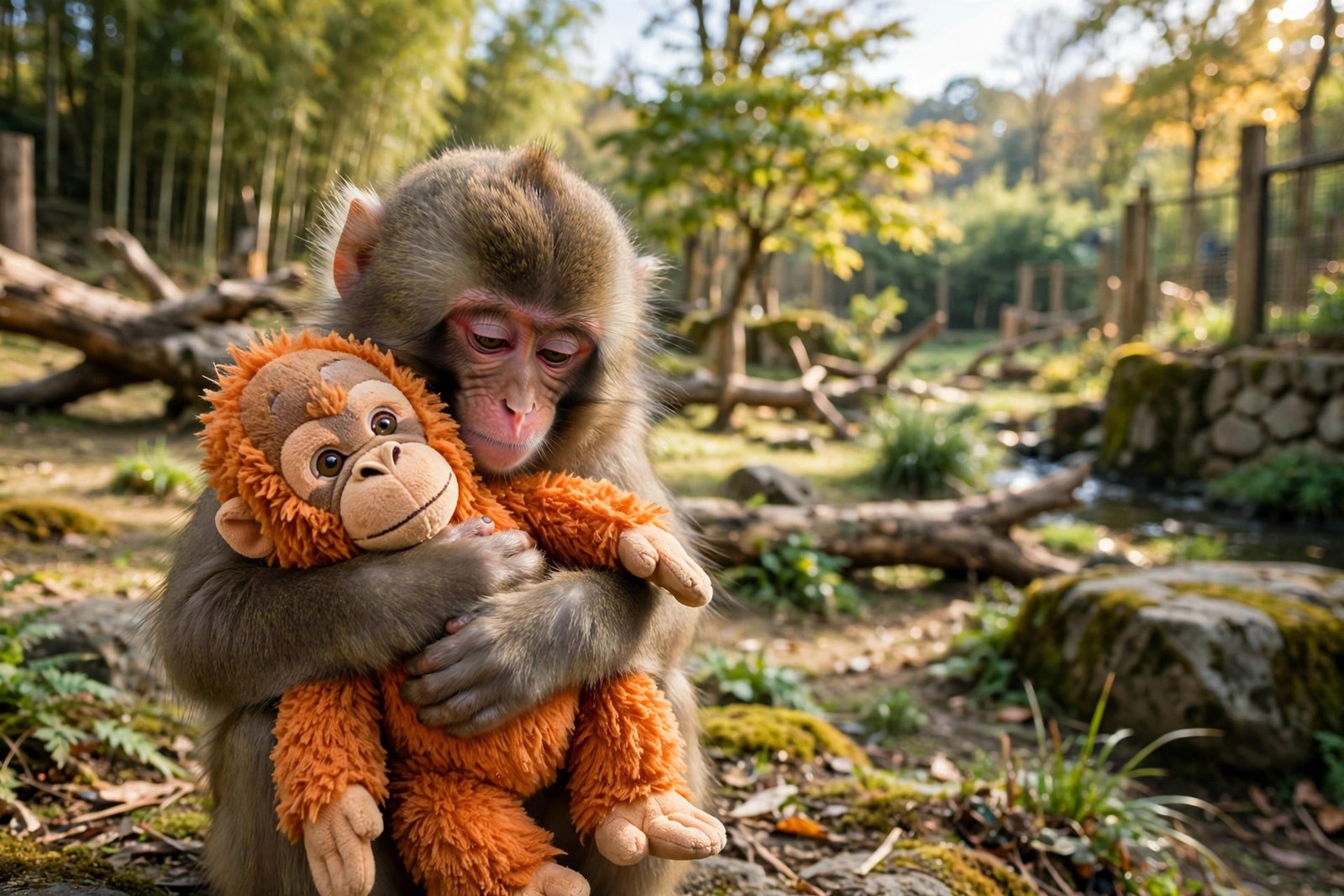
Every so often, the internet finds a story so tender that millions of strangers stop scrolling at the same time. The Punch macaque is one of those stories. Punch is a young Japanese macaque at the Ichikawa City Zoo near Tokyo, and he has become a global sensation for the simplest, sweetest reason: he carries around an IKEA orangutan plushie everywhere he goes, clutching it for emotional support like a toddler with a favorite stuffed animal.
Clips of the little monkey and his plush companion have racked up tens of millions of views across TikTok and Instagram, earning a feature in the TikTok Weekly Digest (Oct 12-18). According to Euronews, some of the clips passed 30 million views back in February 2026 — and the love has not slowed down since. The TODAY Show even posted about him, introducing Punch to an American television audience that promptly fell head over heels.
But what makes Punch’s story truly unforgettable is not just the cuteness. It is the backstory. Punch was abandoned by his mother at birth and has reportedly been bullied by the other monkeys at the zoo. That plushie is not a toy to him — it is comfort, security, and companionship in a world that has not always been kind. And the internet, collectively, has decided to protect this little guy with its whole heart.
Who Is the Punch Macaque?
Punch is a young Japanese macaque — the species also known as the snow monkey — living at the Ichikawa City Zoo, located near Tokyo, Japan. Japanese macaques are famous worldwide for their intelligence, their expressive faces, and their habit of soaking in hot springs during snowy winters. But Punch is famous for something far more personal: his bond with a soft, orange IKEA orangutan plushie that rarely leaves his side.
In the viral clips, the young macaque can be seen carrying the plushie in his arms, hugging it close as he moves around his enclosure. Sometimes he drags it along; sometimes he cradles it against his chest. The image is instantly, universally moving: a small, vulnerable animal holding onto the one thing that makes him feel safe.
Japanese macaques are highly social animals that form deep bonds within their troops. For a young monkey, physical closeness — grooming, huddling, clinging — is not a luxury; it is a developmental need. Punch’s story shows what happens when that need goes unmet, and how an animal can improvise comfort in the most touching way imaginable.
How the Punch Macaque Conquered TikTok and Instagram
Punch’s clips did not go viral by accident — they hit every emotional trigger that makes animal content explode online:
- Instant visual storytelling. You do not need to speak Japanese or know anything about macaques to understand the image of a baby monkey hugging a stuffed animal. The story tells itself in a single frame.
- A sympathetic backstory. Learning that Punch was abandoned by his mother at birth and bullied by other monkeys transforms a cute clip into an emotional narrative. Viewers are not just watching — they are rooting for him.
- The plushie factor. Humans are hardwired to find comfort objects endearing. A monkey with a security blanket mirrors our own childhoods, creating an instant cross-species connection.
- Shareable hope. In a feed full of outrage and anxiety, a story about a vulnerable little animal finding comfort is something people are proud to share. It is digital kindness in video form.
The numbers tell the story: tens of millions of views across TikTok and Instagram, with Euronews reporting that some clips passed 30 million views in February 2026. When the TODAY Show posted about Punch, it cemented his status as a genuine cross-platform, cross-cultural phenomenon — the kind of viral fame that transcends any single app.
Why Punch Needs His Plushie: The Science of Comfort
To understand why Punch clings to his IKEA orangutan plushie, it helps to know a bit about primate psychology. Young primates — monkeys, apes, and humans alike — depend on physical comfort for healthy emotional development. When a baby monkey is separated from its mother, it will seek out soft, warm substitutes. This is not sentimentality; it is biology.
Punch was abandoned by his mother at birth, which means he missed out on the constant physical contact that infant macaques normally receive. On top of that, he has reportedly been bullied by the other monkeys in his group, making social life at the zoo stressful rather than supportive. In that context, the plushie is doing real emotional work: it is a stable, predictable source of comfort in an unpredictable social world.
Animal behaviorists have long observed that orphaned or rejected young primates form attachments to blankets, stuffed toys, and other soft objects. These comfort objects can reduce stress behaviors and provide a sense of security. Punch’s plushie is a textbook example — and a deeply moving one — of an animal meeting its own emotional needs with whatever is available.
The IKEA Orangutan: An Unlikely Celebrity
Let us take a moment to appreciate the other star of this story: a mass-produced IKEA orangutan plushie. Somewhere, a product designer created a soft orange ape as a children’s toy, never imagining it would one day become the emotional support companion of a viral monkey in Japan.
The choice of plushie is almost poetically perfect. An orangutan is a fellow primate — close enough in shape for a little macaque to hug like a friend. The little macaque carrying a miniature ape around is the kind of detail that makes the story feel scripted by a particularly sentimental screenwriter, except it is completely real.
The plushie’s newfound fame is a reminder of how viral moments can elevate the most ordinary objects. That IKEA orangutan is now arguably the most famous stuffed animal on the internet — a symbol of comfort recognized by tens of millions of people who have never set foot in Japan.
From Tokyo to the TODAY Show: Punch Goes Global
Punch’s journey from a zoo near Tokyo to global stardom follows the classic modern viral pipeline. It starts with local visitors filming something adorable, spreads through Japanese social media, gets picked up by international animal accounts, and then explodes across TikTok and Instagram’s global feeds.
Euronews covering the story — and reporting that some clips passed 30 million views in February 2026 — gave Punch mainstream news credibility beyond social media. Then the TODAY Show posted about him, bringing Punch to one of America’s biggest morning television audiences. That kind of cross-media journey, from phone footage to international news to network TV, is the hallmark of a truly universal story.
What is remarkable is how little the story needed translation. No subtitles required, no cultural context needed. A baby monkey hugging a stuffed animal is a complete emotional sentence in every language on Earth.
What Punch’s Story Teaches Us About Empathy
Punch’s phenomenon is about more than cute videos. It reveals something genuine about human nature:
- We recognize vulnerability. Millions of people saw a small monkey who had been abandoned and bullied, and their immediate response was protectiveness. Empathy crossed the species barrier without effort.
- We crave wholesome content. The scale of Punch’s virality — tens of millions of views — shows how hungry audiences are for stories that make them feel something good.
- We project and connect. Anyone who ever had a childhood security blanket sees themselves in Punch. That identification is what turns viewers into devoted fans.
- Kindness scales. A single zoo visitor’s video, shared with love, reached more people than most advertising campaigns ever will. Goodness, it turns out, is extremely shareable.
In that sense, Punch’s story belongs in the same beloved category as other viral animal tales of resilience — like Luna the dog’s incredible 34-day survival in Yellowstone or the baby gorilla rescued from traffickers and given a second chance. Each of these stories reminds us that animals endure extraordinary hardship — and that compassion, whether from a plushie or a person, can change everything.
The Serious Side: Bullying in Primate Groups
As heartwarming as Punch’s clips are, his backstory carries a sobering note: he was abandoned by his mother at birth and has been bullied by other monkeys. Primate social groups have strict hierarchies, and young or vulnerable individuals can end up on the receiving end of aggression.
This is where the role of zoos becomes genuinely important. Good zoos do not just display animals; they manage complex social dynamics, monitor vulnerable individuals, and intervene when welfare is at stake. Punch’s plushie may be adorable, but it is also a signal — a small, resilient animal doing his best to cope, and a reminder of why attentive animal care matters.
The global outpouring of love for Punch also puts gentle pressure on institutions to keep prioritizing welfare. When tens of millions of people are emotionally invested in one small monkey’s happiness, that monkey’s wellbeing becomes a matter of public interest. That is a powerful, positive force.
Key Takeaways From Punch’s Viral Story
- Comfort is a universal need. From human toddlers to young macaques, every young creature needs something soft to hold onto. Punch’s plushie is biology in action.
- Backstories transform content. A cute clip becomes a movement when viewers learn the animal behind it has overcome hardship. Punch’s abandonment and bullying turned viewers into advocates.
- Wholesome beats outrage. Tens of millions of views prove that audiences are starving for content that restores their faith in the world.
- One video can change everything. A zoo visitor’s casual footage traveled from Tokyo to the TODAY Show — never underestimate the power of capturing a genuine moment.
- Empathy is our shared language. No translation was needed for the world to understand a baby monkey hugging his plushie. Some stories are simply human — even when they are about monkeys.
Conclusion: The Little Monkey Who Hugged the World
The Punch macaque did not set out to become famous. He was just a young monkey, dealt a difficult hand — abandoned at birth, bullied by his peers — holding onto the one soft thing in his world. But in doing so, he gave tens of millions of strangers a moment of pure tenderness, and reminded every one of us what comfort, resilience, and love look like in their simplest form.
Somewhere near Tokyo, a little monkey is probably hugging his IKEA orangutan right now, completely unaware that he has become one of the most beloved animals on the internet. And honestly? That might be the sweetest part of the whole story.
For more incredible real-life animal encounters, dive into the story of the fin whale, the second largest animal on Earth, photographed feeding off the coast of Wales — another reminder of how astonishing the natural world can be.
Frequently Asked Questions
Who is Punch the macaque?
Punch is a young Japanese macaque living at the Ichikawa City Zoo near Tokyo, Japan. He went viral on TikTok and Instagram for carrying around an IKEA orangutan plushie for emotional support, with clips racking up tens of millions of views.
Why does the Punch macaque carry a plushie?
Punch was abandoned by his mother at birth and has reportedly been bullied by other monkeys at the zoo. Young primates need physical comfort for healthy emotional development, and the plushie serves as a soft, stable source of security — a well-documented behavior in orphaned or rejected young primates.
How many views did Punch’s videos get?
Clips of Punch have racked up tens of millions of views across TikTok and Instagram. Euronews reported that some clips passed 30 million views in February 2026, and the TODAY Show also posted about him, expanding his fame to mainstream television audiences.
What kind of plushie does Punch carry?
Punch carries an IKEA orangutan plushie — a soft, orange stuffed ape sold as a children’s toy. The fellow-primate shape makes it a perfect huggable companion for the young macaque, and the plushie has become nearly as famous as Punch himself.
Where can I see Punch the macaque?
Punch lives at the Ichikawa City Zoo near Tokyo, Japan. His viral clips continue to circulate on TikTok and Instagram, where new audiences discover his story every day. The story was also covered by outlets including Euronews and the TODAY Show.