
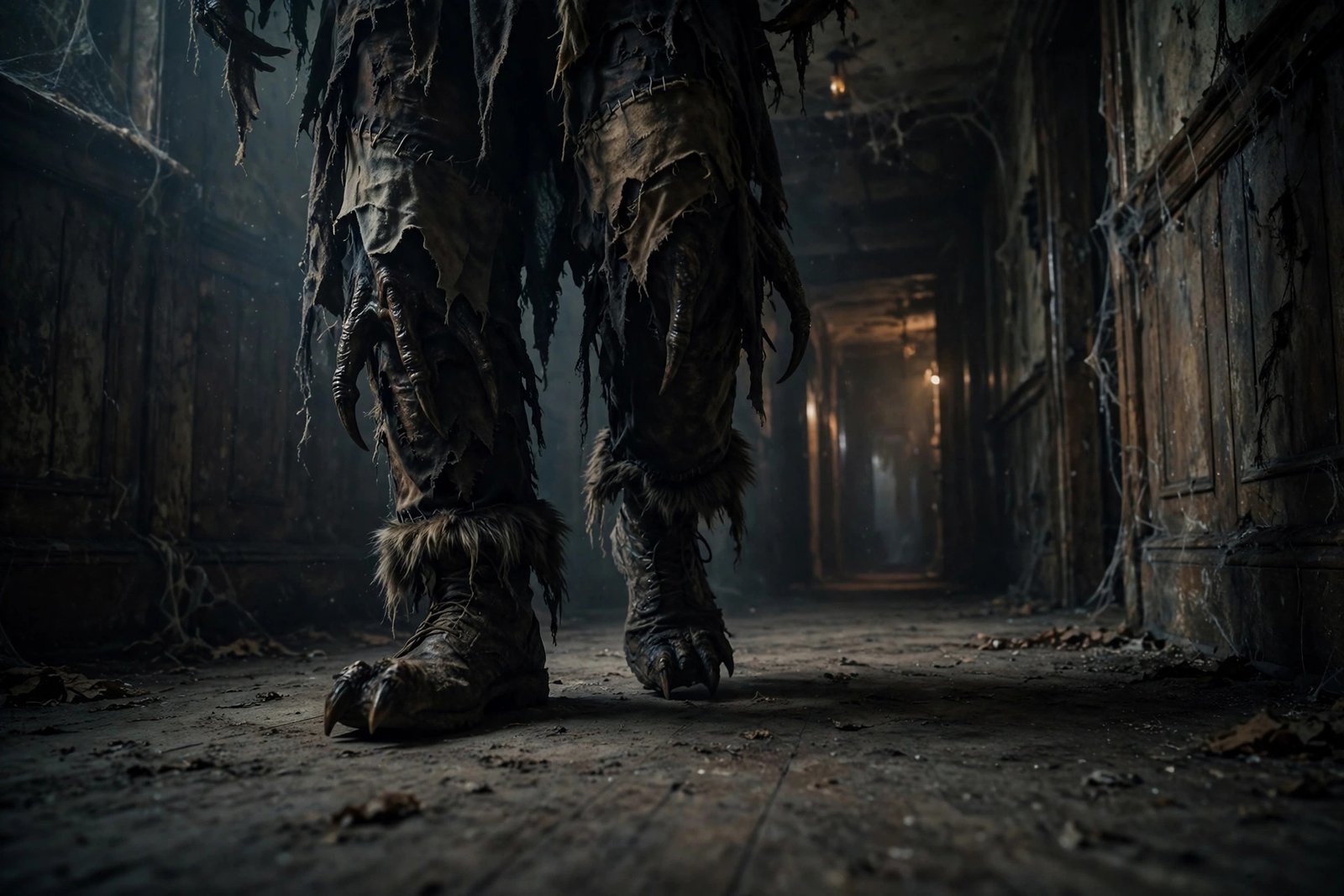
You see the shoes first. Just the shoes, moving slowly across the floor, step by deliberate step, while a strange, chanting song builds in the background. You have no idea who is coming toward the camera, what they are wearing, or what is about to fill the screen. Then the camera pulls back, the vocal shifts, and suddenly there is a full Halloween costume staring right at you. That slow, delicious moment of suspense is the heart of the Ramalama costume walk, the TikTok Halloween trend that has returned for spooky season in 2026.
It is a simple idea, and that is exactly why it works. There is no dialogue, no complicated editing, and no need to be a confident performer. The walk does the talking, the song does the mood-setting, and the costume does the payoff. All you need is a phone, a hallway, a costume you are proud of, and a little patience. In this guide, we will break down what the trend is, why it keeps coming back every October, and how to film your own version safely at home.
What Is the Ramalama Costume Walk?
The Ramalama costume walk is a costume-reveal format on TikTok. The camera starts low, close to the floor, so viewers can only see the creator’s shoes and lower legs. The person walks slowly toward the lens, in time with the music, while the rest of the costume stays hidden. When the vocal shifts in the song, the camera pulls back or tilts up, and the full costume is revealed in one dramatic moment.
The sound behind it is Róisín Murphy’s 2005 song “Ramalama (Bang Bang),” from her first solo album, Ruby Blue. It is not a Halloween song at all. It is a quirky, rhythmic art-pop track built around a chanting vocal, and that oddness is part of its charm. On TikTok, the song’s slow build feels like the opening of a horror movie: something is approaching, you cannot quite see it yet, and you cannot look away.
Trend trackers counted roughly 430,700 videos using the sound, with a big batch of new costume clips landing on October 3 and 4, 2026, according to trend roundups covering the October 2026 wave. That surge makes sense. Early October is when people start showing off costumes, trying on ideas, and looking for inspiration, and this format lets a costume speak for itself. You can read a breakdown of the format in this Ramalama costume walk trend roundup, which describes the shoes-first opening and the beat-drop reveal.
Why This Trend Works So Well
Most costume videos show you everything at once. You see the outfit, you admire it for a second, and you scroll on. This format flips that order. It makes you wait. Psychologists and filmmakers have known for a long time that anticipation is often more powerful than the reveal itself, and this trend is built entirely on anticipation. Every slow step raises a question: who is this, and what are they dressed as?
The format also removes the pressure to perform. You do not need to dance, lip-sync, or deliver a joke. You just need to walk, slowly and steadily, and let the camera do the rest. That makes it welcoming for shy creators, for families filming together, and for anyone whose costume is the real star of the show. A great costume with a quiet walk will beat a mediocre costume with a loud performance almost every time.
There is also a practical reason it spreads so easily. It is easy to copy, and easy to make your own. The recipe is always the same — low camera, slow walk, big reveal — but the costume changes everything. A witch, a vampire, a movie villain, a creepy doll, a skeleton, or a completely original character all feel different inside the same format. Viewers keep watching because the format is familiar but the surprise is new.
The Song Behind the Scare
Róisín Murphy, formerly one half of the duo Moloko, released “Ramalama (Bang Bang)” in 2005. The track is playful and strange, with a vocal that chants and whispers rather than singing a straightforward chorus. That strangeness is why it fits Halloween so well even though it was never written for the holiday. It sounds like something is creeping up behind you, which is precisely the feeling the walk is trying to create.
The song has lived several lives online. It has been used for mirror challenges, outfit transitions, and dance clips over the years, but the slow Halloween walk is the version that has stuck as a seasonal tradition. Each October, creators rediscover it, dress up, and walk toward the camera again. A trend that returns year after year is rare on TikTok, where most sounds burn out in weeks, and that staying power tells you something about how satisfying the format is.
If you are filming, use the official sound in the app rather than uploading your own audio. Search for “Ramalama (Bang Bang)” by Róisín Murphy in TikTok’s sound library, listen to a few versions, and pick the one other costume creators are using. Sounds can have several uploads with slightly different timings, and you want the version where the vocal shift lands where you expect it to.
How to Film It Safely at Home
You do not need a haunted house, an abandoned building, or a dramatic location. In fact, you should avoid those. The safest and most effective place to film is somewhere you control: your own hallway, garage, living room, or backyard. A long hallway is ideal because it gives you distance to walk and lets the camera stay low without wobbling. A garage works beautifully too, especially with dim lighting and a single light source behind the camera.
- Clear the path first. Move shoes, cables, rugs that slide, and anything you could trip over, especially if your costume limits your vision.
- Prop your phone low and steady. A small tripod, a stack of books, or a phone propped against a wall all work. Test the angle before you put the costume on.
- Walk slowly and evenly. Count your steps in your head so you stay in time with the music, and keep your eyes on a fixed point just above the camera.
- Use a friend as camera operator if you can. They can pull back smoothly for the reveal, which looks far better than a sudden zoom.
- Keep props safe. If you carry a prop, choose foam, plastic, or cardboard versions, and never swing anything near the camera or another person.
- Light the reveal, not the walk. A dim hallway with a brighter light at the end makes the reveal pop and hides costume imperfections in the shadows.
Film the walk two or three times and pick the best take. The first attempt is usually too fast — almost everyone walks faster than they think they are walking when they are nervous. Slow down on purpose, and it will still look natural on camera. If your costume has a mask or heavy makeup, do a test walk in it first so you know how far you can see and how easily you can move.
Safety matters more than spookiness. Never film a fake stalking scene where strangers or neighbors might think something real is happening, and never trespass to get a moodier location. A hallway you own will always beat a location you should not be in, and your audience will not know the difference once the lighting and the costume are right.
Costume Ideas That Shine in This Format
The best costumes for this format are ones with a strong silhouette and a memorable detail that only lands when the full outfit is revealed. Think about what the camera will see first — your shoes — and what it will see last — your face, your headdress, or your biggest prop. The bigger the contrast between those two moments, the better the reveal.
- A classic witch with tall boots, a long coat, and a wide-brimmed hat: the boots tease, the hat pays off.
- A vampire in a high collar and cape: dark shoes first, then the cape and collar fill the frame.
- A creepy doll or ventriloquist dummy: small, careful steps make the reveal genuinely unsettling.
- A skeleton or grim reaper: glowing details or a hood read beautifully in dim light.
- A movie villain or horror icon: audiences love guessing from the shoes alone, so pick footwear that hints without giving it away.
- A group walk: friends in matching or themed costumes walking one after another turns a solo reveal into a whole cast entrance.
If you are on a budget, focus on the shoes and the top half of the costume. Those are the two things the camera lingers on. Thrifted boots, a dramatic coat from a charity shop, bold makeup, and one strong accessory will carry the whole video. You do not need a screen-accurate replica to make people stop scrolling; you need a clear character and a confident, slow walk.
Common Mistakes to Avoid
The most common mistake is rushing the walk. The song’s build needs time, and a hurried walk kills the suspense. Another is filming in a cluttered room where the background distracts from the costume. Clear the frame, keep the background simple, and let the costume be the only thing worth looking at. A plain wall or a dark hallway beats a busy living room every time.
Avoid over-editing. This trend works because it feels like one continuous, real moment. A hard cut in the middle, a flashy filter, or a wall of on-screen text can break the spell. Keep the edit minimal: trim the start and end, make sure the reveal lands on the vocal shift, and post it. If the reveal is slightly early or late, adjust the clip’s start point rather than adding effects to cover it.
Finally, do not forget the caption and hashtags. A short caption that invites guessing — something like asking viewers what they think the costume is before the reveal — encourages comments and replays. Keep hashtags relevant to Halloween, costumes, and TikTok trends rather than stuffing the caption with unrelated tags.
Takeaways: Your Ramalama Costume Walk Checklist
- Pick the official “Ramalama (Bang Bang)” sound and learn where the vocal shift falls.
- Film low, walk slowly, and save the full reveal for that shift.
- Use your own hallway or garage, clear the path, and keep props safe and lightweight.
- Choose a costume with a strong silhouette and a reveal-worthy detail.
- Film a few takes, pick the slowest and steadiest one, and keep editing minimal.
If you love easy Halloween formats like this one, you will also enjoy our look at the ghost filter prank taking over TikTok and the viral Mississippi Halloween display that stopped traffic. Both are proof that the simplest Halloween ideas are often the ones people remember.
This format endures because it understands something basic about Halloween: the scare is in the approach, not just the monster. A pair of shoes in the dark, a slow step, a song that sounds a little bit wrong, and then — all at once — the character you have been waiting to see. Film it safely, walk it slowly, and let your costume do the talking. Happy haunting, and may your reveal land exactly on the beat.
What is the Ramalama costume walk?
It is a TikTok Halloween trend where the camera starts low on a person’s shoes, the person walks slowly toward it to Róisín Murphy’s “Ramalama (Bang Bang),” and the full costume is revealed when the vocal shifts.
What song is used in the Ramalama costume walk?
The trend uses Róisín Murphy’s 2005 song “Ramalama (Bang Bang),” from her first solo album, Ruby Blue.
How many videos use the Ramalama sound?
Trend trackers counted roughly 430,700 videos using the sound, with a large batch of new costume clips appearing on October 3 and 4, 2026.
Where is the safest place to film a Ramalama costume walk?
Film at home in your own hallway or garage, with the path cleared and props made from safe, lightweight materials. Avoid abandoned buildings, private property, and anywhere strangers might mistake the scene for something real.
Do I need editing skills to make one?
No. The format works best as a simple, continuous shot: a low camera, a slow walk, and a reveal timed to the vocal shift, with only basic trimming at the start and end.