
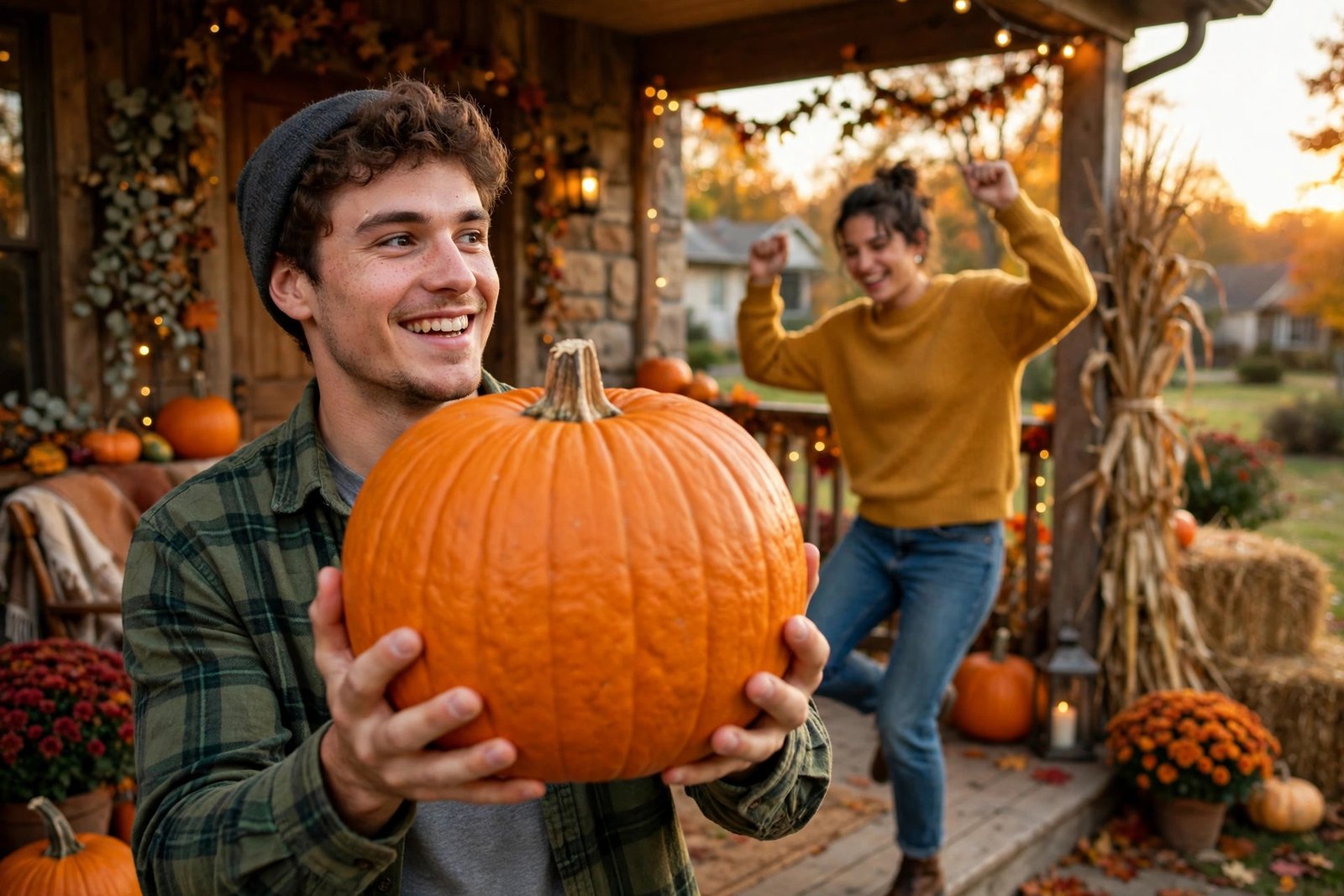
Imagine watching a video where a perfectly still pumpkin is dancing. Not a person in a pumpkin suit, not a cartoon, and not a trick of editing — just a round orange pumpkin, bobbing and spinning while a body moves beneath it. Your brain knows it cannot be real, but your eyes insist it is. That delightful confusion is the Pumpkin Head illusion, one of the easiest and funniest TikTok trends of Halloween 2026, and it needs exactly three things: a pumpkin, a friend, and a phone.
There is no editing, no costume to sew, and no special skill to learn. The whole joke is forced perspective, an old camera trick that makes something close to the lens look huge and something farther away look small. Hold a pumpkin close to the camera, line it up over a friend’s head, and suddenly your friend has a pumpkin for a head. Add a spooky remix, a silly dance, and you have a video people will watch twice just to figure out how you did it. Here is how it works, how to film it, and how to make your version stand out.
What Is the Pumpkin Head Illusion?
The Pumpkin Head illusion is a forced-perspective video format. One person holds a real pumpkin close to the camera lens, so it lines up exactly over the head of another person standing several steps further back. The person behind the pumpkin dances, spins, waves their arms, or flails around, while the pumpkin itself stays perfectly still. On screen, it looks like a pumpkin-headed creature is dancing, and the contrast between the motionless gourd and the wild body is what makes it funny.
The trending sound is a spooky remix built around the familiar “it’s just a bunch of hocus pocus” line, a nod to the beloved Halloween film Hocus Pocus. The line gives every version of the video the same recognizable starting point, so viewers know instantly what kind of clip they are watching, and then the dancing takes over. You can read how trend trackers describe the format in New Engen’s Halloween TikTok and Reels trends roundup, which lists the illusion among October 2026’s standout formats.
Part of the appeal is that the illusion is honest. There is no filter doing the work and no edit hiding the trick. If a viewer watches carefully, they can see exactly how it is done — and that is the point. The best versions do not hide the trick; they celebrate it, and many creators even reveal the setup at the end, showing the friend holding the pumpkin and the dancer stepping forward.
Why This Illusion Went Viral
Most viral formats ask a lot of the creator: learn a dance, buy a costume, master an edit, or perform for the camera. This one asks almost nothing. A pumpkin costs a few dollars, the filming takes a minute, and the result looks far more impressive than the effort behind it. That low barrier is a huge part of why it spreads. Anyone with a porch pumpkin and a willing friend can join in within minutes of seeing it.
It is also endlessly shareable because it works for almost any group. Friends, couples, families, and coworkers can all do it, and each combination changes the joke. A toddler dancing under a pumpkin reads differently from a grandparent doing it, and a couple doing it in matching outfits reads differently again. The format stays the same, but the people make it new every time.
Then there is the rewatch factor. The first watch is for the laugh. The second watch is to figure out the trick. Viewers pause, rewind, and show it to someone else, saying some version of “wait, look again.” That second watch is gold on TikTok, where replays signal that a video is worth showing to more people. A simple visual puzzle will often outperform a polished performance for exactly that reason.
How to Film It Step by Step
You need two people, one pumpkin, and a phone. One person is the holder, and the other is the dancer. The holder stands close to the camera and holds the pumpkin by the stem near the lens. The dancer stands several steps back. The holder’s job is to stay still; the dancer’s job is to be as gloriously silly as possible.
- Choose a round, medium-to-large pumpkin. It needs to be big enough to cover a head on camera, but light enough for the holder to keep steady with one hand.
- Pick your spot. A porch, a backyard, a pumpkin patch you have permission to film at, or a room with autumn decorations all work. Golden hour, the hour before sunset, makes the pumpkin glow beautifully.
- Set the phone on a tripod or prop it steady. The camera must not move once you start, or the illusion will wobble.
- Line up the shot. The holder raises the pumpkin beside the lens while the dancer steps backward or forward until the pumpkin completely covers their head on screen.
- Do a still test first. Take a photo before recording video. If the pumpkin covers the head cleanly with a little room to spare, you are ready.
- Hit record, start the sound, and let the dancer go wild. Spinning in circles reads best on camera, because the pumpkin stays fixed while the body turns.
- Film several short takes. The first one is usually a warm-up; the third one is usually the keeper.
The holder is the unsung hero of this trend. Holding a pumpkin perfectly still while someone dances behind you is harder than it looks, especially when you are trying not to laugh. If your arm gets tired, rest your elbow on a fence, a chair back, or a porch rail. A small, steady adjustment is fine; a big wobble breaks the illusion. If the pumpkin keeps drifting, switch hands or use a lighter pumpkin rather than fighting a heavy one.
The dancer, meanwhile, should think big. Small, polite movements disappear on a phone screen. Big arm waves, spins, jumps, and dramatic poses read clearly even in a short clip. Keep your movements side to side and up and down rather than walking toward the camera, because stepping forward will break the alignment and reveal your real head. Dance in place, spin in place, and let the pumpkin do the staying still.
Tips for a Cleaner, Funnier Illusion
The difference between a good version and a great version is usually in the details. First, match the pumpkin to the dancer’s outfit. A pumpkin held over a person in a witch costume, a skeleton outfit, or even just an orange-and-black outfit sells the character far better than a pumpkin over everyday clothes. You do not need a full costume — a hat, a cape, or a pair of gloves can be enough.
Second, think about the background. A plain wall works, but autumn leaves, string lights, or a decorated porch add atmosphere without distracting from the joke. Avoid busy backgrounds with people walking through them, because movement behind the dancer competes with the illusion. The pumpkin should be the only still thing in a moving scene, or the only orange thing in a muted scene — either way, it should command the eye.
Third, use the reveal. Some of the best versions end with the dancer stepping forward from behind the pumpkin, or the holder lowering the pumpkin to show the dancer’s laughing face. That ending rewards viewers who watched to the end and gives the video a satisfying button. If you prefer to keep the mystery, end on the biggest dance move instead and let the comments section argue about how you did it.
Creative Variations to Try
- The couple swap: two dancers take turns behind the pumpkin, or film a duet where each person gets a pumpkin-headed moment.
- The family lineup: film each family member dancing under the same pumpkin, then stitch the clips together for a whole pumpkin-headed household.
- The pet cameo: a dog or cat wandering through the background adds chaos, and audiences love it — just keep pets safe and never put a pumpkin on an animal.
- The costume upgrade: add a cape, a witch hat on the pumpkin itself, or a scarf below it to turn the illusion into a full character.
- The day-to-night version: film the same setup in daylight and again after dark with string lights, and let viewers pick a favorite.
- The blooper reel: include the takes where the pumpkin slipped or the dancer tripped — outtakes often get as much love as the polished version.
- The group dance: three or four dancers in a line, with one pumpkin passed along the line, creates a delightful relay effect.
You can also play with pumpkin size. A giant pumpkin over a small dancer looks absurd in the best way, while a smaller pumpkin over a tall dancer makes the proportions feel cartoonish. Try a few sizes if you have them, and pick the one that makes you laugh hardest when you watch it back. That is usually the right choice.
Safety, Etiquette, and Common Mistakes
Pumpkin patches are working farms, so if you film at one, ask before you start, buy the pumpkin you use, and stay out of fields that are roped off or marked private. A porch pumpkin works just as well and asks nothing of anyone. If you are filming in a public park or on a sidewalk, keep the path clear for other people and do not block walkways with tripods or props.
Never put a real pumpkin on a person’s head as a helmet unless it has been properly cut and cleaned for that purpose, and never put one on a pet. The illusion version is safer and funnier precisely because nobody is wearing anything. Also, keep the pumpkin intact if you can — an uncarved pumpkin lasts longer, is easier to hold, and can be carved or cooked afterward instead of wasted.
The most common filming mistake is letting the camera move. Even a small shift changes the alignment and exposes the dancer’s head at the edges. Lock the phone down, and if you are filming handheld, brace your arms against something solid. The second most common mistake is standing too close together: if the dancer is too near the camera, the pumpkin cannot cover their head without looking enormous, and if they are too far away, they look tiny. A few steps of distance, adjusted while watching the screen, is the sweet spot.
Takeaways: Your Pumpkin Head Illusion Checklist
- Pick a round, medium-to-large pumpkin that the holder can keep steady.
- Lock the camera down, line the pumpkin over the dancer’s head, and test with a photo first.
- Let the dancer go big — spins, waves, and jumps read best on a small screen.
- Film at golden hour or with warm lights for a glowing, autumn feel.
- End with a reveal, a big move, or a blooper, and keep the edit at zero.
If you enjoy quick Halloween trends like this, check out our pieces on the Things You Should Definitely Ghost trend and the fun facts for National Cat Day — both are the kind of light, shareable seasonal content that pairs perfectly with a pumpkin-headed dance break.
This trick proves that the best Halloween content does not need a budget, a crew, or a single second of editing. It needs a pumpkin, a friend willing to look ridiculous, and the patience to line up one perfect shot. The pumpkin stays still, the dancer goes wild, and everyone watching gets to enjoy a tiny, impossible moment. Grab a pumpkin, find your dancer, and give your friends something to watch twice.
What is this TikTok pumpkin trick?
It is a forced-perspective trick where one person holds a real pumpkin close to the camera lens so it covers the head of a friend standing further back, while the friend dances and spins behind it.
Do you need editing skills for it?
No. The trend needs zero editing. The effect comes entirely from camera placement and distance, not from filters or post-production.
What sound is used in the Pumpkin Head illusion trend?
The trending sound is a spooky remix built around the “it’s just a bunch of hocus pocus” line.
How many people do you need for the Pumpkin Head illusion?
You need at least two people: one to hold the pumpkin steady near the lens and one to dance behind it, plus a phone on a tripod or steady surface.
What is the best pumpkin for the Pumpkin Head illusion?
A round, medium-to-large pumpkin works best: big enough to cover a head on camera, but light enough for the holder to keep perfectly still.