
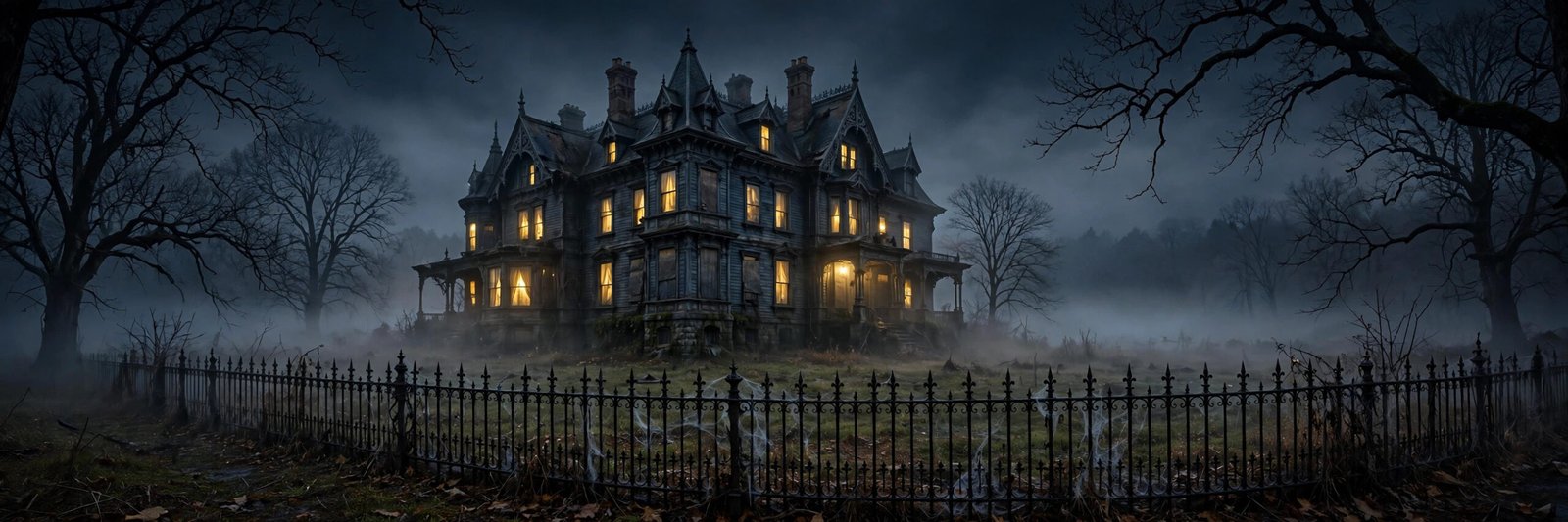
Some houses are famous for who lived in them. Others are famous for what people say never left. The most haunted houses in America sit at the strange intersection of real history and ghostly legend, and every year thousands of curious visitors walk through their doors hoping to feel a chill, hear a footstep, or simply stand in a room where something extraordinary supposedly happened. But what is documented history, and what is story? The answer is usually a fascinating mix of both.
From a sprawling California mansion built with staircases that lead nowhere, to a quiet Long Island home tied to a real-life tragedy, these houses have become landmarks of American folklore. Their stories have inspired books, movies, television shows, and endless campfire retellings. Whether you believe in ghosts or not, these famously haunted houses are worth knowing about — because the true stories behind them are often stranger than the legends.
The Winchester Mystery House: A Mansion Built on Legend
In San Jose, California, stands one of the most visited of the most haunted houses in America: the Winchester Mystery House. The sprawling Victorian mansion is famous for its architectural oddities — doors that open onto walls, staircases that climb to ceilings, and windows set into floors. According to popular legend, the house was built by Sarah Winchester, the widow of William Wirt Winchester of the Winchester rifle fortune, who kept construction going around the clock for nearly four decades to appease the spirits of people killed by Winchester rifles.
The documented history is impressive on its own. Sarah Winchester, a wealthy widow, bought an unfinished farmhouse in San Jose in the 1880s and expanded it into an enormous mansion with, by most accounts, around 160 rooms. Construction did continue for many years, and the house grew in a famously haphazard way, with additions piled onto additions. The result is a maze-like home full of strange features that genuinely exist and can be seen on tours today.
Where history ends and legend begins is harder to pin down. The popular story says a medium told Sarah Winchester that she was haunted by the victims of Winchester rifles and must build continuously to escape them. Historians have questioned how much of that tale was invented or exaggerated later, partly by promoters of the house as a tourist attraction. What is certain is that the Winchester Mystery House is a real architectural marvel, and its strange layout is enough to make any visitor feel disoriented. Reported ghost sightings there — footsteps, cold spots, the sound of workmen — are presented by the house itself as legend and visitor lore, not verified fact. You can read more about the house’s history on its official website and in this overview of the Winchester Mystery House.
The Amityville House: A Real Tragedy, A Disputed Haunting
Few addresses in America are as instantly recognizable as 112 Ocean Avenue in Amityville, New York. The Amityville house became famous after a horrific real crime: in November 1974, Ronald DeFeo Jr. murdered six members of his family inside the home. He was later convicted of the murders. That part of the story is documented fact, and it is grim enough on its own.
The haunting legend began about a year later, when George and Kathy Lutz moved into the house with their children and, according to their account, fled after just 28 days, driven out by terrifying supernatural events — slime oozing from walls, swarms of flies in winter, and a demonic presence. Their story became the bestselling book The Amityville Horror and a hit film franchise. Over the years, however, the Lutzes’ claims have been widely disputed. Lawyers connected to the case later suggested the story was embellished, and skeptics have pointed out inconsistencies. The house itself has had several owners since, none of whom have reported anything like the Lutz experience.
So is Amityville one of the most haunted houses in America, or one of the most famous stories ever told about a house? For visitors, the distinction hardly matters — the home remains a pilgrimage site for horror fans. But it is a useful reminder of how a real tragedy can be wrapped in legend until the two are hard to separate. The facts of the 1974 murders are a matter of public record, while the haunting claims remain, in the careful language of the house’s own history, disputed. For a fuller account of both sides, see the Amityville horror overview.
The Lizzie Borden House: Fall River’s Most Famous Address
In Fall River, Massachusetts, the Lizzie Borden house is now a bed-and-breakfast and museum — and yes, guests can sleep in the very rooms where the story unfolded. In August 1892, Andrew Borden and his wife Abby were found murdered in the home, killed with an axe. Their daughter Lizzie Borden was tried for the murders and acquitted in 1893, in one of the most famous trials in American history. The case was never officially solved, and the mystery has fueled books, plays, and a famous skipping-rope rhyme ever since.
Unlike some haunted houses, the Lizzie Borden house does not need invented ghosts to be chilling. The documented history — a brutal double murder in a respectable middle-class home, a sensational trial, and an acquittal that left the public guessing — is genuinely unsettling. Visitors today tour the house, see period furnishings, and hear the story of the Borden family and the trial. Some guests report strange experiences, and the house leans into its spooky reputation with ghost tours, but the real draw is the unsolved mystery itself.
The Lizzie Borden story also shows why true crime and ghost lore so often travel together. When a violent death goes unexplained, people fill the gap with stories — and over more than a century, those stories harden into legend. The house remains one of America’s most famous haunted homes in popular imagination, even though its true claim to fame is a murder mystery that history never closed.
The Myrtles Plantation: Southern Charm and Ghostly Legends
The Myrtles Plantation in St. Francisville, Louisiana, is regularly ranked among America’s most famous haunted homes, and it may be the prettiest of them all. Built in the late 1700s as a grand Southern plantation home, it is now a bed-and-breakfast surrounded by moss-draped oaks. Its most famous ghost is said to be Chloe, an enslaved woman who, according to legend, was involved in a tragic poisoning on the property.
Here, the gap between legend and documented history is especially wide. Historians who have studied the Myrtles have found little evidence for the Chloe story as it is usually told, and some of the plantation’s most repeated tales appear to have been created or embellished for tourism. What is documented is that the house is a genuine piece of Louisiana history, built in 1796, with a long and complicated past that includes slavery — a reality far more sobering than any ghost story.
Still, visitors flock to the Myrtles, and many report eerie experiences: a piano that seems to play itself, a woman in a green turban in photographs, footsteps in empty rooms. The plantation embraces its reputation, offering mystery tours alongside its history tours. Whether you go for the ghosts or the architecture, the Myrtles is a reminder that the most haunted houses in America are often places where real human history — including painful chapters — gets retold as supernatural tale. More background is available in this overview of the Myrtles Plantation.
Why Do We Visit the Most Haunted Houses in America?
What draws millions of people to houses like these? Part of it is simple curiosity. We want to stand where history happened, even dark history. Part of it is the thrill of a safe scare — a haunted house tour lets you flirt with fear and walk out the front door unharmed. And part of it is storytelling itself: these houses are physical places where America’s favorite ghost stories live, and visiting them feels like stepping inside the tale.
There is also something deeper. Haunted houses are how communities remember tragedy. A murder, a family torn apart, an era of injustice — these are heavy subjects, and ghost stories give people a way to talk about them. The legends keep the history alive, even when the details get fuzzy. That is why it matters to separate what is documented from what is legend: the real stories deserve to be remembered accurately, and the legends are more fun when you know which parts are invented.
- Winchester Mystery House: a real architectural wonder wrapped in a legend about a widow building to escape spirits.
- Amityville: a documented 1974 tragedy followed by haunting claims that remain disputed.
- Lizzie Borden House: a genuine unsolved double murder and one of America’s most famous trials.
- Myrtles Plantation: a beautiful historic home whose most famous ghost stories lack solid documentation.
Visiting the Most Haunted Houses: Tips for Curious Travelers
If you want to explore these houses yourself, a few tips help. First, book tours in advance — the most popular houses sell out, especially around Halloween. Second, take the history tour as well as the ghost tour when both are offered; the real history is often the better story. Third, keep an open mind and a healthy skepticism: enjoy the chills, but remember that a cold spot in an old house often has a perfectly ordinary explanation, like a draft. Finally, be respectful. Several of these homes are tied to real deaths and real grieving families, and the best tours honor that.
For more spine-tingling American history, you might also enjoy our look at the surprising origin of trick-or-treating and the 1938 radio broadcast that panicked America. Both are reminders that the strangest American stories are often the true ones.
Key Takeaways
- America’s most famous haunted houses combine real history with layers of legend — and the real history is often stranger than the ghost stories.
- The Winchester Mystery House is a genuine architectural oddity; the “building to appease spirits” tale is popular legend, not settled history.
- Amityville’s 1974 murders are documented fact; the haunting claims that followed are widely disputed.
- The Lizzie Borden house draws visitors because of a real unsolved murder and a sensational trial, not just ghost lore.
- The Myrtles Plantation’s most famous ghost stories lack strong historical evidence — but the house itself is a real piece of Louisiana history.
- Visiting haunted houses is a way of engaging with history, memory, and storytelling all at once.
Conclusion
The most haunted houses in America endure because they sit at the crossroads of history and imagination. Their walls hold real stories — of wealth and grief, of crime and mystery, of eras long gone — and over time, those stories have grown ghostly companions. Whether you believe in spirits or simply love a good tale, these houses offer something rare: a chance to walk through history and feel it, just a little, come alive. So the next time you pass a grand old house with a dark reputation, remember to ask the most interesting question of all — not just “is it haunted?” but “what really happened here?” The answer is almost always worth hearing.
What is the most haunted house in America?
There is no official ranking, but the Winchester Mystery House, the Amityville house, the Lizzie Borden house, and the Myrtles Plantation are consistently named among the most haunted houses in America by travel lists and ghost-tour guides.
Is the Winchester Mystery House really haunted?
Visitors and guides report footsteps, cold spots, and strange sounds, but these are presented as legend and visitor lore, not verified fact. The house’s documented appeal is its genuinely strange, maze-like architecture.
What really happened at the Amityville house?
In November 1974, Ronald DeFeo Jr. murdered six members of his family in the house and was later convicted. The haunting claims made later by the Lutz family are widely disputed and have never been verified.
Can you stay overnight at the Lizzie Borden house?
Yes. The Lizzie Borden house in Fall River, Massachusetts, operates as a bed-and-breakfast and museum, and guests can stay in rooms connected to the famous 1892 case.
Is the Myrtles Plantation ghost story true?
The most famous Myrtles legend, the ghost of Chloe, lacks strong historical documentation according to historians who have studied the property. The house itself, built in 1796, is a genuine historic landmark.