
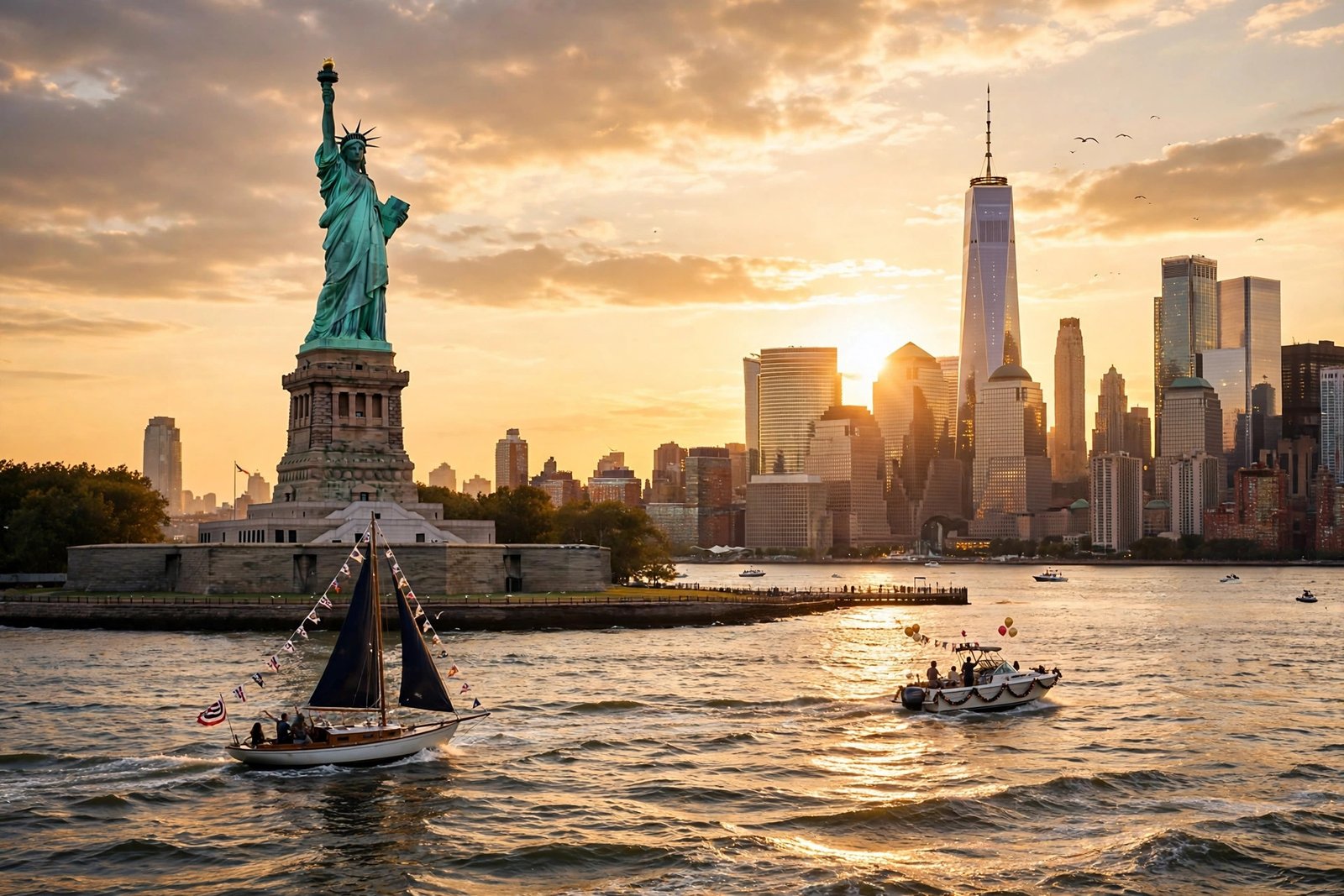
Picture New York Harbor on a crisp autumn day in 1886, with crowds lining the streets, boats crowding the water, and a giant copper figure waiting to be revealed. The Statue of Liberty dedication on October 28, 1886, was not just a ceremony. It was the moment a gift from France officially became an American icon, and it came with a shower of paper that history remembers as the first ticker-tape parade. One hundred and forty years later, the statue still stops people in their tracks, but most visitors only see the postcard version. Behind the torch and the crown is a story full of engineering daring, fundraising drama, and quiet symbols that are easy to miss.
This is the story of how a colossal statue crossed an ocean in pieces, how ordinary people helped pay for the pedestal it stands on, and why the figure looks the way it does. It is also a reminder that famous landmarks are rarely as simple as they seem. The more you learn about this one, the more remarkable it becomes.
A Gift That Crossed an Ocean
The statue was a gift from the people of France to the people of the United States, created to celebrate friendship between the two nations and the ideals of liberty. French sculptor Frederic Auguste Bartholdi designed the figure, and engineer Gustave Eiffel, later famous for the Eiffel Tower, helped design the internal iron framework that holds the statue together. The full name of the work is Liberty Enlightening the World, a title that explains the torch held high above the harbor.
Building such a giant figure in the 1800s was an enormous challenge. Workers in France shaped thin sheets of copper over a huge framework, hammering the metal into the folds of a robe, the curves of an arm, and the calm face of Liberty. When the statue was finished in France, it was taken apart for the journey across the Atlantic. It arrived in New York Harbor in June 1885, packed in crates, and was then reassembled piece by piece on a pedestal that was still being built. Imagine opening crate after crate and slowly watching a 151-foot figure rise again on the other side of the ocean. That slow reassembly is part of why the statue feels so monumental today.
The pedestal itself almost did not happen. Fundraising in the United States stalled, and the project needed a push. Newspaper publisher Joseph Pulitzer ran a campaign asking ordinary readers for small donations, and thousands of people responded. The pedestal was funded not by one wealthy donor alone, but by a crowd of everyday contributors. That detail matters, because it means the statue quite literally stands on public generosity.
The Statue of Liberty Dedication Day in New York
October 28, 1886, was a day of parades, speeches, and celebration. President Grover Cleveland formally dedicated the statue, and crowds filled the streets of New York to mark the occasion. Ships, flags, and music added to the atmosphere, while workers and officials gathered on the island, then known as Bedloe’s Island, for the ceremony itself. For a city that was already growing fast, the event felt like a turning point, a moment when New York gained a symbol the whole world would recognize.
One of the most famous details of that day is the shower of paper. As the parade passed through the streets, people tossed ticker tape and scraps of paper from office windows, creating a swirling celebration above the marchers. That joyful mess is remembered today as the first ticker-tape parade in New York City, a tradition that later became famous for honoring athletes, astronauts, and heroes. The Statue of Liberty dedication was therefore not only the birth of a landmark, but also the birth of a very New York way of celebrating.
Bad weather did not stop the crowds. Rain and fog were part of the day, but the celebration went ahead anyway. When the veil finally came off the statue, the crowd could see the full figure standing above the harbor, torch raised, tablet in hand. It was a powerful image then, and it remains a powerful image now, even for people who have seen it a hundred times in photographs.
Seven Rays, a Tablet, and Broken Chains
Almost every part of the statue carries meaning, and the details reward a closer look. The crown has seven rays, which are widely understood to represent the seven continents and the seven seas, a symbol of liberty reaching around the world. The tablet in the statue’s left arm carries the date July 4, 1776, written in Roman numerals, a direct link to American independence. The right arm holds a torch high above the harbor, a symbol of enlightenment and welcome.
Look down, and you will find another detail that many visitors miss completely. At the statue’s feet lie broken shackles and chains, partly hidden beneath the flowing robe. They represent freedom from oppression and the end of bondage, a quiet but powerful part of the design. The robe itself, with its classical style, connects the statue to ancient ideas of democracy and law, while the calm expression gives the figure a sense of dignity rather than anger or triumph.
These symbols were not chosen by accident. Bartholdi and his collaborators wanted a figure that would speak without words, even to people arriving in a new country who might not speak English. A raised torch, a date carved in stone, and broken chains at the feet tell a story that anyone can read. That is one reason the statue worked so well as a welcome sign for newcomers, and why it still works as a symbol today.
From Copper Brown to Iconic Green
When the statue was first unveiled, it was not green at all. It was the warm reddish-brown color of copper, shining in the sunlight above the harbor. Over time, exposure to air and sea weather changed the surface. The copper slowly developed a green patina, a natural coating that forms on copper outdoors. Within a few decades, the statue had turned the soft green-blue color that everyone recognizes today.
The patina is more than a color change. It also protects the copper underneath, acting like a natural shield against further weathering. That is one reason the statue has survived so well in a harsh harbor environment, with salty air, storms, and freezing winters. The thin copper skin, only about as thick as a couple of coins stacked together in many places, might sound fragile, but supported by its iron frame, it has stood through more than a century of weather.
The torch has its own story. The original torch was replaced during a major restoration in the 1980s, ahead of the statue’s centennial in 1986. The replacement torch was made to match the original design while using modern materials, and the old torch is now displayed in a museum on the island, where visitors can see it up close. It is a reminder that even icons need care, and that restoration is part of keeping history alive.
What the Statue of Liberty Dedication Meant for New Arrivals
For millions of immigrants arriving by ship in the late 1800s and early 1900s, the statue was often the first sight of America. Ships entering New York Harbor passed near the statue, and for people who had spent weeks at sea, that first glimpse meant hope, relief, and the promise of a new life. The nearby immigration station on Ellis Island later became the gateway through which many newcomers passed, and the statue standing close by became linked in memory with those arrivals.
The poem most people associate with the statue came from that era of arrival and hope. Emma Lazarus wrote a sonnet called The New Colossus in 1883, with the famous lines about giving a home to the tired, poor, and huddled masses yearning to breathe free. The poem was later mounted on a plaque inside the pedestal, and it helped shape how Americans understood the statue. It turned a monument about liberty in general into a specific welcome to newcomers, a meaning that has stuck ever since.
That meaning is why the statue still draws visitors from around the world. People do not just come to see a big copper figure. They come to stand where history happened, to look out at the same harbor that arriving ships once crossed, and to think about what liberty meant to the people who came before them. The statue is a landmark, but it is also a meeting point between past and present.
Facts Most Visitors Never Hear
Here are some details that make a visit even more interesting:
- The statue alone measures about 151 feet from base to torch, while the full height including the pedestal and foundation reaches about 305 feet.
- The island was renamed Liberty Island in 1956, replacing its earlier name, Bedloe’s Island.
- Visitors who climb to the crown walk up a narrow spiral staircase, and the crown windows offer views across the harbor.
- The statue was designated a UNESCO World Heritage Site in 1984, recognizing its importance to the whole world, not just the United States.
- Lightning strikes the statue regularly, but the iron framework and copper skin help carry the energy safely, which is part of good 19th-century engineering.
- Full-scale replicas of the statue exist in other places, including a well-known one in Paris, a nod to the statue’s French origins.
Another detail surprises many people: the statue’s face and figure were designed to be seen from far away and from below. Features that look normal from the ground were carefully sized so they would read clearly from a ship in the harbor. That is why close-up photographs sometimes look different from the classic harbor view. The statue was made to be an experience, not just an object.
Takeaways Worth Remembering
If you remember only a few things about this icon, make them these. First, the statue was a gift built across two countries, designed in France, funded in part by ordinary Americans, and assembled in New York Harbor. Second, its symbols were chosen to speak to everyone: a torch for enlightenment, a tablet for independence, seven rays for the wider world, and broken chains for freedom. Third, its color, its island, and even its poem all changed over time, which means the statue we see today is the result of more than a century of history, not a single moment frozen in time.
Today, the Statue of Liberty dedication is remembered as the day all of that came together in public for the first time. The parades are over, the paper has long since been swept away, and the crowds of 1886 are gone, but the figure they celebrated is still standing, still green, and still welcoming ships into the harbor. That is a rare kind of success for any work of art.
When you next see a photograph of the statue, look past the postcard. Look for the broken chains at the feet, the date on the tablet, and the seven rays of the crown. Each one is a clue to a bigger story, a story that began in a French workshop, crossed an ocean in crates, rose on a pedestal paid for by small donations, and was finally unveiled on a rainy October day in 1886. Few landmarks can claim a journey like that, and that is exactly why this one still matters 140 years later. If you enjoy uncovering the hidden side of famous places, you may also like the secrets of the Paris Catacombs, the real history of trick-or-treating, and the strange story of the Great Emu War. For background reading, see the Britannica overview of the Statue of Liberty and the National Park Service pages for the Statue of Liberty.
Frequently Asked Questions
When was the Statue of Liberty dedicated?
The statue was dedicated on October 28, 1886, in New York Harbor, in a ceremony attended by President Grover Cleveland.
Who gave the Statue of Liberty to the United States?
The statue was a gift from the people of France to the people of the United States, designed by French sculptor Frederic Auguste Bartholdi.
Why is the Statue of Liberty green?
The statue is made of copper, which naturally develops a green patina when exposed to air and weather over time. It was originally copper-brown.
What do the seven rays on the crown represent?
The seven rays are widely understood to represent the seven continents and the seven seas, symbolizing liberty reaching around the world.
What is written on the tablet the statue holds?
The tablet carries the date July 4, 1776, written in Roman numerals, marking American independence.