
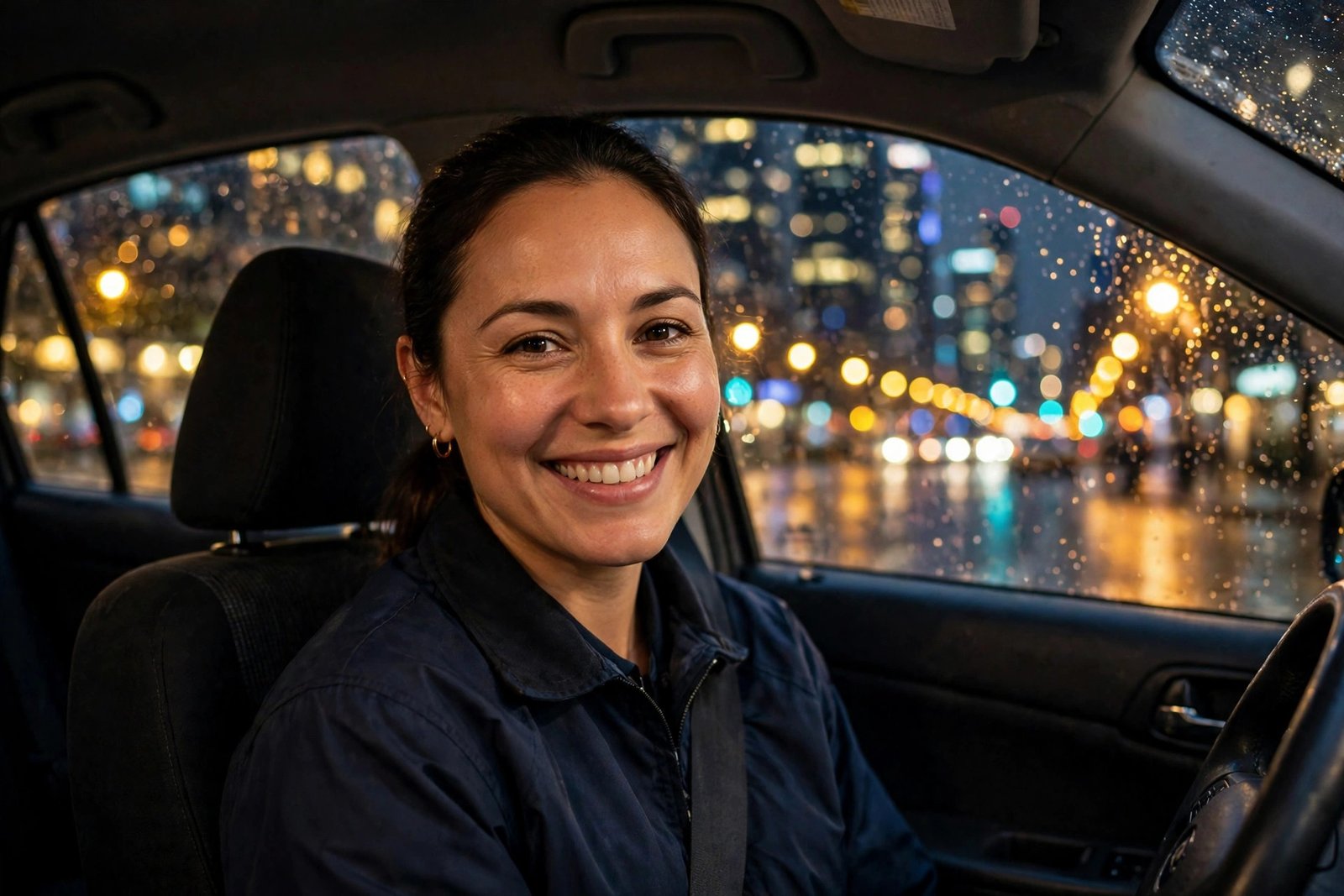
The most powerful viral video of the week shows nothing happening at all. No argument, no surprise twist, no dramatic rescue. Just a woman sitting in the back of a cab in Mumbai late at night, relaxed, quiet, and at peace. She summed up the feeling in five words that have now travelled around the world: “I felt like a man today.”
It sounds like a small sentence, but it landed like a thunderclap. Millions of women recognized the feeling instantly, and millions of men stopped to think about a freedom they had never thought to name. The video went viral not because something extraordinary happened, but because nothing did, and that absence of fear felt so unusual to the woman in the cab that she had to say it out loud.
Her name is Apoorva. She had just landed in Mumbai late at night and booked a cab, and to her surprise, the driver was a woman. The ride that followed was completely ordinary. There was no incident, no alarm, and no reason to worry. And that ordinary calm was so unfamiliar that it became the story. In a world where so many viral moments are loud, this one was quiet, and its quietness is exactly why people cannot stop talking about it.
The Story Behind “I Felt Like a Man Today”
Apoorva landed in Mumbai late at night, the kind of hour when airports feel half-asleep and the city outside is dark. She booked a cab like any other traveller, expecting a routine ride to wherever she was staying. What she did not expect was that the driver would be a woman, and that this one detail would change the entire texture of the journey.
Nothing dramatic happened on the way. That is the point that keeps getting repeated in coverage of the video, because it is the point that matters most. There was no confrontation to describe, no danger to escape, and no twist to reveal. She simply rode, relaxed, and arrived. For most travellers, that is just a cab ride. For Apoorva, it was a glimpse of something she rarely gets to experience: a journey without a background hum of worry.
She shared the moment in a short Instagram video, and the line she chose for it was disarmingly simple. “I felt like a man today,” she said, and then she explained what she meant, carefully and honestly, so that nobody would mistake a personal reflection for an attack. According to ET Now’s report on the viral video, her remark resonated with viewers and prompted discussion about the everyday precautions women take while travelling alone and the privilege of moving through public spaces without constant fear.
Why “I Felt Like a Man Today” Struck Such a Nerve
The reason “I felt like a man today” travelled so far is that it gave a name to something millions of people feel but rarely say. Women who travel alone know the feeling well. It is the low-level alertness that switches on the moment you step into a cab at night: checking the route, keeping your phone close, staying on a call, letting someone know you have arrived. It is not panic. It is maintenance, a quiet job that runs in the background of an otherwise ordinary evening.
What Apoorva described was that job switching off. During her ride, she was not constantly checking her phone. She was not pretending to be on a call with a family member so that someone would appear to be tracking her journey. She could just relax. For many viewers, hearing that simple description was like hearing their own nightly routine read back to them for the first time, and the recognition was immediate.
Men who watched the video had a different but equally powerful reaction. Many said the clip made them realize that the freedom to move through the world without calculating risk is not something everyone experiences equally. One widely shared sentiment in the conversation was that men often take for granted the simple freedom of living a normal life, a privilege that stays invisible until someone points out its absence. The video did that pointing with unusual gentleness: no blame, no lecture, just one woman describing a good night.
That gentleness is part of why the clip spread so widely. It did not ask viewers to feel guilty. It asked them to notice. And noticing, it turns out, is a surprisingly shareable experience. The video has been covered by NDTV and other outlets, and each new round of coverage has brought a fresh wave of viewers recognizing their own lives in a stranger’s cab ride.
The Invisible Checklist Many Women Carry
To understand why a quiet cab ride became a global conversation, it helps to look at the checklist that many women run through without even thinking about it. It starts before the ride begins: sharing the trip details with a friend, checking the driver’s name and photo, and sitting where you can get out quickly. During the ride, it continues: watching the route on your own phone, keeping your bag close, and staying alert even when you are exhausted after a flight.
- Staying connected. Many women keep a friend or family member updated throughout a late-night journey, or stay on a call so someone always knows where they are.
- Watching the route. Following the trip on a map app is second nature, a way of confirming that the journey is going where it should.
- Staying alert when tired. After a long flight, the natural urge is to rest, but many women feel they cannot afford to switch off until they are safely indoors.
- Planning the arrival. Thinking ahead about the drop-off point, the lighting, and who will be there to open the door is part of the routine.
None of these habits are dramatic on their own. Together, though, they add up to a kind of mental labour that runs alongside every late-night trip. It is labour that many men simply do not have to perform, not because they are braver, but because the world has rarely given them a reason to. Apoorva’s video made that labour visible by showing what a journey looks like when it is suddenly, blessedly absent.
It is also worth saying what the video is not. It is not a claim that women drivers are automatically safer than men, or that every ride with a male driver is frightening. Many women travel safely with male drivers every day, and many male drivers are kind, professional, and careful. What changed for Apoorva was her own sense of ease, and ease is a personal, subjective thing. The video’s power comes from her honesty about that feeling, not from a judgment about any driver.
What She Did, and Did Not, Mean by It
Apoorva was careful in her caption to explain exactly what she meant, and that care deserves to be repeated. She was not suggesting that men never experience fear or vulnerability. Men absolutely do, in many situations and for many reasons. Her point was narrower and more precise: she had caught a glimpse of what it might feel like to move through the world without safety being a constant calculation.
Her own words make the distinction beautifully. “Not because men never experience fear or vulnerability, but because I got a glimpse of what it might feel like to move through the world without safety being a constant calculation,” she wrote. It is a sentence worth reading twice, because it refuses the easy argument and insists on the real one. The issue is not who feels fear. The issue is how often, how automatically, and how quietly that fear has to be managed.
She also wrote that sometimes freedom is simply being able to exist without fear, and that this is a privilege not everyone gets to experience equally. That line has been quoted again and again since the video spread, and it is easy to see why. It reframes freedom not as something grand or political, but as something small and daily: sitting in a cab, looking out of the window, and thinking about nothing at all.
This careful framing is one reason the conversation around the video has stayed unusually warm. Viral debates about gender and safety often turn sharp within hours, but this one has mostly stayed reflective. Viewers have shared their own versions of the checklist, their own moments of unexpected ease, and their own hopes that one day the feeling Apoorva described will not be remarkable at all.
Why a Quiet Ride Felt Like Freedom
There is something quietly radical about celebrating an uneventful journey. Most of the internet rewards the dramatic: the confrontation, the reveal, the disaster narrowly avoided. A video about nothing happening should, by the usual rules, sink without a trace. Instead, it floated to the top of everyone’s feed, which tells us something important about what people are actually hungry for.
People are hungry for honesty about ordinary life. The most shared moments online are often the ones that say, in plain language, something that many people have felt but never heard said. Apoorva’s video did exactly that. It took a private, everyday experience and gave it a public sentence, and the sentence fit so many lives that it kept being passed along.
It also offered a rare kind of good news. So much viral content about women’s safety is, understandably, about danger and warning. This video was about safety itself, about a night when everything went right. That matters, because it shows what the goal actually looks like: not a dramatic escape, but a boring ride. A world in which every late-night cab ride feels this unremarkable is a world that has solved something real.
For readers who love viral moments with heart, this story sits naturally alongside other feel-good internet phenomena, like the National Cat Day celebrations that took over feeds on October 29. But where a cat video offers a smile, Apoorva’s video offers something rarer: a small, true story that makes the world slightly easier to understand.
What the Conversation Says About Everyday Safety
The discussion that followed the video has ranged far beyond one cab ride in Mumbai. Viewers have talked about walking home at night, about choosing well-lit routes, about keys held between fingers, and about the messages women send each other that simply say “home safe.” These are not dramatic stories. They are the texture of everyday life for millions of people, and seeing them named in public has been validating for many.
The conversation has also touched on practical questions. How can ride services make late-night travel feel safer for everyone? What role do women drivers play in giving passengers a sense of ease? And what would it take for the feeling Apoorva described to become the default rather than the exception? There are no simple answers to those questions, but the fact that a short video got people asking them is a meaningful result on its own.
It is also a reminder that change often starts with language. Before Apoorva’s video, many women had never described their nightly checklist as labour, or their moments of ease as freedom. Now there is a phrase for it, and phrases travel. A friend can send the video to another friend with a simple message: this is what I meant. That shared language makes private experiences easier to talk about, and easier to talk about means easier to change.
Not every viral trend deserves this much attention, of course. Some internet moments are pure fun, like the ghost filter prank lighting up TikTok, and they should be enjoyed exactly that way. But every so often, a trend arrives that is really a story about how people live, and those are worth slowing down for. This is one of them.
Takeaways Worth Keeping
- Nothing happening can be the whole story. The most meaningful part of Apoorva’s ride was its ordinariness, and that is what made it worth sharing.
- Freedom is often small. It can look like sitting quietly in a cab, not checking your phone, and thinking about nothing at all.
- Privilege is often invisible. Moving through the world without calculating risk is a freedom many people enjoy without noticing, until someone describes its absence.
- Careful words travel further. Apoorva’s honest, gentle explanation kept the conversation warm and reflective instead of turning it into an argument.
- Shared language helps. Giving a common experience a name makes it easier for people to recognize it, discuss it, and work toward changing it.
For anyone who has ever arrived home late at night and sent a quick message saying “home safe,” this story is a reminder that the message itself tells a story. It says that safety, for many people, is not assumed. It is checked, confirmed, and celebrated in small ways every single day.
Conclusion: The Ride That Said Everything
In the end, the sentence “I felt like a man today” endures because it is both personal and universal. It belongs to one woman, on one night, in one cab in Mumbai. And it belongs to everyone who has ever wished that an ordinary journey could feel ordinary, without the background work of staying safe.
The hope behind the video is simple, and it is worth stating plainly: that one day, no one will need a special reason to relax on a late-night ride. No lucky booking, no particular driver, no rare alignment of circumstances. Just a cab, a road, and a passenger thinking about nothing at all, because there is nothing to worry about. Until that day, stories like Apoorva’s do important work. They name the gap between the world as it is and the world as it should be, and they do it with a honesty and warmth that invites everyone into the conversation.
That is why a video about nothing became a video about everything. And that is why, long after the feed has moved on, people will still remember the night a woman in Mumbai sat back, relaxed, and discovered what freedom feels like when it arrives quietly.
What does “I felt like a man today” mean?
In Apoorva’s viral video, the phrase describes the feeling of taking a late-night cab ride without the constant safety calculations many women make when travelling alone. She meant she experienced a rare sense of ease, not that men never feel fear.
Who is Apoorva and what happened on her cab ride?
Apoorva is a woman who landed in Mumbai late at night and booked a cab driven by a woman. Nothing happened during the ride: there was no incident or alarm. The absence of worry was so unusual that she shared a short Instagram video about it, which went viral.
Why did the video go viral?
The video went viral because millions of viewers recognized the experience it described. Many women related to the everyday precautions they take when travelling alone, while many men reflected on the privilege of moving through public spaces without constant fear.
Did Apoorva say men never experience fear?
No. She was careful to clarify that men do experience fear and vulnerability. Her point was that she had glimpsed what it feels like to move through the world without safety being a constant calculation.
What has the conversation about the video focused on?
The discussion has focused on the everyday precautions women take when travelling alone, the invisible privilege of moving without constant fear, and what it would take for that sense of ease to become normal for everyone.