
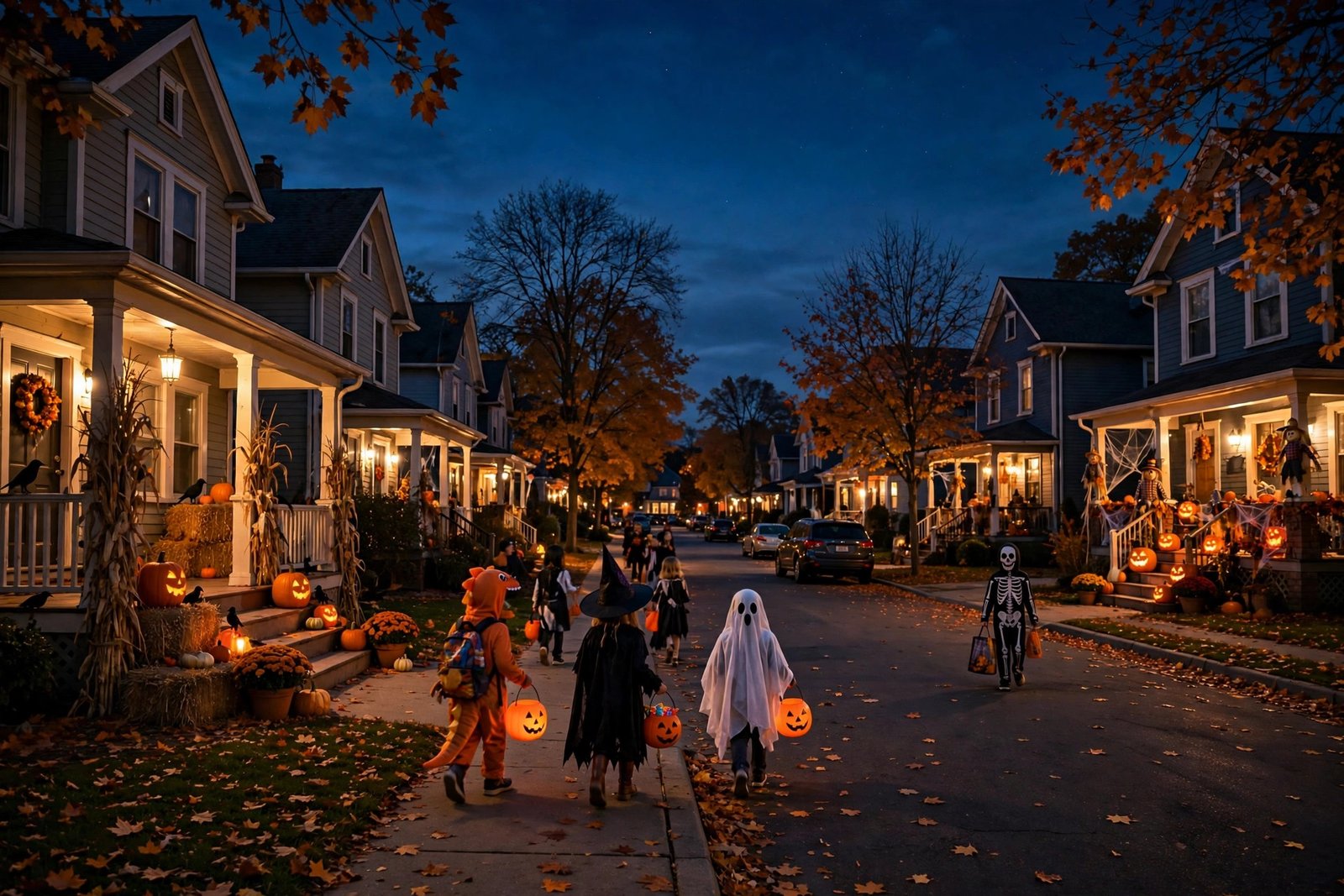
There is a reason Halloween feels different this year, and it has nothing to do with the costumes or the candy. Halloween 2026 falls on Saturday, October 31, and the internet has already given the occasion a name: Saturween. It is the first time since 2020 that the spookiest night of the year has landed on a Saturday, and if you miss the magic this time, you will be waiting a long time for the next one. The next Saturday Halloween does not arrive until 2037.
That gap is exactly why Saturween has become a talking point. A Saturday Halloween changes everything about how people celebrate. There is no school the next morning. There is no work alarm waiting at dawn. Trick-or-treaters can stay out a little later, parties can run a little longer, and nobody has to pretend to be a responsible adult the next day. For families, for party hosts, and for anyone who loves the holiday, a Saturday Halloween is the gold standard — and it only comes around a handful of times in a lifetime.
So what is a Saturday Halloween, why is it so rare, and what does a Saturday Halloween actually change? Here is the full story behind the nickname, the calendar quirk that makes it scarce, and the campaign to make every Halloween a Saturday.
What Is Saturween?
Saturween is the nickname given to a Halloween that falls on a Saturday. The name is a simple blend of “Saturday” and “Halloween,” and it has caught on in recent years as social media users and news outlets have started marking the rare occasions when the calendar lines up just right. When Halloween lands on a Saturday, the whole holiday feels bigger, because the weekend gives everyone room to celebrate properly.
The nickname is not official, and you will not find it in a dictionary, but it has become the go-to shorthand for the phenomenon. Much like “Friday the 13th” has its own lore, the nickname has become a label people reach for whenever October 31 happens to fall on the best possible day of the week. In 2026, that label is everywhere, from local news coverage — including the News-Journal’s report on the rare Saturday Halloween — to party invitations to social media posts counting down to the big night.
Part of the appeal is the shared excitement. A Saturday Halloween is one of those small calendar events that everyone can enjoy at the same time. It does not matter where you live or how old you are — a weekend Halloween is simply more fun, and the nickname gives people a way to celebrate that shared good fortune together.
Why a Saturday Halloween Is So Rare
Halloween always falls on October 31, but the day of the week shifts every year. Because a standard year has 365 days — one more than a whole number of weeks — October 31 moves forward by one weekday each year, and by two weekdays after a leap year. That steady drift means Halloween cycles through all seven days of the week, but Saturday only comes up about once every five to seven years.
Leap years add another wrinkle. When February gains an extra day, the calendar shifts by two weekdays instead of one, which stretches some gaps and shortens others. The result is an irregular rhythm: sometimes Saturday Halloweens arrive five years apart, sometimes six, and sometimes the wait is even longer. That unpredictability is part of what makes each one feel special.
To put it in perspective, think about how many Halloweens a person actually gets to enjoy as a kid. If Saturday Halloween only appears a few times per decade, a child might only experience two or three of them before growing up. Adults feel the same pull: a Saturday Halloween is the version of the holiday where you can do everything — the pumpkin patch, the haunted house, the party, and the trick-or-treating — without watching the clock.
The Last Saturday Halloweens: 2020, 2015, and 2009
The most recent Saturday Halloween before 2026 was in 2020. That year, however, celebrations looked very different from normal. The COVID-19 pandemic meant many trick-or-treat events were cancelled, modified, or replaced with drive-through and socially distanced alternatives. For many families, the 2020 Saturday Halloween felt like a missed opportunity — the calendar had delivered the perfect day, but the circumstances had taken the celebration away.
Before 2020, the previous Saturday Halloween came in 2015, and before that in 2009. Each of those years had its own flavor. In 2015, Halloween parties stretched across the whole weekend, and neighborhoods reported some of the busiest trick-or-treat traffic in years. In 2009, the holiday fell during the early social media era, when costume photos and party pictures were just starting to flood newly popular platforms.
The pattern tells its own story:
- 2009: Saturday Halloween, in the early days of social media sharing.
- 2015: Saturday Halloween, six years later, with full weekend celebrations.
- 2020: Saturday Halloween, five years later, muted by the pandemic.
- 2026: Saturday Halloween, six years later — the first truly normal one since 2015.
- 2037: The next Saturday Halloween, eleven years after 2026.
That last gap is the striking one. After 2026, the wait stretches to eleven years, making this year’s celebration feel even more precious. For many children trick-or-treating in 2026, the next Saturday Halloween will arrive when they are adults.
What Saturday Means for Trick-or-Treat
For families, the biggest difference a Saturday Halloween makes is the schedule. On a weeknight Halloween, trick-or-treating is squeezed between the end of school or work and bedtime. Parents rush home, costumes go on in a hurry, and the whole evening feels compressed. On a Saturday, none of that pressure exists.
Neighborhoods tend to see more trick-or-treaters on a Saturday, and they tend to stay out longer. Porch lights stay on later, decorations get more attention, and the whole event feels more like a community festival than a quick after-school errand. Families can start earlier in the afternoon, take their time walking the neighborhood, and even stop for hot chocolate or cider along the way.
There is also a practical benefit for the people handing out candy. On a weeknight, many adults are still commuting or finishing work when the first trick-or-treaters knock. On a Saturday, more people are home, more houses are decorated, and more porches are staffed. The result is a fuller, livelier trick-or-treat experience for everyone involved.
If you want to understand where trick-or-treating itself came from, the tradition has roots far older than any modern calendar quirk. You can read more about it in our look at the origin and history of trick-or-treat, which traces the custom from its early roots to the door-to-door ritual we know today.
Parties, Haunted Houses, and the Whole Weekend
A Saturday Halloween does not just change one night — it changes the whole weekend. Costume parties that would normally be crammed into a single Friday or Saturday evening can spread across two nights. Haunted houses and pumpkin patches see bigger crowds. Towns and cities can schedule parades and festivals on the Saturday itself, knowing that families are free to attend.
For adults, the difference is just as real. A Halloween party on a Saturday night means no worrying about work the next morning. Costumes can be more elaborate, because there is time during the day to get ready. Party hosts can plan bigger events, and guests can actually enjoy them without one eye on the clock.
Local businesses notice the difference too. Costume shops, candy sellers, pumpkin patches, and haunted attractions all tend to do better business when Halloween falls on a weekend. The holiday becomes a full weekend event rather than a single evening, and that extra time translates into more celebrations, more gatherings, and more memories.
Social media plays a role as well. A Saturday Halloween gives everyone the whole weekend to post costumes, share decorations, and compare haunted house experiences. If you have been following this year’s Halloween trends, you may have seen how quickly costume ideas spread online — including viral moments like the Ramalama costume walk trend on TikTok, which shows how a single idea can take over the holiday conversation.
The Campaign to Move Halloween to the Last Saturday
Given how much people love a Saturday Halloween, it is no surprise that some have tried to make it permanent. For years, there has been a recurring campaign to move Halloween celebrations to the last Saturday of October every year, rather than keeping the holiday fixed on October 31. Supporters argue that a Saturday Halloween would be safer for children, better for families, and easier for communities to organize.
The idea has even attracted organized support. A petition to move Halloween to the last Saturday of October has circulated widely in past years, gathering hundreds of thousands of signatures. The argument is straightforward: children would trick-or-treat in daylight or early evening on a weekend, parents would not have to rush from work, and the whole holiday would be more relaxed and enjoyable.
However, the campaign has never succeeded, and Halloween remains fixed on October 31. Traditionalists argue that the date itself matters — October 31 has historical and cultural roots, and moving the celebration would break a tradition that stretches back centuries. Others point out that many people already celebrate on the nearest weekend anyway, holding parties on the Friday or Saturday closest to Halloween regardless of the actual date.
For now, the calendar keeps its own schedule, and Saturday Halloweens remain a treat rather than a guarantee. That is part of their charm: you cannot plan for them every year, so when one arrives, it feels like a small gift from the calendar itself.
How to Make the Most of Saturween 2026
If you want to get the full value out of this rare Saturday Halloween, a little planning goes a long way. Here are some ideas worth considering:
- Start early: Use the daylight hours for pumpkin carving, decoration, and a visit to a pumpkin patch or fall festival before the evening begins.
- Plan a full day: Unlike a weeknight Halloween, you have the whole day — spread the celebrations out instead of cramming them into two hours.
- Decorate for the weekend: With no work or school the next day, your decorations and porch display can stay up and be enjoyed all weekend long.
- Host or attend a party: A Saturday night party is the easiest kind to enjoy, so take advantage of the rare alignment.
- Stay safe: More people out means more foot traffic, so stick to well-lit streets, use reflective elements on costumes, and keep an eye on younger trick-or-treaters.
- Savor it: Remember that the next one is not until 2037 — take the photos, enjoy the candy, and make the night count.
One more thing worth noting: because Halloween 2026 falls on a Saturday, some communities may schedule their official trick-or-treat hours differently, or host additional weekend events. It is always worth checking your local announcements, since some towns set their own recommended hours even when the holiday itself is fixed.
Key Takeaways
The story of a Saturday Halloween is really a story about how much the day of the week matters. Halloween is always October 31, but a Saturday Halloween transforms the holiday from a weeknight rush into a full weekend celebration. The rarity is real: the last one before 2026 was in 2020, before that 2015 and 2009, and the next one will not arrive until 2037.
That eleven-year wait after 2026 is the detail that makes this year stand out. It means that for many people, this is the Saturday Halloween they will remember — the one where the costumes were best, the candy haul was biggest, and nobody had to set an alarm for the morning after. Whether you are trick-or-treating with kids, hosting a party, or just enjoying the decorations, this is the year to go all in.
And if you are already thinking ahead, mark your calendar: after 2026, the next chance to celebrate a true Saturday Halloween comes in 2037. Until then, the rest of us will be celebrating on whatever weekday the calendar gives us — and quietly wishing it were a Saturday.
For more on the holiday’s stranger history, including the night a radio broadcast convinced listeners that Martians had landed, check out our story on the War of the Worlds radio broadcast panic of 1938 — another October night that nobody forgot.
What is Saturween?
Saturween is the nickname for a Halloween that falls on a Saturday, October 31. The name blends “Saturday” and “Halloween,” and it is used to mark the rare years when the holiday lands on the weekend.
When was the last Saturday Halloween before 2026?
The last Saturday Halloween before 2026 was in 2020, though celebrations that year were limited by the COVID-19 pandemic. Before that, Saturday Halloweens occurred in 2015 and 2009.
When is the next Saturday Halloween after 2026?
The next Saturday Halloween after 2026 will not arrive until 2037, an eleven-year wait that makes the 2026 celebration especially rare.
Why is a Saturday Halloween better for trick-or-treat?
On a Saturday, families are not rushed by school or work schedules, more houses are decorated and staffed, and trick-or-treaters can stay out later, making the whole evening feel more like a community celebration.
Is there a campaign to move Halloween to the last Saturday of October?
Yes, petitions have circulated for years proposing that Halloween celebrations move to the last Saturday of October every year, arguing it would be safer and more convenient for families. Halloween remains fixed on October 31, so the campaign has not changed the official date.