
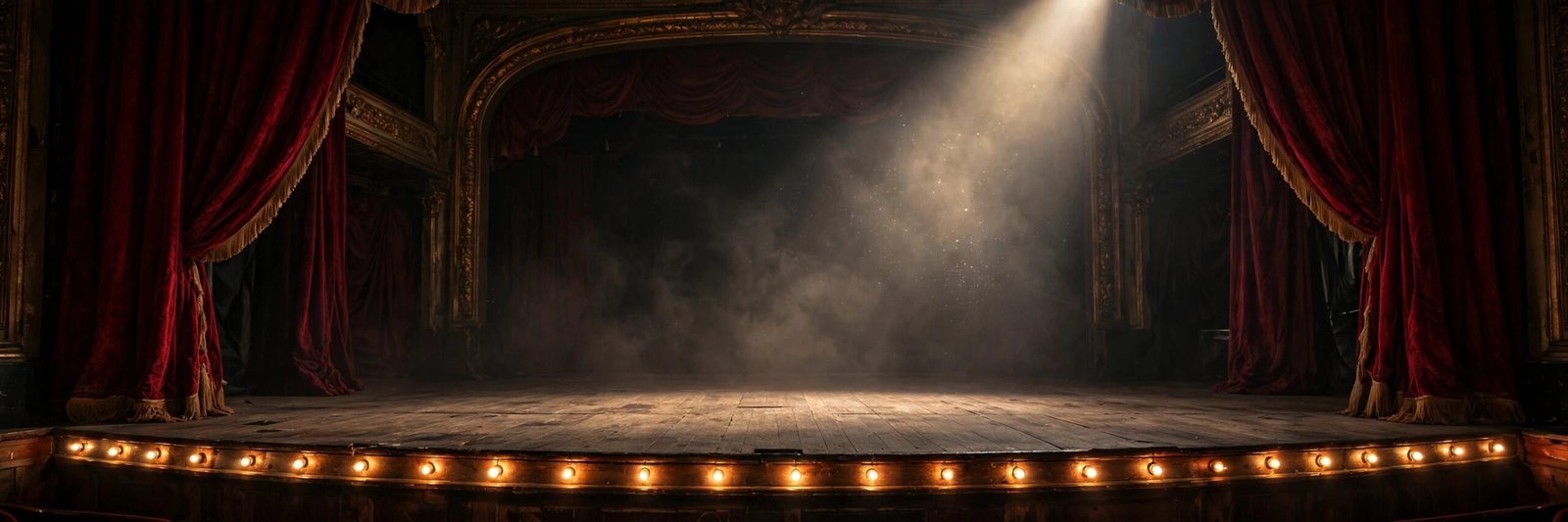
It is one of the strangest things you can say to a performer before a show. A friend is about to step on stage, nerves jangling, and instead of wishing them good luck, you grin and say: break a leg. To anyone outside the theatre, it sounds rude, even a little cruel. Inside the theatre, it is the warmest wish you can offer. The break a leg origin is one of the most debated stories in the English language, and the truth is that nobody knows it for certain. What we do know is that the phrase is wrapped up in superstition, stage history and a good deal of myth-making, and that the competing explanations each reveal something different about how actors think about luck. In this article, we trace the leading theories, separate the plausible from the fanciful, explain why actors avoid saying good luck, and look at the other superstitions that still haunt the theatre today — including the famous Lincoln assassination story, which is popular, dramatic and almost certainly not true.
What Does Break a Leg Actually Mean?
Today, to break a leg means simply to wish someone good luck, especially before a performance. Actors say it to each other in the wings, directors say it to a cast on opening night, and audiences sometimes call it out to friends in a school play. The phrase has also spread far beyond the theatre. People now say it before job interviews, exams, presentations and first dates — any moment when someone needs a little luck and a little courage. The meaning is always positive. The puzzle is why a wish for good fortune should be dressed up as a wish for a broken limb. The short answer is superstition: many performers believe that wishing someone good luck directly will invite the opposite, so they wish for something bad instead, in the hope that the spirits, or fate, will be tricked into delivering the reverse. It is the same logic that makes people say knock on wood, or refuse to walk under a ladder. The long answer is more complicated, because the break a leg origin may have nothing to do with superstition at all. Some of the leading theories suggest the phrase started as a practical piece of stage language, or as a reference to the way performers were paid, and only later picked up its superstitious meaning. To understand the debate, it helps to look at each theory on its own terms and ask what evidence actually supports it.
The Superstition Theory: Wishing Bad Luck to Get Good Luck
The most widely repeated explanation for the break a leg origin is the superstition theory. According to this idea, actors in the theatre of the past believed that spirits — or simple bad luck — were always listening, and that wishing a performer good luck out loud would tempt fate to ruin the show. The solution was to wish for the opposite. By saying break a leg, the well-wisher was really saying: may everything go so well that the evil spirits are confused, or may your bad luck be spent on these words instead of on the performance. This kind of reverse wishing appears in other traditions too. In some cultures, people avoid praising a baby too warmly for fear of attracting the evil eye. In the theatre, the habit may have grown out of a broader belief that the stage itself was a dangerous, unpredictable place where anything could go wrong: a missed cue, a forgotten line, a piece of scenery falling at the wrong moment. Wishing for disaster, paradoxically, felt safer than wishing for success. There is a certain logic to it. If you say good luck and the show goes badly, you might feel you jinxed it. If you say break a leg and the show goes well, the phrase gets the credit. Over time, the habit hardens into tradition, and new actors learn it from older actors without ever asking why. The superstition theory is attractive because it fits what we know about theatre culture, which is famously superstitious in many other ways. But it is worth noting that it is a theory about motive, not a documented first use. Nobody has found a diary entry or a playbill from the 1500s that says: today we started saying break a leg because we fear the spirits. The theory explains why the phrase might have survived, but it does not prove where it began.
The Shakespeare Theory — and Why It Is Shaky
One popular version of the story pushes the phrase’s origin all the way back to Shakespeare’s time. In this telling, Elizabethan actors believed that wishing a fellow performer good luck would offend the spirits, or that the ghost of a dead actor might take revenge, so they wished for a broken leg instead. It is a colourful story, and it is often repeated in articles and tour guides. The problem is the evidence. The phrase break a leg does not appear in Shakespeare’s plays, and there is no record of it being used in the theatre of his era. The earliest known printed uses of the phrase in this sense date from the 20th century, hundreds of years after Shakespeare’s death. That does not mean the idea is impossible — phrases can exist in speech for a long time before anyone writes them down — but it does mean the Shakespeare connection is speculation, not history. What is true is that Shakespeare’s theatre was a superstitious world. Actors of the period believed in ghosts, omens and curses, and Shakespeare himself filled his plays with witches, spirits and prophecies. The Scottish play, Macbeth, is still considered cursed by many actors today, and saying its name inside a theatre is said to bring bad luck. So the Shakespeare theory may be wrong about the date while being right about the atmosphere. The theatre of that era was steeped in superstition, and a phrase like break a leg would have fitted right in. But fitting in is not the same as originating there, and honest accounts of the break a leg origin should mark this as a popular theory rather than a settled fact. For background on Shakespeare’s theatre and its traditions, Shakespeare’s Globe is a good starting point, and The Phrase Finder gives a careful summary of the competing explanations.
The Leg Line Theory: Breaking the Line on Stage
A second leading theory has nothing to do with superstition and everything to do with the physical layout of a stage. In theatre, the legs are the tall, narrow curtains at the sides of the stage that hide the wings from the audience. The leg line is the invisible boundary where the visible stage ends and the hidden wings begin. According to this theory, to break a leg meant to cross that line — to step out from the wings and onto the stage itself. Wishing an actor to break a leg was therefore wishing them to actually get on stage and perform, rather than waiting in the wings. Some versions of the theory add a financial twist: in the days of vaudeville and variety theatre, performers were sometimes paid only if they actually appeared on stage, so breaking the leg line meant earning your pay. Others link the phrase to bowing: an actor who takes a bow bends at the knee, which could be described, loosely, as breaking the leg line of the body. The leg line theory is appealing because it is grounded in real stage vocabulary — legs are a genuine theatre term, and actors really do talk about the leg line. But like the superstition theory, it is hard to prove. There is no early document that uses break a leg in this technical sense, and the bowing explanation in particular stretches the language. Still, it remains one of the most plausible explanations, and many theatre historians consider it at least as likely as the superstition story. The truth may be a combination: a piece of stage slang that started as a practical term and later picked up a superstitious meaning as actors repeated it and invented explanations for it.
The Lincoln Assassination Theory: Popular, Dramatic — and Disputed
Perhaps the most dramatic theory about where the phrase came from concerns the assassination of President Abraham Lincoln in 1865. According to this story, the actor John Wilkes Booth, after shooting Lincoln at Ford’s Theatre in Washington, leapt from the presidential box onto the stage, caught his spur in a flag and broke his leg as he landed — and then, so the story goes, the phrase break a leg entered the language as a reference to that moment. It is a gripping tale, and it is repeated surprisingly often. The problem is that the facts do not support it. Booth did injure his leg during his escape from Ford’s Theatre, but historians disagree about exactly how and when the injury happened, and there is no evidence connecting his injury to the phrase. The phrase does not appear in print in this sense until many decades after 1865, and there is no record of 19th-century actors using it as a reference to Booth. Most language historians regard the Lincoln theory as a folk etymology: a story invented after the fact to explain a phrase whose real origin had been forgotten, using the most famous broken leg in theatre history as the hook. Folk etymologies are common in language — people love a good story more than a dull one — and this one has everything: a president, an assassin, a theatre and a broken leg. But popularity is not proof. The responsible way to present the Lincoln theory is exactly as it is: a popular but disputed claim, not a fact. It tells us something interesting about how phrases attract legends, but it almost certainly does not tell us where break a leg came from. The assassination itself is, of course, a real and well-documented historical event, and readers who want the verified history can find it in standard sources on Lincoln and the Civil War era. The phrase, though, is a separate matter, and the two should not be confused.
Why Actors Refuse to Say Good Luck
Whatever the true break a leg origin may be, the habit it describes is very real: many actors genuinely avoid saying good luck before a performance. Ask a cast on opening night and most of them will tell you that good luck is bad luck, and that the correct wish is break a leg — or, in some traditions, merde, the French word for a less polite substance, which French actors supposedly said for luck before a show. The belief is part of a wider web of theatre superstition. Actors are, by the nature of their work, people who spend their lives trying to control the uncontrollable: a live audience, a complex set, a script that must be remembered word for word. Superstitions give them a small sense of control over that uncertainty, a ritual to perform before stepping into the unknown. Psychologists would call this a form of magical thinking, but for the people who practise it, it feels like respect for the craft and for the generations of actors who came before them. Young actors learn these rules quickly, often on their first day in a theatre. They learn not to say good luck, not to whistle in the dressing room, not to say the name of the Scottish play, and not to leave a ghost light off on a dark stage. Whether or not any of it works, the rituals create a shared identity: you belong to the theatre when you know its unwritten rules. And break a leg is the most famous of those rules, the one that even people who have never set foot on a stage have heard of.
Other Theatre Superstitions You Might Not Know
Break a leg is only the beginning. Theatre is one of the most superstitious workplaces in the world, and its rules have been passed down for centuries. Here are some of the best-known ones, and the reasons actors give for them.
- The Scottish play: actors avoid saying the name Macbeth inside a theatre, calling it the Scottish play instead. The legend says the play is cursed, with a history of accidents and mishaps in productions. If someone does say the name, tradition demands a cleansing ritual: leave the theatre, spin around three times, spit, and knock on the door before coming back in.
- No whistling backstage: whistling in a theatre was once used as a cue by stagehands working the rigging above the stage. A stray whistle could bring a piece of scenery crashing down at the wrong moment, so whistling backstage became taboo, and the rule has survived long after the cue system changed.
- The ghost light: a single bare bulb left burning on stage overnight, said to keep the theatre’s ghosts company and to stop anyone tripping over props in the dark. Practical and superstitious at once, the ghost light is still used in theatres around the world.
- Never say good luck: the rule behind break a leg itself. Some actors will even knock on wood or touch a prop for luck after hearing the forbidden words.
- Bad dress, good opening: some actors believe that if the final dress rehearsal goes badly, the opening night will go well — and that a perfect dress rehearsal is a bad omen. It is a comforting belief on a bad night, and a worrying one on a good one.
These superstitions may look irrational from the outside, but inside the theatre they serve a purpose. They give a company a shared language, a set of small rituals that bond a cast together, and a way of coping with the nerves of live performance. Even actors who do not literally believe in curses will often follow the rules out of respect for their colleagues. That is part of why break a leg has survived for so long: it is not just a phrase, it is a membership badge.
How the Phrase Spread Into Everyday Language
For much of its early life, break a leg was theatre slang, known mainly to performers and the people around them. Its move into everyday language happened gradually through the 20th century, helped by the growth of film, radio and television, and by the way theatre language leaked into popular culture. When a phrase appears in a popular play, film or television show, millions of people hear it at once, and if it is vivid enough, they start using it themselves. Break a leg is vivid: it is short, surprising and memorable, exactly the kind of phrase that sticks. By the later 20th century, it had escaped the theatre entirely. Today, people say it before exams, job interviews, driving tests and wedding speeches, often without knowing anything about its theatrical roots. The spread also changed the phrase. In the theatre, it is a serious piece of tradition. Outside, it is often said lightly, even jokingly, as a funnier alternative to good luck. That is how language works: a phrase born in one world gets borrowed by another, and its meaning softens and widens as it travels. The same kind of journey has carried many theatre words into everyday English — words like stage fright, upstage and limelight all began in the theatre before becoming part of general speech. If you enjoy tracing how strange expressions enter the language, you may also like our look at a long-awaited performance milestone in a very different kind of show, GTA 6 after 13 years, and the record-breaking story of GTA 6’s first-day sales of 3.79 billion dollars — two more stories where anticipation, nerves and a huge audience all came together.
Key Takeaways
- The break a leg origin is genuinely uncertain: several theories compete, and none is proven by early written evidence.
- The superstition theory says actors wished for bad luck to trick fate into delivering good luck instead.
- The leg line theory says the phrase meant crossing from the wings onto the stage — actually getting to perform.
- The Shakespeare-era theory is popular but has no evidence in the plays or records of the time.
- The Lincoln assassination theory is a dramatic folk etymology: Booth did injure his leg, but there is no evidence it gave us the phrase.
- The phrase survives because theatre is deeply superstitious, and because break a leg has become a shared ritual as much as a wish.
Conclusion
The origin of the phrase may never be settled beyond doubt, and in a way that is fitting. The phrase belongs to the theatre, a world built on stories, and it has attracted stories of its own — about Shakespeare, about ghosts, about a president’s assassin leaping to the stage. Some of those stories are plausible, some are almost certainly invented, and the honest answer is that we do not know which is right. What we do know is why the phrase has lasted: it captures something real about performance, the mixture of excitement and fear that comes before stepping in front of an audience, and the human habit of inventing rituals to keep that fear at bay. The next time you hear someone say break a leg, you will know that you are hearing a small piece of theatre history, wrapped in superstition, carried into everyday life — and that the darkest, most dramatic explanation for it is probably the one you should trust the least.