
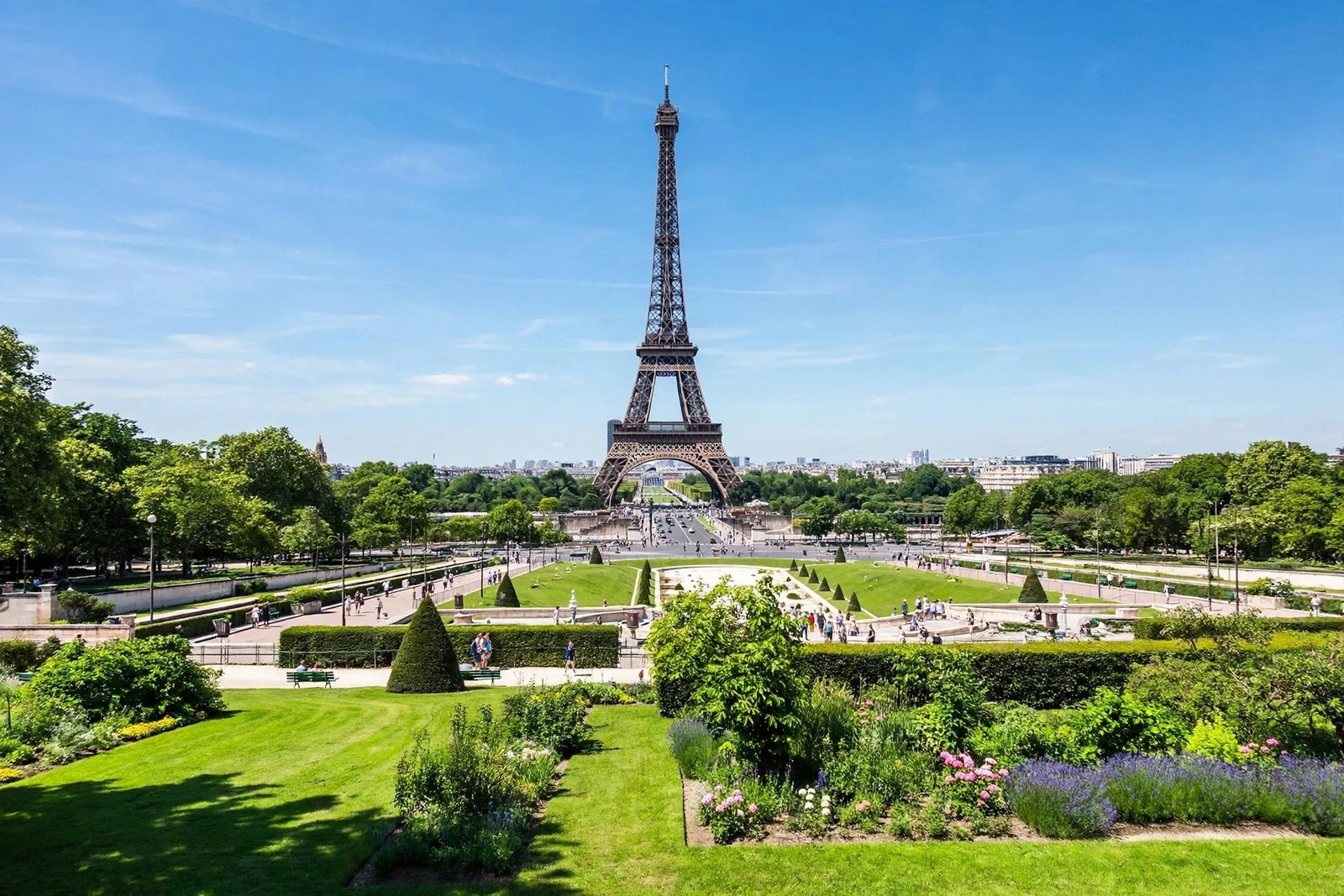
Paris has a secret that even millions of visitors never notice: its most famous landmark is not the same height all year round. The Eiffel Tower grows taller in summer by about 15 centimetres, roughly 6 inches, and then quietly shrinks back down again when winter arrives. No one adds a new section. No crane lifts anything into place. The iron itself simply stretches in the heat and relaxes in the cold, like a living thing breathing with the seasons.
It sounds like a trick, or a piece of trivia too strange to be true. Yet it is simple, well-documented physics, and the Eiffel Tower is one of the best demonstrations of it on Earth. Because the tower is so tall, a tiny change in every metre of iron adds up to something you could measure with a ruler. In this article, we will look at exactly how much the tower grows, why it happens, what it means for the engineers who look after it, and which other famous structures do the same surprising thing.
The Eiffel Tower Grows Taller in Summer: How Much Taller?
Specialists estimate that the Eiffel Tower grows between 12 and 15 centimetres when you compare its height on a cold winter day with its height on the hottest days of summer. That is about 5 to 6 inches, roughly the length of a smartphone stood on end. It may not sound like much, but for a structure made of iron and rivets, it is a remarkable amount of movement, and it happens every single year without anyone touching the tower.
To put that in perspective, the tower stands 330 metres tall today, including its antennas, and 312 metres to the roof. A change of 15 centimetres is tiny next to that height, far too small for any visitor to notice with the naked eye. But surveyors and engineers can measure it precisely, and the effect is real enough that the people who maintain the tower have to plan for it.
The growth is not permanent. When autumn cools the iron, the tower contracts again, returning to its normal height, and on the coldest winter days it may sit a fraction lower still. The cycle repeats year after year, summer after summer, and has done so ever since the tower was completed in 1889. In other words, the Eiffel Tower grows taller in summer and shorter in winter, endlessly, without ever breaking.
The Science: Why Iron Grows in the Heat
The reason the Eiffel Tower grows taller in summer is a phenomenon called thermal expansion. Every solid material expands slightly when it warms up and contracts when it cools down. Heat makes the tiny atoms inside a material vibrate more energetically, pushing them a little farther apart from each other. Across a whole structure, those tiny extra distances add up.
The effect is measured with something called the coefficient of thermal expansion, which tells you how much a material stretches per degree of temperature change. The puddled iron used in the Eiffel Tower, along with its steel components, has a coefficient of around 12 millionths of a metre per metre for every degree Celsius. That means a one-metre iron bar grows by just 12 micrometres, thinner than a human hair, when it warms by one degree.
Twelve micrometres sounds like nothing. But the Eiffel Tower is about 300 metres of ironwork stacked on top of itself. Multiply that tiny stretch by 300 metres, and then by the temperature difference between a freezing Paris winter and a scorching summer day, and the numbers suddenly matter. A simple calculation shows that a 100-metre iron bar heated by 100 degrees Celsius would grow by 12 centimetres, and a 300-metre bar would grow by three times as much. The real tower is a complex lattice of more than 18,000 iron pieces held together by rivets, not a single straight bar, so its actual seasonal change is smaller than that simple upper estimate, but the measured 12 to 15 centimetres fits comfortably within the physics.
The same rule applies to everything made of metal, from railway tracks to bridges to the frame of your car. The Eiffel Tower just makes the effect visible, because it is so tall that the tiny stretches add up to centimetres instead of fractions of a millimetre.
The Eiffel Tower Grows Taller in Summer and Leans Away From the Sun
There is one more twist to the story. The sun does not heat all four sides of the tower equally. On a sunny day, one face of the tower bakes in direct sunlight while the other faces stay relatively cooler. The warmer side expands slightly more than the cooler side, and the whole tower leans a tiny amount away from the sun.
According to the official Eiffel Tower website, the summit can trace a roughly circular curve about 15 centimetres across during a sunny day as the sun moves across the sky. The lean is far too small for tourists to notice, but instruments can measure it precisely, and it disappears again after dark when the metal cools and evens out.
So on a hot summer afternoon, the tower is not only taller than it is in winter, it is also leaning almost imperceptibly away from the sun. The tower’s summer growth is only half the story; it also tilts, sways and breathes with the day.
Other Famous Structures That Grow and Shrink
The Eiffel Tower is far from the only landmark that changes size with the temperature. Engineers have to design for thermal expansion everywhere, because ignoring it can break things. Here are some famous examples:
- Bridges: Long bridges expand and contract so much that engineers build expansion joints into them, gaps that open and close as the deck grows and shrinks. The Golden Gate Bridge in San Francisco is a classic case. Its steel deck expands in the heat and contracts in the cold, shifting by a noticeable amount between seasons, and the bridge can also sway sideways in strong winds.
- Railway tracks: Steel rails grow longer on hot days. If the rails have nowhere to expand, they can buckle sideways in a dangerous kink known as a sun kink, which is why railway engineers leave gaps between rail sections or use special fastenings that allow movement.
- The Forth Bridge in Scotland: This giant cantilever railway bridge, built in the same era as the Eiffel Tower, also grows and shrinks with temperature. Like the tower, it is a huge lattice of steel, and its length changes measurably between summer and winter.
- Skyscrapers: Tall buildings expand in the heat too. The top of a skyscraper can move by several centimetres between a cold morning and a hot afternoon, and engineers account for this when they design lifts, windows and joints.
- Everyday objects: Even small things do it. Metal lids loosen on glass jars when warmed, power lines sag lower on hot days, and concrete roads are cut with joints so the slabs can expand without cracking.
What makes the Eiffel Tower special is that, unlike a bridge, which spreads its growth sideways along its length, the tower channels almost all of its expansion upwards. That is why its seasonal change shows up as extra height, and why it has become the most famous example of thermal expansion in the world.
Gustave Eiffel’s Design Genius
The tower’s seasonal stretching is not a flaw. It is something Gustave Eiffel and his engineers understood and designed for. Eiffel was one of the great bridge builders of the 19th century, and he knew that iron moves with temperature. The tower’s open lattice design, its riveted joints and its curved legs all give the structure room to flex, expand and settle without damage.
The tower was built for the 1889 World’s Fair in Paris, the Exposition Universelle, to mark the centenary of the French Revolution. It was completed in just over two years, using a crew of around 300 workers, more than 18,000 iron pieces and about 2.5 million rivets. At the time, it was the tallest structure in the world, a title it held until the Chrysler Building in New York overtook it in 1930.
Eiffel’s design was so clever that the tower was originally meant to stand for only 20 years. It survived because it proved useful as a radio transmission tower, and later as a television and radio antenna mast. The latest antenna, installed in March 2022, added six metres and brought the tower to its current height of 330 metres. So the tower has two kinds of growth: permanent growth from new antennas, and temporary growth every summer from the heat.
Eiffel also designed the internal iron framework of the Statue of Liberty, another reminder that his genius for metal structures shaped landmarks on both sides of the Atlantic.
Surprising Facts About the Eiffel Tower
Beyond its summer growth spurt, the tower is packed with curiosities:
- It weighs around 10,100 tonnes of iron, yet its open lattice design means it is mostly empty space, and the iron presses down on the ground with less force per square centimetre than a person sitting in a chair.
- It is repainted every seven years, using around 60 tonnes of paint. The current colour is a bronze shade officially called Eiffel Tower Brown, applied in three slightly different tones, darkest at the bottom and lightest at the top, so the colour looks even against the sky.
- There are 1,665 steps to the summit, although visitors take the lifts for the upper levels. The original hydraulic lifts were marvels of engineering in their day.
- It sparkles at night. Since 1985, the tower has been lit with golden lighting, and for five minutes every hour after dark, 20,000 flashing bulbs make it sparkle across the Paris skyline.
- Gustave Eiffel kept an office at the top, a small apartment where he entertained guests, including the inventor Thomas Edison.
- It was once the tallest structure on Earth, and around seven million people visit it every year, making it one of the most visited paid monuments in the world.
- It almost did not survive. Many Parisians hated the design when it was built, and it was only saved from demolition by its value for radio science.
Each of these facts is a reminder that the tower is far more than a postcard image. It is a working piece of engineering that has been adapting, growing and changing for more than 135 years.
Key Takeaways
- The Eiffel Tower grows taller in summer by about 12 to 15 centimetres, around 6 inches, because its iron expands in the heat.
- The cause is thermal expansion: heat makes the atoms in iron vibrate more and push slightly farther apart, and across 300 metres of ironwork, those tiny stretches add up.
- The tower also leans slightly away from the sun during the day, because the sunlit side expands more than the shaded side.
- The effect is seasonal and reversible. The tower shrinks back in winter and grows again the next summer.
- Bridges, railways, skyscrapers and even power lines do the same thing, which is why engineers build expansion joints into them.
- Gustave Eiffel designed the tower to flex safely, which is one reason it has stood for more than 135 years.
Conclusion
The next time you see a photograph of the Eiffel Tower, remember that the structure in the picture is not fixed. On a hot summer day, it stands a few centimetres taller than it does in the depths of winter, leaning almost imperceptibly away from the sun, quietly responding to the weather like a living thing. The fact that the Eiffel Tower grows taller in summer is a perfect example of how science hides in plain sight, even in the most familiar landmarks on Earth. It took one of the greatest engineers of the 19th century to build a tower tall enough to make invisible physics visible, and more than a century later, it is still stretching toward the sky every summer.
If you enjoyed this story, you may also like these curious facts from BolanPost: Cleopatra lived closer to the iPhone than to the building of the pyramids, a time fact that bends your brain in a similar way; the year without a summer in 1816, when a volcano changed the weather across the world; and facts that feel fake but are 100 percent real, a collection of true stories stranger than fiction. For the science behind this article, see the explanations at Phys.org and Interesting Engineering, and the official tower site at toureiffel.paris.
How much does the Eiffel Tower grow in summer?
The Eiffel Tower grows taller in summer by about 12 to 15 centimetres, roughly 5 to 6 inches, compared with its height on a cold winter day. The change is caused by thermal expansion of the iron as it heats up.
Why does the Eiffel Tower grow taller in summer?
Heat makes the atoms in the tower’s iron vibrate more energetically and move slightly farther apart. This effect, called thermal expansion, adds up across the tower’s roughly 300 metres of ironwork to produce a measurable increase in height.
Does the Eiffel Tower shrink in winter?
Yes. When temperatures fall, the iron contracts and the tower returns to its normal height, sitting slightly lower on the coldest winter days. The cycle of growing in summer and shrinking in winter repeats every year.
Does the Eiffel Tower lean in the sun?
Yes, slightly. Because the sun heats one side of the tower more than the others, the warmer side expands more and the tower leans a tiny amount away from the sun. According to the official Eiffel Tower website, the summit can trace a curve about 15 centimetres across during a sunny day.
How tall is the Eiffel Tower?
The Eiffel Tower is 330 metres tall including its antennas, and 312 metres to the roof. It was built for the 1889 World’s Fair in Paris, and a new antenna installed in March 2022 brought it to its current height of 330 metres.