
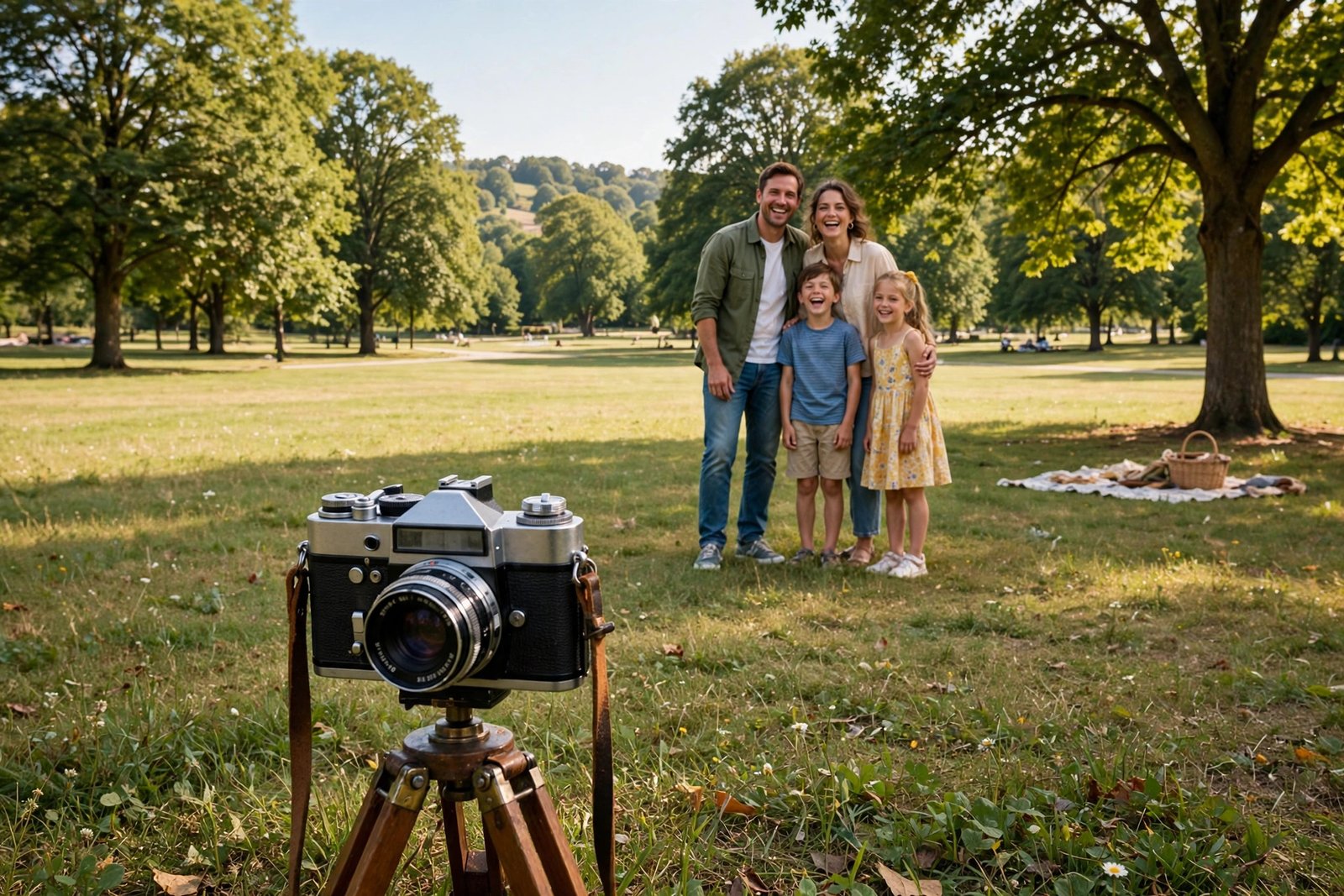
Picture the scene: a birthday party, a wedding, a family reunion. Someone lifts a camera, everyone squeezes together, and on the count of three the whole group shouts a single word in unison. It is not “smile.” It is “cheese!” But why say cheese photos in the first place? What does a dairy product have to do with looking happy in a picture?
The answer is a delightful mix of face muscles, Victorian manners, and 1940s folk wisdom. Saying “cheese” is not really about cheese at all. It is a trick, a tiny piece of mouth choreography that forces your face into something that looks like a grin, whether you feel like grinning or not. And like many everyday habits, its origin is murkier than the confident way photographers say it suggests.
Before we dig in, one honest note: nobody knows exactly who first told a group to say “cheese.” The earliest printed evidence dates to 1943, and the story attached to it involves a diplomat and an unnamed politician. Historians treat that as a commonly told explanation, not a settled fact with a single inventor. What is certain is how the trick works, why it replaced an older instruction, and why versions of it exist all over the world.
What Happens to Your Face When You Say Cheese?
Try it right now, slowly: “chhh-eee-zuh.” Notice what your mouth does. The “ch” sound brings your teeth together. Then the long “ee” sound pulls the corners of your mouth wide and upward, parts your lips, and shows your teeth. The result looks a lot like a smile, even if you started out completely neutral.
That is the whole magic trick. The word “cheese” ends on a long vowel sound that stretches the lips outward and lifts the cheeks. Photographers love it because it is fast, it works on a whole group at once, and it gives everyone the same cue at the same moment. On three, everyone says it, everyone grins, and the shutter clicks while the grin is at its peak.
There is a catch, though, and you have probably seen it in your own photos. A real, spontaneous smile, sometimes called a Duchenne smile, involves both the mouth and the muscles around the eyes. A “cheese” smile is manufactured by the mouth alone, while the eyes often stay flat. That is why so many “say cheese” photos look slightly stiff or hollow: the mouth is smiling, but the eyes did not get the memo.
Other words with a long “ee” sound would work just as well mechanically. “Cheer,” “geese,” and “money” all pull the mouth into a similar shape. “Cheese” simply won the popularity contest in English, partly because it is short, familiar, and fun to say out loud in a group.
Why Say Cheese Photos Replaced Say Prunes
To understand why “cheese” caught on, you have to understand what came before it. In the 19th century, smiling in a photograph was not the norm at all. People were expected to look serious, dignified, and composed, much like the subjects of painted portraits. A big grin was considered undignified, and in some circles, only children, peasants, or people who had been drinking were expected to smile for the camera.
There were practical reasons too. Early photography was slow and expensive. In the earliest days, exposures could run for minutes, and holding a smile that long turns into a grimace. Even after faster plates and brighter lenses cut sittings to seconds by the early 1840s, the serious look stuck around for decades out of habit and fashion. Photographs were rare, formal occasions, and people dressed and posed accordingly.
Dental health played a role as well. In an era when dental care was limited, many people did not want to show teeth that were missing or damaged. A closed, neutral mouth was safer and more flattering. So Victorian photographers, chasing that small, controlled, decorous mouth, are said to have told sitters to say “prunes.” The word purses the lips into exactly the tight shape the era admired. It was the opposite of “cheese”: an instruction designed to suppress a smile, not produce one.
As cameras became cheaper and more common in the early 20th century, photography moved out of the studio and into backyards, beaches, and birthday parties. Kodak’s inexpensive box camera, introduced in 1900, helped turn photography from a formal record into a casual souvenir. Smiling started to look natural rather than frivolous, and the old “prunes” instruction began to feel outdated. The culture was ready for a word that made people grin instead of purse their lips.
Why Say Cheese Photos Caught On in the 1940s
The earliest printed reference researchers have pinned down for “say cheese” appeared in 1943, in a Texas newspaper, the Big Spring Herald. The article ran under a line along the lines of “Just say ‘Cheese,’ It’s an automatic smile,” and credited the formula to former ambassador Joseph E. Davies. According to the account, Davies said he had learned the trick from a politician he declined to name.
Some retellings suggest that unnamed politician may have been President Franklin D. Roosevelt, Davies’s former boss, but the original account does not say so, and honest histories leave that detail unresolved. What the 1943 article does establish is that by the early 1940s, the trick was already common enough to print as folk wisdom. It was not a brand-new invention being announced to the world. It was a tip being passed along.
The timing makes sense. By the 1940s, snapshot culture was booming, Hollywood had made the bright, toothy smile glamorous, and ordinary families were taking far more photos than their grandparents ever had. A quick, reliable way to get a group smiling on cue was exactly what amateur photographers needed. “Cheese” fit perfectly: one syllable of setup, one long vowel of payoff, and a grin on demand.
From there, the phrase spread through magazines, movies, classrooms, and family albums until it became automatic. Today, many people do not even say the word anymore. “Say cheese” has become a cue in itself, a final warning to get into position and smile, whether or not anyone actually pronounces the word before the shutter clicks.
Why We Did Not Always Smile in Photos
It is easy to assume that old photos look serious because early cameras were too slow for smiles. That explanation is only partly true. As photography historians point out, exposure times dropped quickly. By the early 1840s, a studio sitting could take under a minute, and within a few years portrait studios were working in seconds. You can hold a smile for ten seconds without much strain, so technology alone does not explain six decades of solemn faces.
Culture explains much more. Painted portraits set the standard for how a respectable person should look: calm, serious, and in control. Smiling broadly in a portrait would have looked strange, even silly, to a Victorian audience. Add the cost of a sitting, the formality of the occasion, and the desire to look dignified for posterity, and the serious face becomes the obvious choice.
The shift toward smiling was gradual and measurable. Researchers behind a University of California, Berkeley study analyzed nearly 38,000 American high school yearbook portraits from 1905 to the 2010s and scored how much each face smiled. The curve climbs steadily out of the stiff-faced early 1900s and rises through the middle of the century, tracking the rise of casual photography, advertising, and a culture that began to value warmth and approachability in a portrait.
In other words, we did not suddenly learn how to smile. We gradually decided that a smile was the right thing to show the camera. “Cheese” arrived right in the middle of that change, giving people a tool to produce the new ideal expression on demand.
What Photographers Say Around the World
Every culture that loves photography seems to have found its own version of the trick, and the pattern is remarkably consistent: pick a word with a smile-shaped vowel, or a word that makes people laugh, and shout it together.
In South Korea, photographers often say “kimchi,” the beloved fermented dish, whose ending sound pulls the mouth into a grin. In China, the word is “qiezi,” meaning eggplant, whose pronunciation sounds notably similar to “cheese.” In Japan, people say “chiizu,” the Japanese pronunciation of cheese itself, or use a “ready, set” style countdown.
In Latin America, many photographers say “whiskey,” because the word ends with the same long “ee” sound that makes “cheese” work. In Spain, the classic word is “patata,” meaning potato. In France, photographers may say “ouistiti,” the French word for a marmoset monkey, which is funny enough to produce a genuine laugh. In Germany, food words like “Spaghetti” or “Käsekuchen,” meaning cheesecake, are used, often to make children laugh.
Other traditions skip the funny word entirely and go straight for the point. In the Netherlands and Portugal, photographers may say “look at the little bird,” directing attention and smiles toward the lens. In Brazil, photographers may ask people to say “X,” whose Portuguese pronunciation sounds much like “cheese.” The details differ, but the goal is identical everywhere: a shared cue, a synchronized smile, and a photo that looks happy.
That global pattern is strong evidence that “cheese” is not special because of dairy. It is special because of phonetics. Any word that stretches the mouth into a grin, or any joke that produces a real laugh, can do the same job.
Why Say Cheese Photos Still Rules the Selfie Era
You might think smartphones would have killed “say cheese.” After all, selfies are often taken alone, with a front camera and a timer, and nobody is shouting instructions. Yet the phrase survives, and the grin it produces survives with it. Social media runs on bright, toothy, approachable photos, and the “cheese” smile has become the default face of a good time online.
At the same time, modern photography trends are pushing back. Lifestyle photographers, wedding photographers, and portrait artists increasingly prefer candid, natural expressions over posed grins. They ask subjects to laugh at a joke, look at someone they love, or simply relax and forget the camera. The goal is a smile that reaches the eyes, not just the mouth.
That tension is the modern story of “say cheese.” It is still the fastest way to get a group photo that looks cheerful, and it remains a beloved ritual at parties and school picture days. But the best photographers now know its limits. A manufactured grin is a starting point, not the finish line. The most memorable photos are usually the ones where someone forgot to say “cheese” and laughed for real.
If you want a better group photo next time, try this: instead of counting to three and shouting “cheese,” ask everyone to think of something funny, or have the photographer tell a quick joke right before the shot. You will still get the mouth shape, but you might also get the eyes. And if all else fails, “cheese” is still there, ready to save the shot.
Takeaways: The Smile Trick in One Minute
- Saying “cheese” works because the long “ee” sound pulls the mouth wide and shows the teeth, mimicking a grin.
- In the 19th century, photographers said “prunes” to keep mouths small and dignified, the opposite of today’s trick.
- Early photos look serious for cultural reasons as much as technical ones: dignity, cost, formality, and dental health all mattered.
- The earliest printed “say cheese” reference dates to 1943, linked to former ambassador Joseph E. Davies and an unnamed politician.
- Nobody knows for certain who invented the phrase; treat single-inventor stories as commonly told explanations, not settled fact.
- Around the world, photographers use “kimchi,” “qiezi,” “whiskey,” “patata,” and “ouistiti” for the same mouth-shaping effect.
- A “cheese” smile often misses the eyes, which is why posed grins can look stiff compared with a genuine laugh.
- In the selfie era, candid and natural expressions are gaining ground, but “cheese” remains the classic group-photo cue.
Curious about other everyday habits with surprising histories? Our viral facts collection includes stories like Reddit’s most viral today-I-learned facts, and for a wilder animal story, meet Jimothy, the Seattle raccoon who went viral. History hides in the smallest habits, from voting days to photo days.
Conclusion: A Tiny Word With a Big History
So why say cheese photos? Because a single word can choreograph a whole group of faces in under a second. Because Victorian manners once demanded “prunes,” and a more casual, camera-happy century demanded the opposite. And because a Texas newspaper in 1943 printed a diplomat’s tip that turned out to be too useful to forget.
The next time someone shouts “cheese” at you, you will know you are taking part in a tradition that is less than a century old in print, but rooted in two centuries of changing ideas about how we should look, smile, and remember ourselves. Say it slowly, notice your mouth move, and then, if you can, laugh for real. That is the photo you will actually treasure.
Sources and further reading: Wikipedia on “Say cheese”, Reader’s Digest on why we say “cheese”, Fstoppers on the surprisingly recent history of smiling in photos, and Omniglot’s guide to “say cheese” around the world. For another mind-bending time fact, read why Cleopatra lived closer to the iPhone than to the pyramids.
Frequently Asked Questions
Why do we say “cheese” when taking photos?
We say “cheese” because the long “ee” sound pulls the corners of the mouth wide, parts the lips, and shows the teeth, creating a grin on cue. Photographers use it as a fast, synchronized signal so a whole group smiles at the same moment the shutter clicks.
Who invented saying “cheese” for photos?
Nobody knows for certain. The earliest printed reference appeared in 1943 in the Big Spring Herald, a Texas newspaper, which credited the tip to former ambassador Joseph E. Davies, who said he learned it from a politician he did not name. Some retellings guess that politician was President Franklin D. Roosevelt, but the original account does not confirm that, so the inventor remains unknown.
What did photographers say before “cheese”?
In the 19th century, photographers are said to have told sitters to say “prunes,” which purses the lips into a small, controlled shape. That matched Victorian ideals of dignity and restraint, the opposite of the wide, toothy grin that “cheese” produces.
Why did people not smile in old photographs?
Old photographs look serious for several reasons: cultural ideals favored a dignified, neutral expression like a painted portrait, sittings were expensive and formal, and limited dental care made many people reluctant to show their teeth. Long exposure times played a role in the very earliest photos, but by the 1840s sittings were often short enough to hold a smile, so culture mattered at least as much as technology.
What do people say instead of “cheese” in other countries?
Many countries use a word with a similar smile-shaped sound or a funny word that prompts laughter. Examples include “kimchi” in South Korea, “qiezi” (eggplant) in China, “whiskey” in much of Latin America, “patata” (potato) in Spain, and “ouistiti” (marmoset) in France. The goal is always the same: a shared cue that shapes the mouth into a smile.