
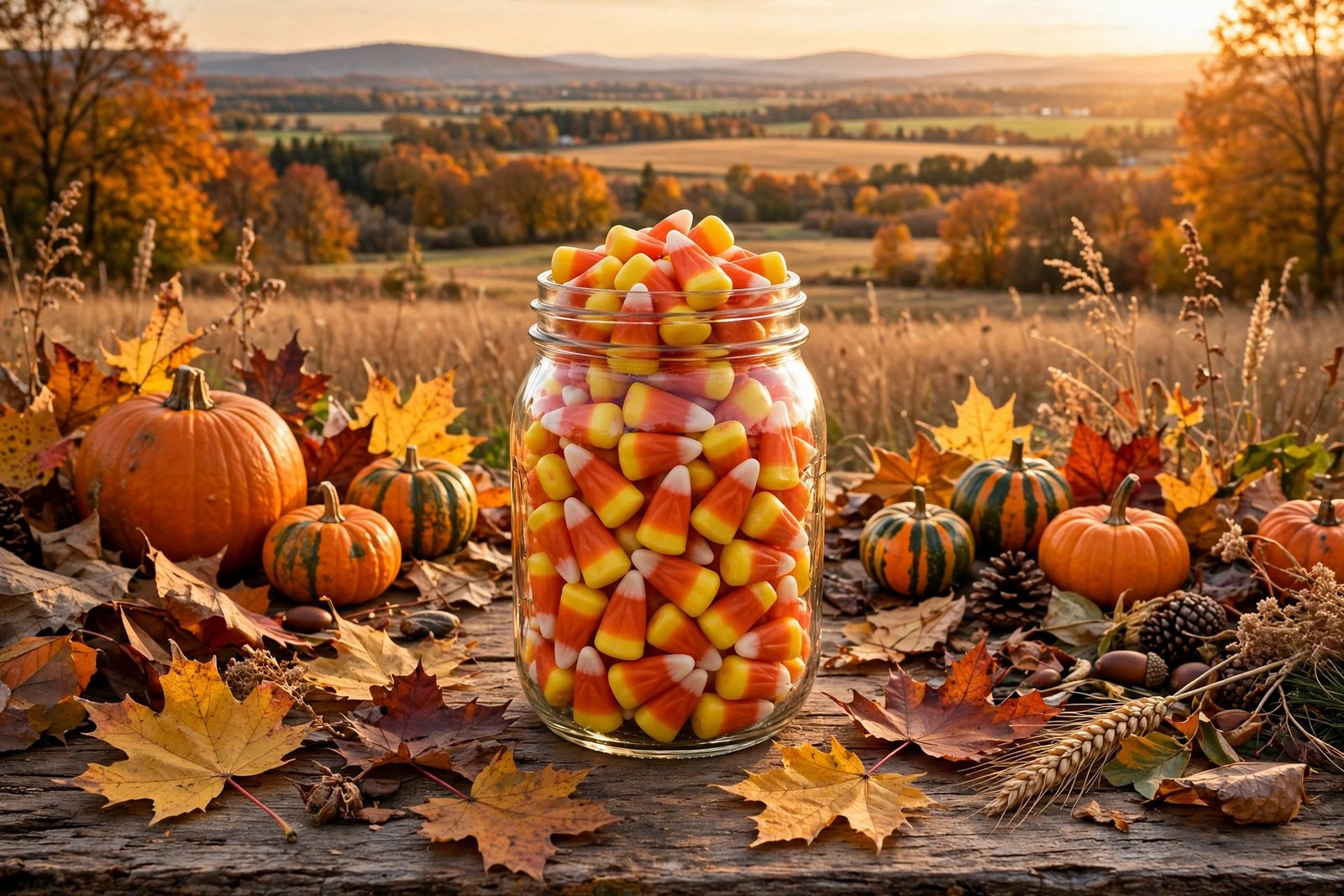
Every October, the same battle breaks out in offices, classrooms, and candy bowls across America. Some people reach for the little tri-colored kernels with pure joy. Others recoil as if they have been offered a piece of sweetened wax. Few candies inspire such strong feelings — and few have a story as surprising as this one. The candy corn history behind this tiny treat stretches back more than a century, to a time when it was not a Halloween candy at all, but a year-round novelty meant to look like farm food.
Love it or hate it, candy corn is one of the most recognizable sweets in the United States. It shows up in fall displays, harvest decorations, and heated debates on social media every single year. But how did a simple piece of sugar, corn syrup, and wax become a cultural icon — and why does it divide America like almost no other candy? The answers are sweeter, stranger, and older than you might think.
The Surprising Origins of Candy Corn History
The commonly told candy corn history begins in the 1880s, when candy maker George Renninger, working at the Wunderle Candy Company in Philadelphia, is credited with inventing the treat. At the time, candy-making was still largely done by hand, and new sweets were often designed to mimic everyday objects. Renninger reportedly created a candy shaped like a kernel of corn, with a yellow tip, an orange middle, and a white base — the colors of a real ear of corn, stacked in a single bite-sized piece.
Originally, the candy was not called candy corn at all. It was marketed under the name “Chicken Feed,” complete with a rooster on the box and the slogan that it was the kind of feed chickens loved. That sounds odd today, but in the late 1800s, much of America still lived on or near farms, and a candy shaped like chicken feed was a charming agricultural novelty, not an insult. The name stuck for years before “candy corn” became the standard name.
One of the most important companies in early candy corn history was the Goelitz Confectionery Company, which began producing the candy in the late 1890s and helped make it widely available. That company later became the Jelly Belly Candy Company, which still produces candy corn today. Because production was labor-intensive — each kernel was poured by hand into molds, layer by layer — candy corn was something of a craft product in its early days, and workers poured thousands of kernels by hand.
How Candy Corn Became a Halloween Staple
For decades, candy corn was sold year-round, but its fortunes changed as Halloween grew into a major American holiday. Its harvest colors — yellow, orange, and white — matched the autumn season perfectly, and its corn-kernel shape fit the harvest theme. As trick-or-treating became a widespread tradition in the mid-1900s, candy corn found its natural home: the Halloween candy bowl.
Manufacturers leaned into the seasonal connection, and candy corn became one of the defining treats of fall. Grocery stores began stocking it in September, and it became a visual shorthand for Halloween itself, appearing in decorations, party supplies, and advertising. Even people who never eat it recognize it instantly. In that sense, candy corn history is also the history of Halloween becoming the candy holiday we know today — a treat and a tradition grew up together.
The candy’s design helped, too. Unlike chocolate bars or lollipops, candy corn is instantly recognizable from across a room. Its tri-color layers are simple, bold, and unmistakable. That visual identity is part of why it survived for more than a century while countless other old-fashioned candies faded away. You do not need a wrapper or a logo to know what candy corn is — the shape tells you.
Candy Corn History: The Great Love-It-or-Hate-It Debate
Ask ten Americans about candy corn and you will get a passionate argument. Fans describe it as sweet, nostalgic, and perfect in small handfuls — a taste of childhood Halloweens, fall festivals, and grandmother’s candy dish. They point out that the texture, a soft, slightly waxy chew, is part of the charm, and that the flavor, a gentle honey-vanilla sweetness, is comforting rather than overpowering.
Critics are equally passionate. They call it too sweet, too waxy, and too much like eating a candle. Some say a single piece is fine but a handful is a sugar overload. Others insist the taste is artificial and the texture is off-putting. The debate has become a yearly ritual in itself, with polls, articles, and social media threads ranking candy corn among the most divisive foods in America — right up there with debates over other polarizing treats.
Why does such a small candy inspire such big feelings? Part of the answer is nostalgia. Candy corn is tied to childhood memories, and people tend to defend the tastes of their youth or reject them just as fiercely. Part of it is the candy’s unusual texture, which is genuinely different from most modern sweets. And part of it is simply fun: arguing about candy corn is a harmless, low-stakes tradition, and the internet loves a good-natured food fight every October.
The Candy Corn Family: Variations and Modern Twists
Over the years, candy corn has inspired a whole family of seasonal variations. There are harvest corn versions in brown, orange, and white for Thanksgiving, pastel “Easter corn” in spring colors, and even red-and-white “reindeer corn” for Christmas. Candy makers have also experimented with flavors, including chocolate, caramel, and fruit varieties — though traditionalists insist the original is the only real candy corn.
Creative cooks have embraced the candy as well. Candy corn appears in cookies, popcorn mixes, cupcakes, and trail mixes every fall. Its bright colors make it a favorite decoration for Halloween treats, and its shape makes it easy to scatter over desserts like edible confetti. For bakers and party hosts, candy corn is less a candy to eat on its own and more an ingredient in the visual language of autumn.
- Classic candy corn: yellow, orange, and white — the original, sold mainly in fall.
- Harvest corn: brown, orange, and white, made for Thanksgiving season.
- Pastel corn: soft spring colors, sold around Easter.
- Reindeer corn: red and white, a Christmas variation.
- Flavored varieties: chocolate, caramel apple, and other twists on the original recipe.
What Candy Corn Is Actually Made Of
Part of the mystery around candy corn is its ingredient list. The classic recipe is built on sugar, corn syrup, and confectioner’s wax, with honey, vanilla flavoring, and food coloring added. The wax is food-grade and safe to eat — it is the same kind of wax used on many fruits and candies — but it is also the reason some people describe the texture as waxy. The honey gives the candy its distinctive mellow sweetness, which is different from the sharper sweetness of pure sugar candy.
Understanding the ingredients takes some of the mystery out of the debate. Fans are tasting honey and vanilla; critics are tasting wax and sugar. Both are right, because both are literally in the candy. The texture that one person calls smooth and creamy, another calls waxy — and that difference in perception is at the heart of the candy corn divide. For a deeper look at the candy’s background, see the candy corn overview and the Jelly Belly company site, the successor of the Goelitz company that helped popularize it.
Why Candy Corn Refuses to Disappear
Many candies from the 1800s have vanished, but candy corn is still here — and still selling strongly every fall. Its survival is a small business lesson in itself. It found a season and owned it. It kept a simple, recognizable design that never needed redesigning. And it became part of a ritual — Halloween — that grows bigger every year. Even its critics help keep it alive: every “I hate candy corn” post is free advertising, and every debate reminds shoppers to pick up a bag.
There is also the nostalgia factor. For millions of Americans, candy corn is not just a candy — it is a time machine. One bite brings back trick-or-treating in a plastic pumpkin, school Halloween parties, and autumn afternoons. That emotional connection is hard to replicate, and it is why a candy invented in the 1880s still shows up in stores every September. For more Halloween history, check out the surprising origin of trick-or-treating, and for a completely different kind of timeless food, read why honey never expires.
Key Takeaways
- Candy corn history begins in the 1880s, when George Renninger of the Wunderle Candy Company is credited with creating it.
- It was originally called “Chicken Feed” and marketed with a rooster on the box, a nod to its farm-inspired design.
- Its tri-color layers mimic a kernel of corn, and early production was done by hand, layer by layer.
- The Goelitz Confectionery Company, later Jelly Belly, helped make candy corn widely available in the late 1890s.
- Candy corn became a Halloween staple because its harvest colors and shape matched the autumn season perfectly.
- The love-it-or-hate-it debate is driven by its unusual waxy texture, honey-vanilla sweetness, and deep nostalgia.
- Seasonal variations now include harvest corn, pastel Easter corn, and reindeer corn for Christmas.
Conclusion
Whether you love it or hate it, candy corn has earned its place in American culture. It is a survivor from the age of hand-poured candy, a symbol of Halloween, and the subject of one of the friendliest arguments in food. Its history — from “Chicken Feed” to Halloween icon — is a reminder that the simplest ideas sometimes last the longest. So this October, when the candy bowl comes around, take a piece, make up your own mind, and join a debate that has been going on for more than a century. Just do not be surprised if you end up reaching for a second handful — or passing the bowl along with a grin.
Who invented candy corn?
Candy corn is commonly credited to George Renninger of the Wunderle Candy Company in Philadelphia, who is said to have created it in the 1880s, though exact early records are limited and the account is the commonly told version of candy corn history.
Why was candy corn originally called Chicken Feed?
Early candy corn was marketed as “Chicken Feed” with a rooster on the box, because its shape resembled kernels of corn used as chicken feed — a charming farm reference in an era when most Americans lived close to agriculture.
What are the three colors of candy corn?
Classic candy corn has three layers: a yellow tip, an orange middle, and a white base, designed to mimic the appearance of a kernel of corn.
Why do people hate candy corn?
Critics usually point to its very sweet flavor and waxy texture, which comes from food-grade confectioner’s wax in the recipe. Fans, by contrast, enjoy its honey-vanilla sweetness and nostalgic Halloween associations.
Is candy corn only sold at Halloween?
No. While classic candy corn is most associated with Halloween and fall, seasonal variations like pastel Easter corn, harvest corn for Thanksgiving, and reindeer corn for Christmas are sold at other times of year.