
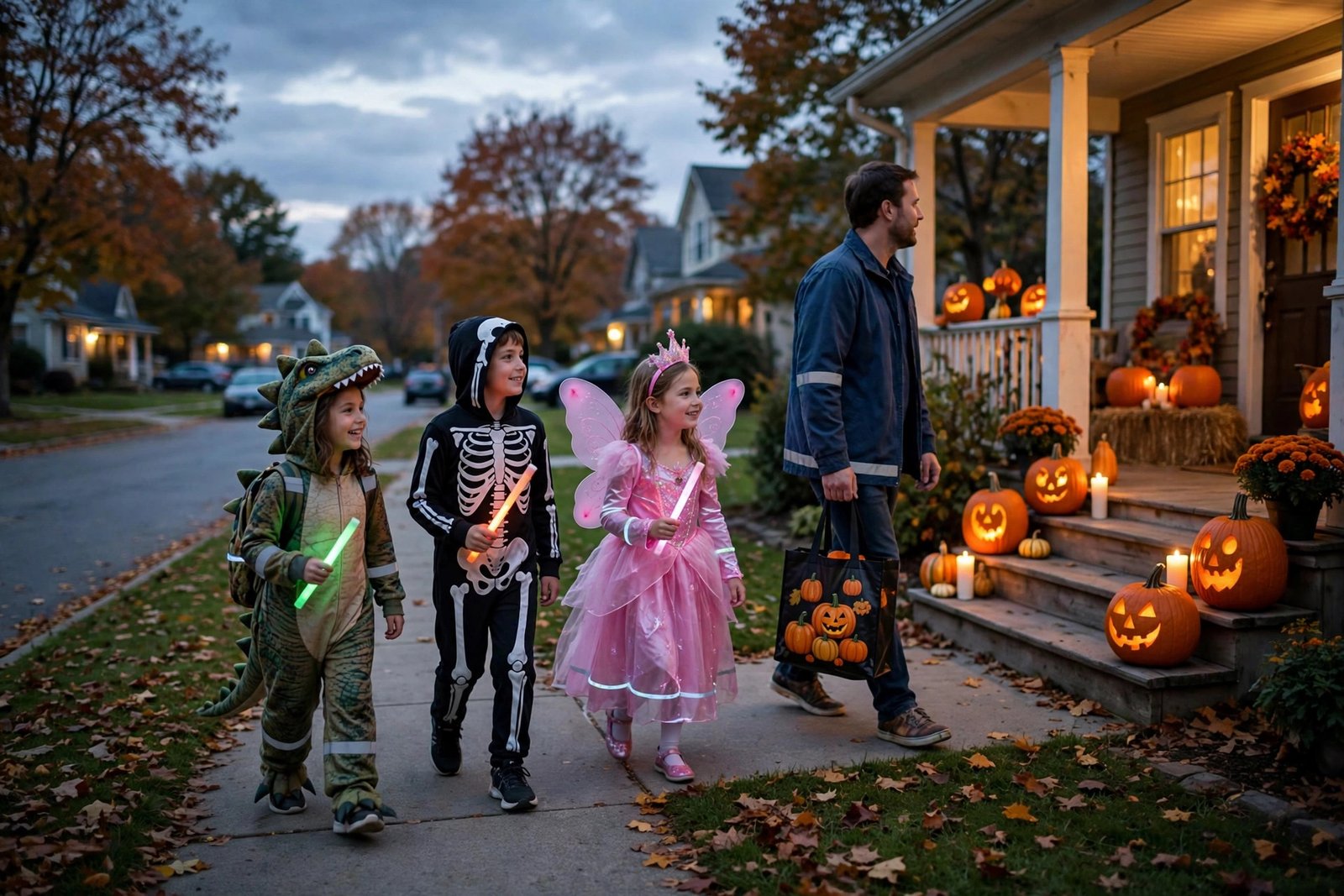
Halloween night in 2026 falls on a Saturday, which means neighborhoods across America will be buzzing with costumed kids, decorated porches, and candy bowls long after sunset. That extra weekend energy makes the night even more fun — and it also makes a little planning more important than ever. These Halloween safety tips will help your family enjoy every porch light and pumpkin without the worry, whether you are heading out with toddlers, tweens, or a whole group of neighborhood friends.
The good news is that staying safe on Halloween does not mean sucking the fun out of it. Most of the smartest precautions are simple, quick, and easy to build into your evening: a glow stick here, a flashlight there, a quick candy check before the first bite. Think of this guide as your family’s pre-trick-or-treat checklist — run through it before you leave the house, and the night takes care of itself.
Halloween Safety Tips for Costumes and Visibility
Costumes are the heart of Halloween, but they are also the first place safety matters. A costume that is hard to see, hard to walk in, or hard to see out of can turn a fun night into a frustrating one. The trick is choosing a costume that looks great and still lets your child move, see, and be seen.
Start with fit. Costumes should be short enough to avoid tripping on sidewalks and curbs, and shoes should be comfortable and well-fitting — save the fancy character shoes for photos at home and wear sturdy sneakers for the actual route. Masks can block peripheral vision, so face paint or makeup is often the safer choice for younger trick-or-treaters. If your child insists on a mask, make sure the eye holes are large and the mask fits snugly without slipping.
Visibility is the single biggest safety upgrade you can make, and it costs almost nothing. Add reflective tape to costumes and treat bags, clip on a glow stick bracelet or necklace, and carry a flashlight. Drivers can spot a glowing, reflective group far sooner than a group in dark costumes, and that extra reaction time matters on busy streets. Light-colored costumes are naturally easier to see, but even the darkest vampire cape becomes visible with a few strips of reflective tape.
- Use face paint instead of masks when possible, so vision stays clear.
- Add reflective tape to costumes, shoes, and treat bags.
- Give every child a flashlight or glow stick — and carry a spare.
- Choose comfortable, well-fitting shoes for walking the route.
- Skip long, trailing fabric that can catch on steps, fences, or bushes.
Props deserve a quick check too. Swords, wands, and other accessories should be short, soft, and flexible rather than sharp or rigid. A foam sword is just as fun as a plastic one and far less likely to poke someone in a crowded group.
Halloween Safety Tips for Road and Traffic Safety
More children are out on foot on Halloween night than on almost any other night of the year, and many of them are excited, distracted, and crossing streets in the dark. That combination is exactly why road safety deserves its own spot on your checklist. These Halloween safety tips for the road apply to kids, parents, and drivers alike.
Always walk on sidewalks where they exist, and if there is no sidewalk, walk facing traffic as far to the edge of the road as possible. Cross streets only at corners and crosswalks, look left, right, and left again, and never dart out from between parked cars — a driver simply cannot see a small child stepping out from behind a vehicle in time. Put phones away while crossing; a text can wait, but a car cannot.
Adults should walk the route with younger children, and even older kids do better in groups with a planned route and a set return time. Agree on the streets you will cover before you leave, and stick to well-lit, familiar neighborhoods. If your teen is heading out with friends, make sure phones are charged and everyone knows the meeting point and curfew.
Drivers have a role too. If you are driving on Halloween night, slow down in residential areas, watch for children at every intersection and driveway, and be extra careful when turning into or out of driveways. Excited kids do not always look before they run, so assume a child could appear from anywhere and drive accordingly.
- Stay on sidewalks; cross only at corners and crosswalks.
- Never run across a street or dart out between parked cars.
- Keep phones tucked away while crossing the road.
- Stick to well-lit, familiar streets and a planned route.
- Drivers: slow down, expect children everywhere, and check driveways carefully.
Candy Checks: The Rule Every Family Should Keep
The candy haul is the prize at the end of the night, and a quick check before anyone digs in is a tradition worth keeping. When you get home, spread the candy out in a well-lit room and look it over together. Toss anything that is unwrapped, has torn or damaged packaging, looks homemade from a stranger, or simply does not look right. When in doubt, throw it out — there is always plenty more candy.
Food allergies deserve special attention on Halloween. Many candies contain peanuts, tree nuts, milk, or wheat, and miniature or fun-size versions can have different ingredients than the full-size bars. If your child has allergies, read labels carefully, and consider carrying a small bag of safe treats to swap in so no one feels left out. The Teal Pumpkin Project, which encourages households to offer non-food treats for kids with allergies, has become a familiar sight in many neighborhoods — a teal pumpkin on a porch signals allergy-friendly options.
It is also smart to set a sensible candy pace. Let kids enjoy a few pieces on Halloween night and save the rest for the days that follow. A small bag of favorites eaten slowly beats a stomach ache from eating everything at once, and it stretches the fun across the whole week.
Porch and Home Safety for Hosts
If you are the one handing out candy this year, a few small steps make your home welcoming and safe for every visitor. Clear your walkway, porch steps, and driveway of anything a costumed visitor could trip over — garden hoses, toys, loose decorations, and extension cords are all easy to miss in the dark. Keep your porch and path well lit, and if you use jack-o’-lanterns with real candles, place them well away from walkways, curtains, and anything flammable.
Battery-operated candles are a simple swap that keeps the glow without the open flame, and they are especially smart if your decorations include dried cornstalks, hay bales, or hanging fabric. If you do use real candles, never leave them unattended, and keep them out of reach of little hands and wagging tails.
Consider your pets too — a constantly ringing doorbell and a parade of strangers in strange costumes can be stressful for dogs and cats. Many families find it easiest to keep pets in a quiet back room during peak trick-or-treat hours, with water, a comfortable bed, and something to chew or play with. It protects both your pet and your visitors, since even friendly dogs can get overexcited or slip out an open door.
Pet Safety on Halloween Night
Pets are part of the family, and Halloween brings specific risks for them. Chocolate and many sugar-free candies are toxic to dogs, and even small amounts of chocolate can make a dog seriously ill — so keep the candy bowl well out of reach and remind kids not to share their haul with the family pet. Costumes for pets can be adorable, but only dress a pet that genuinely tolerates it, and never use a costume that restricts breathing, movement, vision, or hearing.
Outdoor cats are safest kept indoors on Halloween night, when extra foot traffic, loud noises, and unfamiliar people can frighten them into running off. And if you take your dog along on the trick-or-treat route, keep them leashed, watch for dropped candy on sidewalks, and be ready to head home if they seem stressed. A calm pet at home is often happier than a stressed pet on the route.
Prank Warnings: The Door Kick Challenge and Copycat Stunts
Every Halloween season brings a fresh round of viral prank trends, and this year is no exception. Police departments in various parts of the country have warned families about prank-style challenges circulating on social media, including the so-called door kick challenge, in which participants kick or bang loudly on strangers’ doors and run away. Police warnings covered in the news this Halloween season have urged teens not to take part, noting that startling a homeowner late at night can lead to dangerous confrontations and, in some cases, legal trouble.
The message for families is simple: pranks that frighten strangers, damage property, or involve running onto someone else’s property are not harmless fun. Talk to your teens before Halloween night about where the line is. A good rule of thumb is that a prank is only funny if everyone involved, including the person on the receiving end, would laugh about it afterwards. If it relies on fear, surprise at someone’s front door late at night, or property damage, skip it.
Parents should also talk to kids about what to do if they encounter aggressive pranksters or feel unsafe: stay with the group, move toward a well-lit area or a trusted adult, and call a parent. And if someone knocks aggressively on your door, there is no obligation to answer — you can observe from inside and call local non-emergency services if the behavior continues.
For a deeper look at how this trend spread online, see our earlier coverage of the door kick challenge warning this Halloween, and if you want to share the history behind the holiday itself with your kids, our story on the origin of trick-or-treating makes a great read before you head out.
Your Halloween Night Checklist
A little preparation goes a long way. Run through this quick list before you leave the house, and you will cover nearly every one of these Halloween safety tips in about five minutes.
- Costumes fitted, reflective tape added, flashlights and glow sticks packed.
- Route planned, well-lit streets chosen, return time agreed.
- Phones charged and an adult accompanying younger children.
- Candy-check plan agreed: no eating until the haul is inspected at home.
- Pets settled safely indoors; chocolate and candy kept out of reach.
- Teens reminded: no door-kicking pranks or anything that frightens strangers.
- Porch lights on, walkways clear, candles safely placed if you are hosting.
Takeaways for a Safe, Fun Halloween 2026
Halloween is at its best when everyone can relax and enjoy it — the costumes, the decorations, the neighbors, and yes, the candy. The families who have the best nights are usually the ones who did a tiny bit of planning first: a reflective strip, a planned route, a candy check, and a quick chat with the kids about staying together and being kind to strangers’ doorsteps.
Keep the night well-lit, keep the group together, keep the candy checked, and keep the pranks friendly. Do those four things and Saturday night, October 31, 2026, can be all treats and no tricks gone wrong. Happy Halloween — and may your candy bowl always be full.
Conclusion
Safety on Halloween does not have to be complicated. Costumes that let kids see and be seen, streets crossed with care, candy inspected before it is eaten, pets kept comfortable, and pranks kept harmless — that is the whole formula. Share these Halloween safety tips with the other parents on your street, and the entire neighborhood gets a safer, happier night. For more seasonal reading, check out our National Cat Day facts to celebrate the real stars of spooky season once the candy is sorted.
What are the most important Halloween safety tips for kids?
The most important tips are making costumes visible with reflective tape and glow sticks, walking on sidewalks, crossing only at corners, carrying a flashlight, and checking all candy at home before eating it.
What age should a child trick-or-treat without an adult?
There is no single official age, and it depends on the child and the neighborhood. Most families let older children go in groups with a planned route, charged phones, and a set return time, while younger children should always go with a trusted adult.
Should you check Halloween candy before eating it?
Yes. Inspect all candy in a well-lit room, discard anything unwrapped or with damaged packaging, and check labels carefully for allergy ingredients before letting children eat it.
What is the door kick challenge and why is it dangerous?
The door kick challenge is a social media prank in which participants kick or bang on strangers’ doors and run away. Police warnings covered in the news have urged teens not to take part, because startling a homeowner late at night can lead to dangerous confrontations and legal trouble.
How can drivers stay safe on Halloween night?
Drivers should slow down in residential areas, watch carefully at intersections and driveways, avoid distractions, and expect children to appear unexpectedly from between parked cars or driveways.