
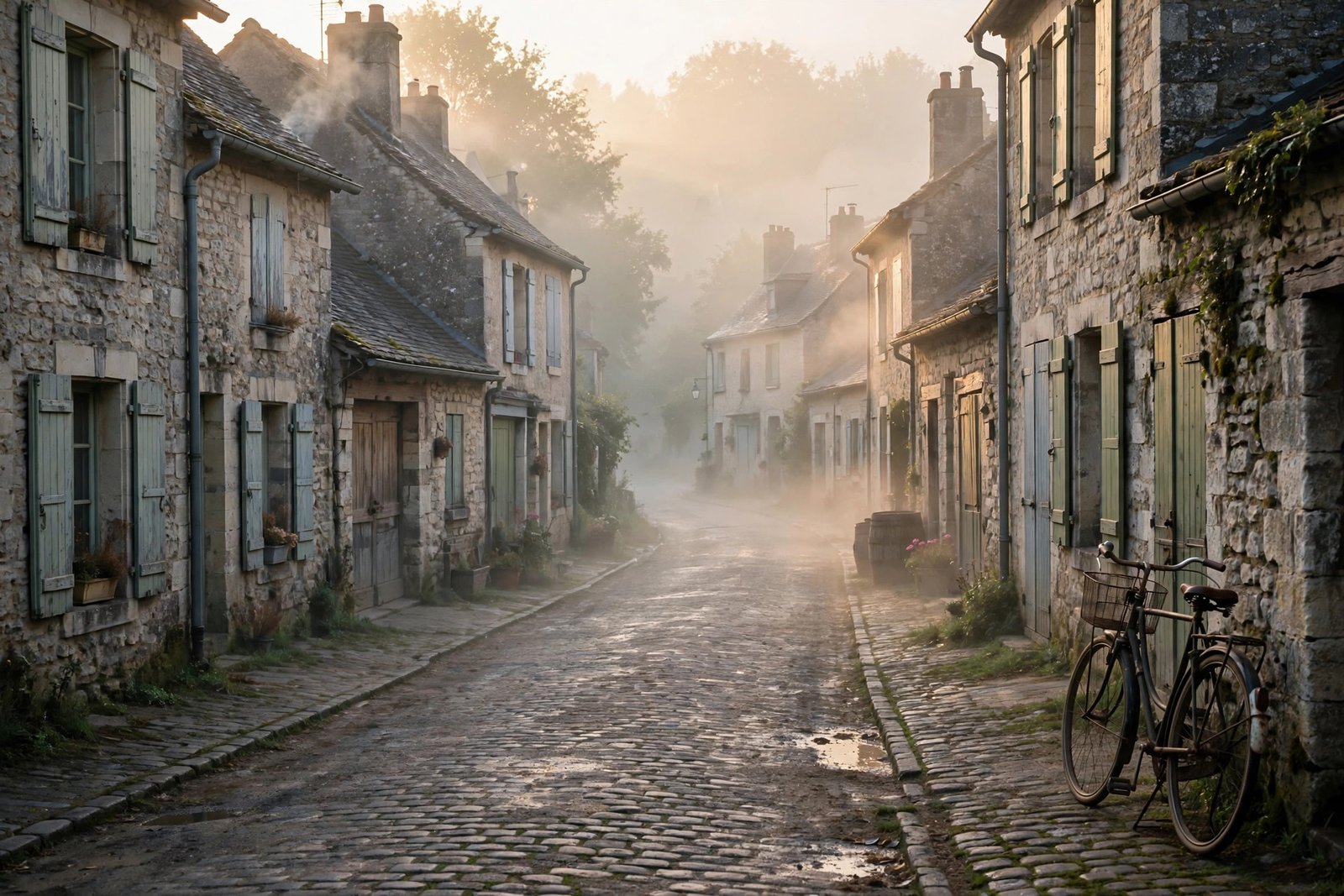
She was a schoolteacher on a bicycle, pedaling quietly through the French countryside with secret messages hidden in her basket. Eighty years later, the world finally learned her name. Solange Alexandre, one of the last heroes of the French Resistance, has died at the age of 104, closing one of the final living chapters of the fight against Nazi occupation in France.
Her death was announced at a nursing home in Le Mans, in the Sarthe department of western France, where she had lived most of her long life. The news was reported by BBC News on November 10, 2026, and tributes poured in from across France, led by President Emmanuel Macron. Yet for most of her 104 years, Alexandre asked for none of this attention. She twice turned down the Légion d’Honneur, France’s highest honour, saying she had only done her duty and that others were more worthy. She only relented in 2024, at the age of 102.
That humility is part of what makes her story so extraordinary. Alexandre was not just a witness to the darkest years of occupied France. She was a rare woman who, together with her future husband, created and commanded her own unit of anti-German fighters. She gave orders to some 30 men. She organised sabotage, sheltered Allied airmen shot down over France, and after the D-Day landings in 1944, she took up arms herself and joined the fight against the occupying German forces. In a war where women in the Resistance were usually couriers, typists, or lookouts, she was a commander.
Her passing matters because her generation is almost gone. Every year, the number of people alive who remember the Second World War shrinks a little further, and with each death, a piece of living memory disappears. Alexandre’s story is a reminder of what ordinary people can do when history demands the extraordinary, and of why that memory is worth protecting while we still can.
A Schoolteacher From Sarthe
Alexandre was born Solange Dubuisson on September 9, 1922, in Mamers, a small town in the Sarthe department of western France. She grew up in a patriotic family that had already suffered in the First World War, and the memory of that earlier conflict hung over her childhood like a shadow. France had lost a generation of young men in the trenches between 1914 and 1918, and families like hers carried the grief and the pride of that sacrifice into the next generation.
She trained as a schoolteacher, a profession that in rural France carried real standing in the community. Teachers were among the most educated people in a village, and they were trusted figures. That trust would later become one of her greatest weapons. A teacher on a bicycle, traveling between villages, carrying books and papers, was invisible in the best possible way. Nobody suspected the schoolmistress.
When Germany invaded France in the spring of 1940 and the country fell in a matter of weeks, Solange was just 17 years old. France was divided: the north and west under direct German occupation, the south under the collaborationist Vichy regime. For a patriotic young woman raised on stories of the First World War, living under a foreign occupier was intolerable. Like thousands of other young French men and women, she faced a choice that would define the rest of her life: accept the occupation, or resist it.
She chose resistance, and she chose it early. By 1941, at the age of 18 or 19, she was already working as a courier for the Resistance, carrying messages between networks in the region. It was dangerous work. A single intercepted message, a single informer, or a single unlucky checkpoint could mean arrest, torture, and deportation. Couriers were the nervous system of the Resistance, and the Germans knew it. They hunted them relentlessly.
Courier on a Bicycle: Joining the Resistance in 1941
The life of a Resistance courier sounds romantic in films. In reality, it was exhausting, terrifying, and often lonely. Alexandre used her bicycle to travel between villages around her home area in Sarthe, carrying messages, and sometimes supplies, between Resistance cells. A bicycle was the perfect cover: it was the normal transport of a rural schoolteacher, it needed no fuel, and it could slip down country lanes that a car could not follow.
But the cover only worked if she stayed calm. Every journey meant passing German patrols and checkpoints, where soldiers could stop her, search her bag, and question her at any moment. She had to know her story, keep her nerves steady, and be ready to destroy or hide a message in seconds. The BBC reported that she used her bicycle to travel through the region providing services even before the war had fully taken hold of her life, and the image has stayed with her story ever since: a young woman on two wheels, pedaling through occupied France, carrying the secrets of the Resistance in her basket.
Couriers like her were the reason the Resistance could function at all. Radio sets were rare, dangerous to operate, and easily detected by German direction-finding equipment. Most communication between cells still traveled by hand, by bicycle, and by train. A courier carried orders, warnings, and intelligence, and every trip was a gamble. Many couriers were caught. Many never came home. Alexandre made those journeys for three years before her role grew into something even more remarkable.
What is striking is how young she was. She began this work as a teenager, barely out of school herself. There was no training programme, no manual, no guarantee of support if things went wrong. She learned by doing, and she survived by being careful, disciplined, and brave in the quiet, everyday way that real courage usually looks: not a single dramatic gesture, but hundreds of small decisions to keep going.
Solange Alexandre and the Pas-de-Boeuf Maquis
In 1944, three years after she began carrying messages, Alexandre did something almost unheard of for a woman in the French Resistance: she founded her own fighting unit. Together with her future husband, she created the Pas-de-Boeuf network near the town of Ruillé-sur-Loir, in the Sarthe region. The Pas-de-Boeuf was a maquis, a rural band of armed Resistance fighters who lived in hiding in the woods and countryside, launching attacks on German forces and then melting back into the landscape.
Alexandre was not a figurehead. She was one of the founders and the head of the cell, and she had some 30 men under her orders. In 1944 France, a woman in her early twenties commanding 30 armed men was extraordinary. The Resistance was, like the rest of French society, largely a man’s world. Women were valued as couriers, nurses, and radio operators, but command was rarely offered to them and almost never taken by them. She took it anyway.
Under her leadership, the Pas-de-Boeuf network organised sabotage operations against the German occupiers. Sabotage was the maquis’s main weapon: cutting railway lines to slow German troop movements, destroying bridges, cutting telephone wires, and attacking supply convoys. Each act was small on its own, but together, across hundreds of networks all over France, sabotage made the occupation far harder and far more expensive for Germany to maintain. It also tied down thousands of German soldiers who might otherwise have been sent to the front.
The network also sheltered Allied airmen who had been shot down over France. Bomber crews from Britain and America who parachuted into French fields faced almost certain capture unless the Resistance reached them first. Hiding an airman was one of the most dangerous things a French family could do: the punishment, if discovered, was arrest and often deportation to a concentration camp, for the airman and for everyone who had helped him. The Pas-de-Boeuf network took that risk repeatedly, moving downed airmen along escape lines toward safety.
Running a maquis meant living with danger every single day. Fighters slept in barns, woods, and farmhouses, always ready to move. Food had to be found or stolen. Weapons were scarce and precious. Betrayal was a constant fear, and the Gestapo offered rewards for information. The fact that the Pas-de-Boeuf network survived and operated effectively under a young woman’s command is a measure of her leadership, and of the trust the men under her orders placed in her.
D-Day and the Fight for Liberation
Everything changed on June 6, 1944, when Allied forces landed on the beaches of Normandy. The D-Day landings, known as Operation Overlord, marked the beginning of the liberation of France, and for the Resistance, it was the signal to rise. Across the country, maquis units received coded orders broadcast over BBC radio, and the sabotage campaign intensified into open fighting.
Alexandre and the Pas-de-Boeuf network joined the fight against the occupying German forces directly. The months after D-Day were the most dangerous of the war for the Resistance. German forces, retreating but still heavily armed, fought back brutally against maquis units, and reprisals against civilians were common. The fighting in the Sarthe region, as the Allies advanced from Normandy toward Paris and beyond, was fierce and confused, with Resistance fighters operating alongside advancing Allied troops.
She survived. Many did not. By the time France was liberated in the late summer of 1944, the Resistance had paid a terrible price, and the country faced the enormous task of rebuilding itself and coming to terms with the years of occupation, collaboration, and resistance. For Alexandre, the war was over, but its shadow would shape the rest of her life. She returned to teaching, married, and lived quietly in the region she had fought to free.
For decades, she spoke little about what she had done. Like many Resistance veterans, she considered her wartime service a duty rather than an achievement. The men and women who had fought beside her, and the friends who had not survived, were the reason she resisted any suggestion that she was special. That silence is part of why her story remained little known outside France for so long, and why her death has prompted so many people to ask how such an extraordinary life could have stayed so quiet for so long.
The Honour She Twice Refused
Why Solange Alexandre Still Matters
Key Takeaways From Her Life
- Alexandre, born Solange Dubuisson on September 9, 1922, in Mamers, Sarthe, died on November 8, 2026, in a nursing home in Le Mans, aged 104.
- She served as a Resistance courier from 1941, carrying messages by bicycle through occupied France from the age of 18 or 19.
- In 1944, she and her future husband founded the Pas-de-Boeuf maquis near Ruillé-sur-Loir, and she commanded some 30 men.
- Her network organised sabotage, sheltered downed Allied airmen, and fought German forces after the D-Day landings.
- She twice refused the Légion d’Honneur, saying she had only done her duty, and finally accepted it in 2024 at the age of 102.
- President Emmanuel Macron led the tributes after her death, which was reported by BBC News on November 10, 2026.
Sources: BBC News, Wikipedia, The Nation.