
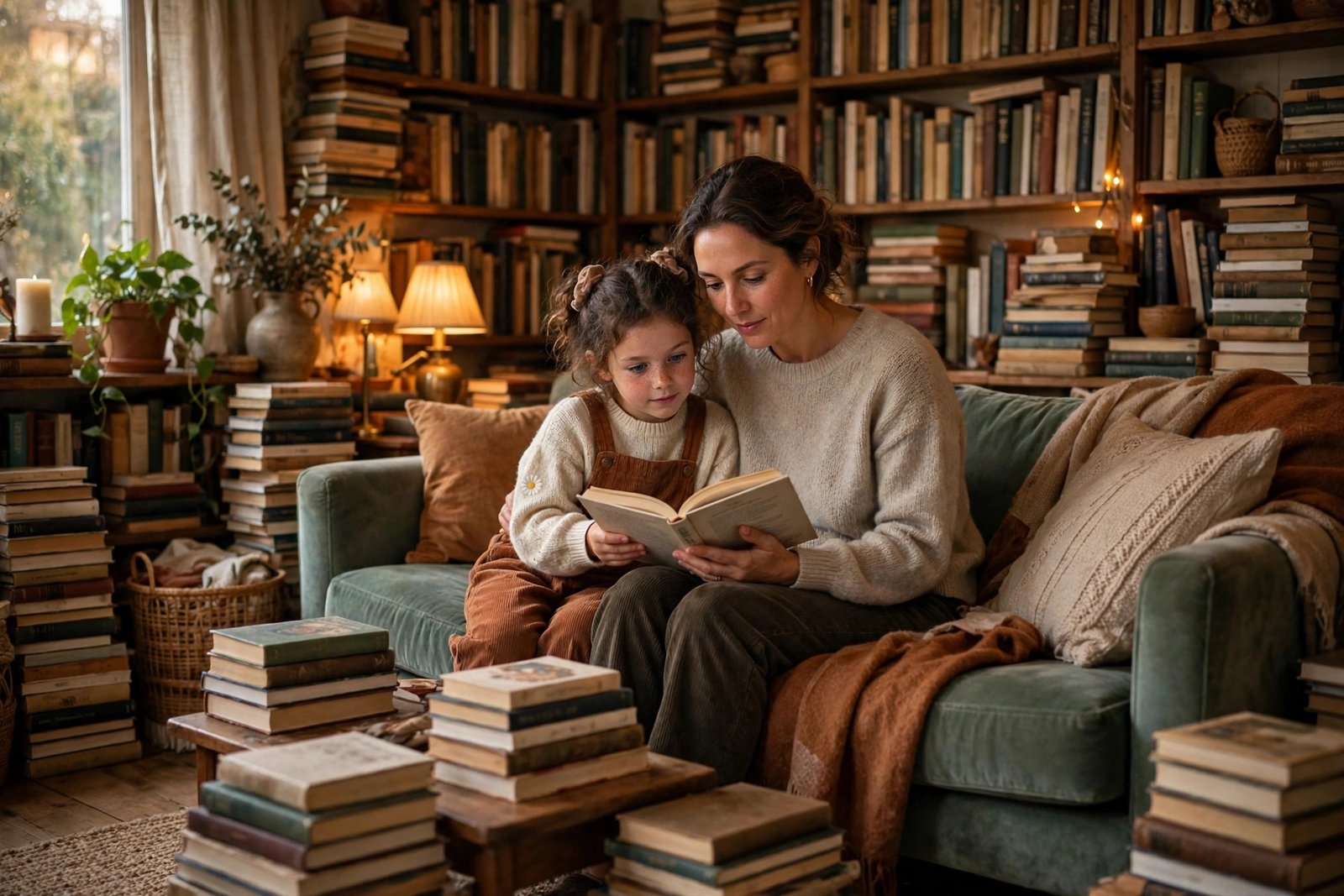
Imagine a home with no television humming in the background, no phone lighting up at the dinner table, and shelves stacked with books meant for children years older than the one reading them. That is the picture Rahul Sharma painted when he spoke about how he and his wife, former Bollywood star Asin, are raising their daughter Arin. The story of Asin no screens daughter languages has captured attention because it flips the usual celebrity parenting story on its head: instead of gadgets and glamour, this family chose books, quiet, and a remarkable love of language.
Asin, best known to Hindi film audiences for the blockbuster Ghajini, stepped away from acting years ago. Her husband, Micromax co-founder Rahul Sharma, recently opened up about their family life in an interview, and his comments about their daughter quickly went viral. According to Rahul, their young daughter can already understand and speak about 12 languages, including Korean, Japanese, Thai, and Chinese. He admitted, with a laugh, that he struggles with even two languages, saying the family is largely stuck with English and Hindi.
It is the kind of claim that makes readers stop scrolling. Twelve languages before even reaching double digits in age sounds almost unreal. But Rahul was quick to give all the credit to Asin, saying the environment she built at home made it possible. And that environment, he said, has one very clear rule: no screens.
Asin No Screens Daughter Languages: What Rahul Actually Said
In the interview, Rahul spoke warmly about his marriage before turning to their daughter. He described Asin as the person who holds the home together while he focuses on his professional work, saying he had never met a person like her. Then came the detail that set social media alight: the couple have not given their daughter any screens at all so far.
His exact words, as reported, were simple and striking: no TVs or mobile phones. Instead, the house is full of books. Rahul said the family probably has more books at home than Arin has at her school, and that although she is in Class 2, the shelves already hold books meant for Classes 8 and 9. He even joked that they might as well let her sit for the Class 10 board exam, adding that it is all Asin’s contribution to the family.
Reports of the interview differ slightly on Arin’s age, with some outlets describing her as seven and others as eight, reflecting that the original interview dates from 2025 and has been recirculated in new coverage. What stays consistent across the reports is the core of the story: a screen-free home, a house full of books, and a child with an extraordinary ear for languages. The coverage of Asin no screens daughter languages has focused on exactly that combination, because it feels both old-fashioned and radical at the same time.
No TV, No Phones: A House Full of Books
For most modern families, a screen-free home sounds almost impossible. Televisions are often the background noise of family life, and phones are how parents stay in touch, work, and unwind. Choosing to live without them, especially with a young child in the house, is a deliberate decision that shapes every part of the day.
In the Sharma home, according to Rahul, books fill the space that screens would normally occupy. That matters more than it might first appear. When a child grows up surrounded by books, reading stops being homework and becomes the default way to pass time. A bored child reaches for a story instead of a remote. A curious child flips through an atlas instead of swiping through videos. Over months and years, that habit compounds.
The detail about Class 8 and 9 books is especially telling. It suggests the family is not simply removing screens and hoping for the best. They are actively feeding their daughter’s curiosity with material well above her school level, trusting her to stretch toward it rather than waiting for the classroom to catch up. Parents and teachers often talk about meeting children where they are, but this approach does something different: it surrounds the child with harder material and lets her grow into it at her own pace.
There is also a quiet message in Rahul’s joke about the Class 10 board exam. It is not a serious plan, of course. It is a proud father’s way of saying that his daughter’s reading level already surprises him. And by crediting Asin so fully, he makes clear that this did not happen by accident. Someone in the household chose the books, set the rules, and kept them going day after day.
How Does a Young Child Pick Up So Many Languages?
Children are famously good at learning languages, and researchers have long noted that young brains absorb sounds, patterns, and vocabulary far more easily than adult brains do. A child who hears several languages regularly, whether through family members, books, songs, or everyday conversation, can often understand far more than an adult learner who starts from scratch.
It is worth being careful about what “speaking 12 languages” means in practice. Rahul did not provide a detailed breakdown of his daughter’s fluency in each language, and the reports do not claim she reads and writes all twelve at an advanced level. Understanding a language, speaking it conversationally, and studying it formally are three different things, and a young child can plausibly do the first two in several languages while still building the third.
What the story does show is the power of exposure. A home full of books in different languages, a mother who values reading, and a daily life without screens competing for attention all create space for language to grow. Children learn by listening, repeating, and playing with words, and a screen-free home leaves more hours in the day for exactly that kind of play.
It is also worth remembering that multilingual childhoods are normal in many parts of the world. In India, where Asin and Rahul’s family roots lie, many children grow up hearing two or three languages at home and at school without anyone calling it remarkable. Arin’s reported dozen languages is unusual, but it sits at the far end of a very normal spectrum: children learn the languages they live with.
Asin No Screens Daughter Languages and the Screen-Free Debate
Not surprisingly, the story has reignited the debate about children and screens. Some parents cheered the family’s choice, saying they wish they had the discipline to do the same. Others pointed out that not every family can realistically remove televisions and phones entirely, especially when parents work from home or rely on screens for school and safety.
Both reactions make sense. A screen-free home is easier when one parent can be fully present at home, as Rahul says Asin is, and when the household can afford shelves of books and the time to read together. For many families, the realistic goal is not zero screens but fewer screens, better screens, and more books alongside them. The conversation around Asin no screens daughter languages is useful precisely because it gives parents something concrete to react to, rather than a vague warning about screen time.
Health and child development experts have, in general, encouraged limits on recreational screen time for young children and plenty of reading, play, and conversation instead. That broad guidance does not mean every family must copy the Sharma household exactly. It does suggest that the ingredients of their approach, reading together, talking together, and protecting time away from screens, are worth borrowing in whatever form fits a family’s real life.
There is also a celebrity angle here that should not be ignored. Asin left the film industry after her marriage, and she has kept a relatively low public profile since. Stories about her tend to focus on her family life rather than film gossip, and this one is no exception. Fans who remember her from Ghajini and Ready seem delighted to hear that the actress they admired on screen is now, by her husband’s account, pouring the same energy into raising a curious, book-loving child.
What Parents Can Take Away From This Story
You do not need to throw away your television to learn something from this family. Here are a few practical ideas inspired by their approach:
- Make books the easiest thing to reach. Keep them in every room, not just on a single shelf, so reading becomes the path of least resistance.
- Protect at least one screen-free window each day, such as dinner or the hour before bed, and fill it with conversation or a story instead.
- Stock books above your child’s current level. Children often rise to harder material when they can explore it freely, without pressure or tests.
- Read aloud together, even after your child can read alone. Shared reading builds vocabulary and makes books feel like a family activity, not a chore.
- Expose children to other languages through songs, stories, and simple everyday words, without turning it into a formal lesson.
- Let children get bored sometimes. Boredom is often the moment when a child invents a game, opens a book, or starts asking questions.
None of this requires a celebrity budget. A library card, a secondhand bookshop, and a regular reading routine can do much of the same work. The Sharma family’s story is extreme, but its lessons are ordinary, and that is why it resonates.
Why This Story Went Viral
Celebrity parenting stories usually go viral because they are glamorous or controversial. This one went viral because it is neither. It is a story about a famous family choosing something quiet: books over screens, patience over pressure, and a mother’s steady daily work over any grand announcement.
It also taps into a worry many parents share. Screen time has become one of the most argued-over topics in modern parenting, and every family has its own uneasy compromise. Reading about a family that went all the way to zero screens feels like a glimpse of another path, even for parents who would never take it themselves.
Finally, there is the sheer wonder of a child and languages. Most adults remember struggling through a second language at school, so the idea of a young child moving between a dozen of them feels almost magical. Rahul’s own admission that he struggles with two languages makes the story relatable rather than boastful. He is not bragging, he is marvelling, and readers can marvel along with him.
For more celebrity stories that got people talking, see how Salman Khan’s hug for a little fan at IIFA went viral, how Kim Kardashian and North West’s Halloween costume surprised fans, and how Rajinikanth’s Jailer 2 fans marked 40 years of devotion in Chennai.
Takeaways
- Asin and Rahul Sharma have, according to Rahul, raised their daughter without televisions or mobile phones so far, filling their home with books instead.
- Their daughter Arin is in Class 2 but already has books for Classes 8 and 9 at home, according to her father.
- Rahul says Arin can understand and speak about 12 languages, including Korean, Japanese, Thai, and Chinese, though no detailed fluency breakdown was given.
- The story is a reminder that reading, conversation, and protected screen-free time can shape a child’s learning more than any single gadget or app.
The tale of Asin no screens daughter languages will keep circulating because it asks a simple question every parent has asked at some point: what would childhood look like without screens? The Sharma family’s answer is books, languages, and a lot of quiet time together. Whether or not any other family copies them exactly, that answer is worth thinking about. For the full original reporting, see the Times of India report and the Indian Express coverage of Rahul Sharma’s interview.
Who is Asin’s daughter, and how is she being raised?
Asin and her husband Rahul Sharma’s daughter is Arin Rayn Sharma. According to Rahul, she is being raised without televisions or mobile phones, in a home filled with books instead of screens.
How many languages can Asin’s daughter speak?
Rahul Sharma says Arin can understand and speak about 12 languages, including Korean, Japanese, Thai, and Chinese. He did not give a detailed breakdown of her fluency in each language.
Does the family really have no TV at home?
According to Rahul’s interview, the family has not given Arin any screens so far, no TVs or mobile phones, and their home is filled with books instead.
What school class is Arin in, and why are older books mentioned?
Rahul says Arin is in Class 2, but the family already keeps books for Classes 8 and 9 at home, showing how they surround her with reading material above her current school level.
What can parents learn from Asin’s screen-free approach?
Parents can borrow the core ideas without going fully screen-free: keep books easy to reach, protect daily screen-free time, read aloud together, and let children explore harder books at their own pace.