
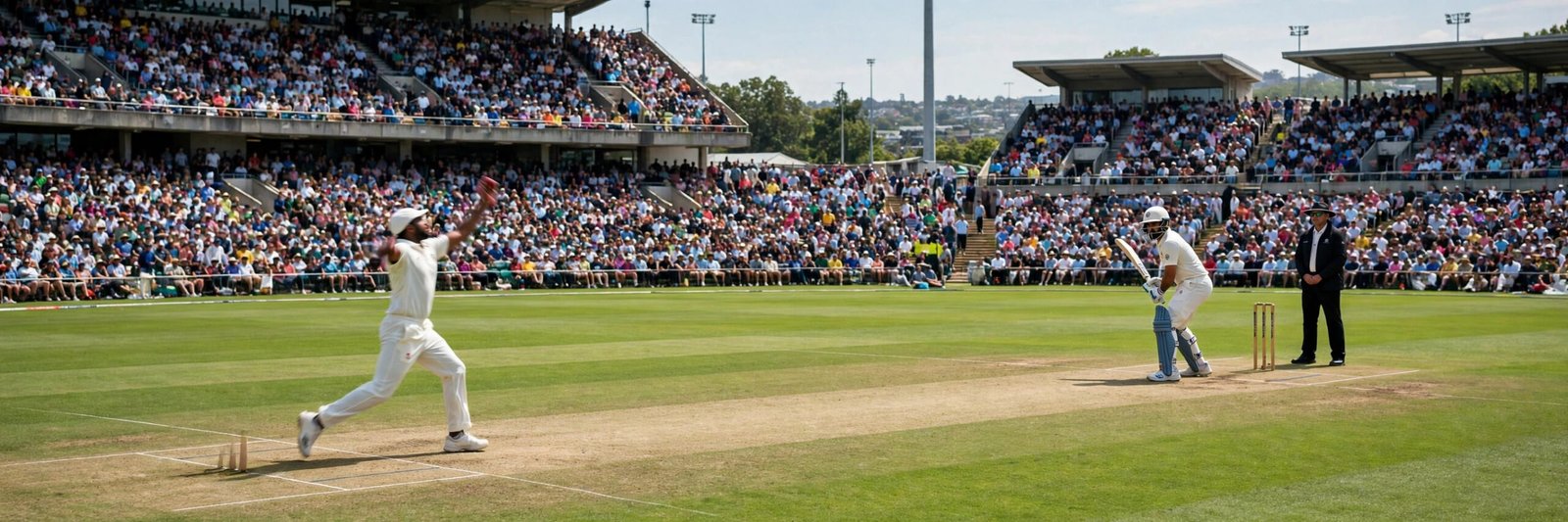
Some cricket results make you check the score twice. This was one of them. New Zealand beats India 244 runs on November 14, 2026, after bowling India out for just 89, and the cricket world is still trying to make sense of it. A margin of 244 runs is not a close finish or a narrow escape. It is a landslide. And 89 all out is not a bad day at the office for one or two batters. It is a full team collapse, the kind that becomes a reference point for years.
New Zealand Beats India 244 Runs: What Actually Happened
A 244-run winning margin is enormous in any format of the game. It usually means one team dominated for long stretches while the other could not find an answer. It is the kind of margin that turns a normal match report into a talking point, because it suggests more than a single bad session. It suggests a gap on the day between the two sides in execution, decision-making, and composure under pressure.
Why India Being Bowled Out for 89 Is So Shocking
To understand why this result has caused such a reaction, it helps to think about what Indian cricket normally looks like. India regularly produce some of the best batters in the world. Their domestic system is deep, their international players have experience in every condition, and their team is usually expected to compete strongly at home and away. A total of 89 does not fit that picture at all.
First, there is the sheer size of the gap. A 244-run defeat means India were not just beaten, they were outplayed by a wide distance. In a close match, fans can point to one turning point and say that was the difference. In a match decided by 244 runs, there is no single moment to blame. The difference was spread across the game, and that makes it harder to explain away.
Second, there is the speed of the collapse. When a team is bowled out for 89, the innings does not last long. Batters come and go quickly, the scoreboard barely moves, and the pressure builds with every wicket. For the fans watching, it can feel unreal. One wicket becomes two, two becomes four, and suddenly the team is in deep trouble with no partnership to steady things.
Finally, there is the rarity of the scoreline. Totals as low as 89 are unusual for a top international side. They happen, but they are remembered precisely because they are so rare. That is why this match is already being talked about as one of the most surprising results of the year. It will be mentioned alongside other famous collapses and unexpected defeats whenever fans discuss the most shocking days in cricket.
How a Batting Collapse Like This Usually Happens
Without inventing details about individual deliveries or specific dismissals that have not been verified, it is still possible to explain how a collapse to 89 generally happens in cricket. Collapses are rarely caused by one thing alone. They are usually the result of several factors coming together at the worst possible time.
Any one of these factors can hurt a team. When several happen together, a total like 89 becomes possible, even for a strong side. That is what makes cricket so unpredictable and, at times, so brutal. A team can be full of talent and still have a day where nothing works.
It is also important to give credit where it is due. A collapse is not only about the batting side failing. It is also about the bowling and fielding side succeeding. New Zealand would have had to bowl well, field sharply, and maintain pressure for long periods to dismiss India for 89 and win by 244 runs. That level of control does not happen by accident. It takes planning, discipline, and execution.
What This Result Means for New Zealand
For New Zealand, this is far more than just another win. A victory of this size can change how a team sees itself and how opponents prepare for them. New Zealand have long been respected as a smart, well-organised side that punches above its weight. A 244-run win over India adds weight to that reputation.
The second benefit is belief in the team system. New Zealand cricket has often been praised for its culture, teamwork, and calm leadership. Results like this reinforce that culture. Young players coming into the side see proof that the New Zealand way of playing can beat the best teams in the world by a huge margin, not just by a narrow finish.
There is also a practical benefit. Big wins can improve a team’s standing, boost net run rate in tournaments where that matters, and create momentum that carries into the next match. Cricket schedules are busy, and teams that arrive at the next game with confidence and rhythm often perform better than teams still trying to recover from a loss.
None of this means New Zealand will win every match from here. Cricket does not work that way. But this result gives them a strong platform, and they will want to build on it quickly before the memory fades and opponents adjust.
What This Result Means for India
For India, the questions are harder, but they are also familiar. Every great team has bad days, and the test of a great team is how it responds. A 244-run defeat and a total of 89 will lead to serious conversations inside the camp, in the media, and among fans. That scrutiny is intense, but it is also part of playing for India, where expectations are always high.
The third step is mental recovery. A defeat by 244 runs can affect confidence if it is allowed to linger. Batters who were dismissed cheaply may start doubting their method. Bowlers may feel their efforts were wasted. The leadership group will need to reset the mood, remind the squad of its strengths, and focus attention on the next match rather than the last one.
It is worth noting that Indian cricket has recovered from heavy defeats before. The team has a long history of bouncing back, and its players have the experience to handle pressure. One shocking result does not erase years of strong performances. But it does create a moment of truth. How India respond in their next matches will tell us more about the team than this one result alone.
Fans will also be watching for signs of learning. Did the team adapt? Did the batters show more patience? Did the bowlers find a better plan? Those details matter more than public statements, because they show whether the lessons of a 244-run defeat have truly been taken on board.
The Fan Reaction: Disbelief, Memes, and Debate
Within hours of the result, the reaction online was impossible to miss. Cricket fans in India, New Zealand, and around the world shared the score, posted memes, and debated what had happened. Some reactions were humorous, some were angry, and many were simply stunned. That mix is typical after a result that nobody saw coming.
Indian fans, in particular, expressed disbelief. Many had expected a competitive match, not a one-sided defeat. The sight of India bowled out for 89 was hard to accept, and the comments reflected that. Some fans called for changes, others defended the players and pointed to the long history of Indian success, and others simply said they could not believe what they had watched.
New Zealand fans, by contrast, celebrated a famous win. For supporters of a smaller cricket nation, beating India by such a margin is a proud moment. The result was shared widely, with fans praising the team’s discipline, teamwork, and ability to perform on the big stage. It is the kind of win that fans remember and talk about for years.
Neutral fans also joined the conversation. Cricket lovers enjoy the unpredictability of the sport, and a result like this is a reminder that no team is unbeatable. Even the strongest sides can have a terrible day, and even the underdogs can produce a performance for the ages. That is part of what makes international cricket so compelling.
The debate will continue for days. Former players will offer analysis, journalists will write columns, and fans will argue about selection, tactics, and conditions. That is normal after a match of this size. What matters is separating fair criticism from overreaction, and remembering that one match, however shocking, is still one match in a long season.
Could India Have Avoided a 244-Run Defeat?
This is the question every fan asks after a heavy loss, and it is a fair one. Could India have done something differently to avoid losing by 244 runs and being bowled out for 89? The honest answer is that we cannot know for certain without the full match detail, but we can talk about the general ways teams try to stop a collapse.
One approach is to slow the game down. When wickets are falling, batters sometimes try to take time, play each ball on its merits, and rebuild through singles and careful defence. The aim is to stop the flow of wickets and give the innings a chance to stabilise. It is not exciting, but it can be effective.
Another approach is to change the batting tempo. A counter-attacking innings can shift pressure back onto the bowlers, but it is risky. If it works, it can change the match. If it fails, it can speed up the collapse. Teams have to judge the moment carefully, and that judgment is easier with hindsight than in the middle of the game.
Communication also matters. Batters in the middle need to talk, share what they are seeing, and agree on a plan. A partnership is not just two people batting together, it is two people working together to solve the problem in front of them. When that communication breaks down, wickets tend to follow.
Finally, there is preparation. Teams study the opposition, the pitch, and the likely conditions before a match. If the preparation is right, players walk in with a clear plan. If the conditions behave differently from expectations, players have to adapt quickly. Adaptation is one of the hardest skills in cricket, and it often separates the teams that recover from those that collapse.
None of these ideas guarantees a different result. New Zealand were clearly the better team on the day, and they earned their 244-run win. But they are the kinds of adjustments India will be thinking about as they prepare for what comes next.
What Happens Next for Both Teams
The immediate future for both teams is shaped by this result, but in opposite ways. New Zealand will want to carry their momentum forward, while India will want to reset and respond. In cricket, the next match often matters more than the last one, because it shows whether a team has learned or simply moved on.
For New Zealand, the priority is consistency. A famous win can be followed by a flat performance if the team relaxes or believes the job is done. The best teams treat a big win as a starting point, not a finish line. They review what worked, keep the same standards in training, and prepare for the next opponent with the same focus.
For India, the priority is response. A strong response does not have to be another huge win, although that would help. It can be a disciplined batting performance, a better partnership, or simply a match where the team competes hard for the full game. Fans and experts will look for signs that the lessons have been learned and that the collapse was a one-off rather than a pattern.
The wider cricket calendar will also shape what happens next. International schedules are packed, and teams often move quickly from one series or tournament to another. That can be helpful for a team that has just lost heavily, because it gives them a fresh challenge soon. It can also be challenging, because there is little time to fix problems before the next match.
For readers who want to keep following the biggest talking points in sport and beyond, our story on Cristiano Ronaldo and his first TV series as retirement talk grows is another example of how a single announcement can dominate the conversation. Sport moves fast, and the next big story is never far away.
Key Takeaways From a Shock Result
As more detailed reporting emerges, fans will learn more about the key moments and turning points. Until then, the two numbers stand on their own: 244 runs, and 89 all out. Together, they tell a story of a famous New Zealand win and a painful Indian defeat, and they set up a fascinating next chapter for both teams.
For more verified context on international cricket, see the International Cricket Council, ESPNcricinfo, and BBC Sport cricket coverage.
How many runs did New Zealand beat India by?
New Zealand beat India by 244 runs on November 14, 2026, in a shock result that quickly became one of the most talked-about cricket scores of the day.
What was India’s total in the match?
India were bowled out for just 89. The low total, combined with the 244-run margin, made the defeat especially surprising for a team of India’s standing.
When did New Zealand beat India by 244 runs?
The match took place on November 14, 2026. The result was reported the same day and shared widely by cricket fans and news outlets.
Why was India’s 89 all out so shocking?
India are one of the strongest teams in world cricket with a deep batting line-up, so a total of 89 is far below what fans and experts expect. The 244-run margin also showed the defeat was comprehensive rather than close.
What does this result mean for New Zealand?
It is a major statement win that boosts confidence, reinforces New Zealand’s reputation for disciplined team cricket, and gives them momentum going into their next matches.