
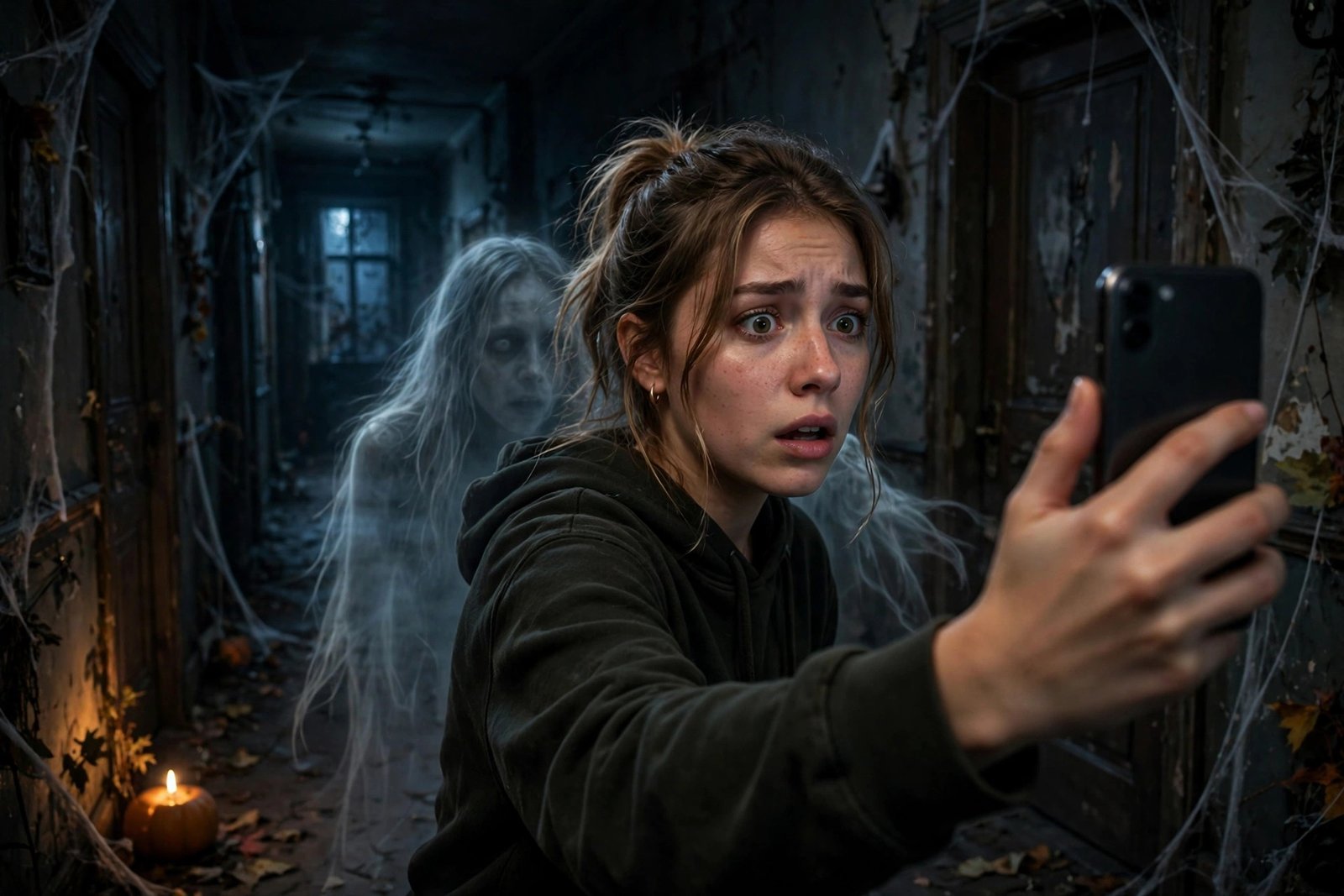
You are smiling into your front camera, telling your followers about your day, completely relaxed. Then, slowly, a pale face with long hair rises up behind your shoulder. You do not notice. Your viewers do, and the comments explode: “LOOK BEHIND YOU.” That is the ghost filter prank TikTok trend in a nutshell, and this October it has become one of the most shared Halloween formats on the app.
The setup is almost always the same. A creator films a cheerful selfie video, seemingly unaware that something is creeping into frame behind them. The ghost never jumps out right away. It fades in, drifts closer, and stops right beside their cheek. The person in the video keeps talking, keeps smiling, and never turns around. That gap between what the viewer sees and what the person on screen knows is the entire joke, and it is why people watch these clips twice: once to be surprised, and once to study how it was done.
If you have seen one of these videos and wondered whether it was real, you are not alone. The effect looks convincing because the ghost is built into the same scene, with matching light and movement, instead of being pasted on top like a sticker. Below is a full breakdown of how the trend works, why it fools so many viewers, how creators actually make it, and where the line sits between a funny prank and one that goes too far.
What Is the Ghost Filter Prank TikTok Trend?
The ghost filter prank TikTok format is a short vertical video in which a pale, long-haired ghost appears behind someone who is filming a selfie. The ghost usually has grey skin, huge white eyes, and long hair falling on either side of its face. It rises slowly from below the frame or drifts in from the side, then hovers just behind the person’s shoulder or cheek.
The trend picked up steam in early October 2026. A month-by-month tracker of 2026 AI video trends notes that a new grey ghost started its run between October 5 and 6, 2026, and that a phone template for it had already racked up more than a million uses by October 13. That kind of fast spread is typical of Halloween season on TikTok, when spooky formats travel from creator to creator in days rather than weeks.
There are two main versions of the prank. In the first, the person filming knows the ghost is there and plays along, pretending not to notice while the audience panics in the comments. In the second, the ghost is shown to an unsuspecting friend or family member, and their genuine reaction becomes the video. Both versions rely on the same trick: the viewer spots the ghost before the person on screen does.
The format sits comfortably alongside the rest of this year’s Halloween wave on TikTok. If you enjoy seasonal trends, our roundup of October 2026 TikTok trends covers the other formats blowing up at the same time, from dance crazes to costume illusions.
Why the Slow Reveal Fools So Many Viewers
Jump scares are easy to spot. Your brain learns the pattern fast: quiet moment, sudden face, loud noise. The ghost filter prank TikTok trend works differently, and that is exactly why it fools people. The ghost does not jump. It creeps.
Psychologists who study attention call this a kind of inattentional effect: when your focus is locked on one thing, in this case the smiling person talking to the camera, you can miss something else happening in the same scene. The ghost exploits that. It enters the frame slowly, in the background, while your eyes are busy reading the person’s expression. By the time you notice it, it is already close, and the surprise feels bigger because you were not braced for it.
Three details make the illusion especially convincing:
- Matched lighting. The ghost is generated inside the same scene, so its shadows and brightness match the room. A pasted-on sticker usually looks too bright or too flat, and viewers catch it instantly.
- Natural movement. The person in the video keeps blinking, smiling, and talking normally. That realism anchors the whole clip, so the ghost inherits credibility from the real footage around it.
- Gradual timing. The ghost fades in over several seconds instead of popping onto the screen. Slow reveals feel less like an edit and more like something actually happening in the room.
That slow timing also drives replays. Viewers rewatch to pinpoint the exact second the ghost appears, and they tag friends to see whether they spot it faster. Every replay and tag pushes the video further, which is part of why the format spread so quickly in October.
How Creators Make the Ghost Filter Prank Video
There are three main ways creators build this effect, and they range from a one-minute AI tool to a hands-on manual edit. A detailed October 2026 guide to the trend tested all three and found that the AI route produces the most convincing result, while the manual routes are free but take longer and are easier for viewers to spot.
Method 1: AI tools that animate a single selfie. This is the method behind most of the “how is this real?” clips. You upload one normal front-camera selfie, ideally with some empty space behind one shoulder, such as a hallway, doorway, or dark kitchen. The tool animates your photo and generates the ghost inside the same scene, then exports a short vertical video, often around 8 to 10 seconds long, with an eerie sound. Some tools let you preview the first few seconds free before you pay to unlock the full clip. One such tool, Ghost Filter Prank, offers two scare styles, a slow creep and a sudden lunge, and states that it only allows photos of yourself or an adult who agreed to be pranked.
Method 2: CapCut overlays. Creators who prefer a free, hands-on approach film a selfie video, then layer a ghost image or clip over the background in CapCut, fading it in slowly and matching the opacity to the room. This takes more patience, and the result depends heavily on how well the ghost layer blends with the original lighting. Done carefully, it can still look great, but viewers are more likely to notice the edit.
Method 3: TikTok and Snapchat effects. Both apps have built-in filters and effects that can add ghostly figures to a live recording. These are the quickest free option and work well for casual pranks on friends, though the ghost tends to look more cartoonish than the AI-generated version, which gives the joke away sooner.
Whichever method you choose, a few filming tips make the result stronger. Film in a dim room with a plain background so the ghost stands out without looking pasted on. Leave clear space behind one shoulder. Keep your own performance natural: talk, smile, and do not glance at the spot where the ghost will appear. And keep the clip short. Ten seconds is plenty; the joke lands fast, and longer videos give viewers time to study the edit.
For more seasonal inspiration, our guide to makeup-only Halloween costumes on TikTok shows another low-cost format that needs no costume at all, just skill and a camera.
The Ghost Prank Debate: Funny or Too Far?
Not everyone is laughing. As the trend spread in October 2026, it also sparked a debate about who should be pranked and how far the joke should go. The flashpoint was videos showing the prank pulled on young children, which drew sharp criticism in the comments. A CafeMom report from October 12, 2026, described viewers calling out parents over children’s horrified reactions, with one commenter writing that parents “don’t actually realize how dangerous this trend is because they would rather entertain people online.” Others defended the videos as harmless fun, and one mother responded that her daughter was the youngest of four children and “walks around terrorizing us all day.”
The debate echoes an older internet argument. The same report noted that the prank feels reminiscent of early internet jump scares, when harmless-looking links hid a screaming face. The difference now, critics argue, is that the person being scared is sometimes a small child who cannot tell a filter from something real.
There are also lighter examples of the trend done well. In South Africa, TikToker Malcolm Wentzel posted a ghost filter prank on October 7, 2026, in which he called over Thembi Ubisi, who had just returned from a holiday, on the pretence of checking in on her. When the ghost appeared on screen, she froze, insisted there was a ghost behind her, and only dissolved into laughter when he revealed the trick. The clip charmed viewers precisely because everyone involved was an adult, in on the reveal, and laughing together at the end.
Another widely shared clip from October 6, 2026, showed a grandmother who took the AI-generated apparition completely seriously, folding her hands and making heartfelt requests to the ghostly figure on screen. Viewers found her sincere reaction funny and warm, but the clip also shows why consent and context matter: the joke only works when the person being pranked understands it was a joke once the reveal happens.
Safety and Etiquette: How to Prank Without Crossing the Line
A good prank ends with everyone laughing, including the person who was pranked. Here are the ground rules that keep this trend on the right side of funny:
- Prank adults, not young children. Small children may not understand that a filter is fake, and the fright can linger after the video ends. Stick to friends and family members who can enjoy the reveal.
- Get consent where it counts. If you are using someone else’s photo in an AI tool, make sure they agreed. The tool behind many of these videos states this rule explicitly: only your own selfie, or a photo of an adult who agreed to be pranked.
- Reveal the trick quickly. Do not let someone walk away genuinely believing something supernatural happened. The reveal is part of the joke, and skipping it turns a prank into a scare.
- Label it as an effect. A caption or on-screen note saying it is a filter or effect protects viewers who might otherwise believe the ghost is real, and it keeps your video honest.
- Skip anyone who is anxious, unwell, or vulnerable. If someone has a heart condition, anxiety, or a genuine fear of the supernatural, the joke is not worth their distress. Pick a target who will laugh.
- Keep it out of sensitive settings. Do not film the prank in a way that could alarm strangers, disrupt a workplace, or be mistaken for a real emergency.
These rules are not just about kindness; they are about the video itself. Pranks where everyone ends up laughing get shared warmly. Pranks where someone is upset tend to attract the kind of comments that hurt a creator’s reputation far more than any single video helps it.
How to Try the Ghost Filter Prank TikTok Trend Yourself
Ready to make your own? Here is a simple step-by-step plan that keeps the video convincing and the prank friendly:
- Pick your method: an AI selfie tool for the most realistic result, CapCut for a free manual edit, or a built-in TikTok or Snapchat effect for a quick casual version.
- Take or film a relaxed selfie in a dim room with empty space behind one shoulder.
- Choose the slow creep style rather than a sudden lunge; slow reveals fool more viewers and feel less aggressive.
- Record yourself talking naturally, as if you are filming a normal update. Do not look at the ghost’s spot.
- Add an eerie hum or a soft horror sting, but keep the volume low enough that your voice stays clear.
- Caption the video honestly, for example by noting it is an effect, and reveal the trick to anyone featured in it before you post.
- Post during Halloween season, when audiences are primed for spooky content, and pair it with other seasonal posts. Our piece on the history of trick-or-treating is a great companion read for viewers in a Halloween mood.
Key Takeaways
- This trend works because of a slow reveal: a pale ghost creeps into frame while the person filming pretends not to notice.
- AI selfie tools produce the most convincing version, but CapCut overlays and built-in TikTok or Snapchat effects offer free alternatives.
- Matched lighting, natural movement, and gradual timing are what separate a believable ghost from an obvious sticker.
- The trend sparked real debate in October 2026 about pranking children, and the safest approach is to prank consenting adults and reveal the trick fast.
- Label your video as an effect, and make sure the person being pranked ends up laughing too.
Conclusion
The ghost filter prank TikTok trend is a perfect Halloween format: cheap to make, easy to understand, and genuinely surprising the first time you see it. Its secret is not fancy technology but patience. The ghost that creeps beats the ghost that jumps, because viewers let their guard down before they ever see it coming. That is also why the trend comes with responsibility. A slow reveal that fools a friend for ten seconds is hilarious. A slow reveal that terrifies a child who cannot tell a filter from reality is not. Keep the prank among consenting adults, reveal the trick, label the effect, and you get the best of both worlds: a video people rewatch, share, and laugh about, without anyone left scared after the camera stops. Happy haunting, and remember to check behind you before you film.
Sources: How to Make the Ghost Filter Prank Video (TikTok Trend, 2026 Guide); AI Video Trends 2026: Every Viral Remake, Month by Month; TikTok Ghost Filter Prank Sparks Parenting Backlash; “Poor Thembi”: Malcolm Wentzel’s Ghost Prank; Prank Fails As Pensioner Tries to Negotiate With a ‘Tokoloshe’; Ghost Filter Prank.
What is the ghost filter prank TikTok trend?
It is a short video format in which a pale, long-haired ghost slowly appears behind someone filming a selfie video, while the person on screen pretends not to notice. Viewers spot the ghost first, and that gap is the joke.
How do creators make the ghost filter prank video?
Most convincing versions use an AI tool that animates a single selfie and generates the ghost inside the same scene. Free alternatives include layering a ghost image over a selfie video in CapCut, or using built-in TikTok and Snapchat effects.
Why does the ghost filter prank fool viewers?
The ghost appears slowly, with lighting matched to the room, while the viewer is focused on the person talking. Because the reveal is gradual rather than a sudden jump scare, viewers do not brace for it and often miss the ghost at first.
Is the ghost filter prank safe to try on children?
It is best to avoid pranking young children with this trend. Children may not understand that a filter is fake, and the fright can linger after the video ends. The trend drew criticism in October 2026 over videos showing scared children, so stick to consenting adults.
Should you label a ghost filter prank video as an effect?
Yes. A caption or on-screen note saying the video uses a filter or effect keeps the joke honest, protects viewers who might otherwise believe the ghost is real, and makes sure the person featured in the video understands it was a prank.